Youth Goalie Gloves Grip Types: Easy Guide for Parents
By Carlos Alvares

As an Amazon Associate I earn from qualifying purchases. This post contains affiliate links which means I may receive a small commission at no extra cost to you if you make a purchase through a link. I only recommend gear I have personally tested and thoroughly evaluated.
Youth Goalie Gloves Grip: Why the Label on the Box Tells You Almost Nothing
You are standing in a sports store — or more likely scrolling Amazon at 10pm — staring at youth goalie gloves labeled Soft Grip, Super Soft, Contact Latex, Solid, Infinity, Superior Grip, Absolutegrip, and about six other names that mean absolutely nothing to you.
Every glove claims maximum grip. Every brand invents its own terminology. And none of them explain what any of it actually means for a ten year old playing twice a week on artificial turf.
I have tested goalkeeper gloves across multiple seasons with real young players at every level — from first season beginners to competitive club players. After all that testing the honest conclusion is straightforward. The grip type on the box matters enormously — but only if you know how to read it. And right now most parents cannot.
This guide fixes that completely. By the end you will know exactly which latex type your child needs — based on their age their surface their training frequency and their level of play. Every product reference in this guide is a verified youth specific listing currently available on Amazon. No adult gloves presented as youth. No unverifiable claims. Just the honest framework that makes every glove comparison immediately clear.
The One Rule That Explains Everything
Before going through every latex type there is one principle that sits above all of them. Understand this and every buying decision becomes significantly clearer.
Softer latex grips better. Harder latex lasts longer. You cannot fully have both.
This is the fundamental tradeoff in goalkeeper glove latex and it never disappears regardless of price or brand. Professional goalkeepers use the softest grippiest latex available because they play around ten matches before the palm degrades and then replace the gloves. Youth players — who train three times weekly on abrasive artificial turf fall on their palms regularly and generally put gloves through far more punishment — need latex that sits much further toward the durable end of that spectrum.
Four rules to keep in mind throughout this guide:
| Rule | Reality |
|---|---|
| Softer latex | Better grip — shorter lifespan |
| Harder latex | Better durability — less immediate grip |
| Thicker latex | Better shot absorption — less ball feel |
| Thinner latex | More ball control — less protection |
Every latex comparison that follows is a variation on these four rules. They never change regardless of how many different names brands put on their packaging.
Why There Is No Universal Latex Naming System
There is no universal naming standard for goalkeeper glove latex. Every brand invents its own terminology for the same performance tiers. Adidas calls their entry level latex Soft Grip. Reusch calls theirs Solid or Infinity. Renegade GK names theirs Super Grip. Uhlsport uses Absolutegrip. PUMA uses Match latex. Storelli uses Superior Grip.
The same performance level gets a completely different badge depending on who manufactured the glove.
This guide maps every major brand-specific latex name to three practical performance tiers — which is the only honest way to compare youth goalkeeper gloves across brands and the framework that makes every future buying decision immediately clear.
The Three Latex Tiers That Matter for Youth Players
Professional and contact latex are excluded from this guide entirely. They are adult products — not appropriate or practical for youth goalkeeper use for reasons explained at the end of this section. Every tier covered here uses verified youth specific Amazon listings.
Tier 1 — Training and Durable Latex
Also called: Soft Grip — Solid — Superior Grip — Classic Latex — Basic Grip
Tier 1 is the most durable latex available in youth goalkeeper gloves. Dense firm and abrasion resistant — built specifically for the training demands that most youth goalkeepers place on their equipment rather than for peak match day performance.
Verified Youth Products Using Tier 1 Latex:
| Product | Brand Latex Name | Confirmed Youth |
|---|---|---|
| Adidas Tiro Club Junior | Basic latex | ✅ Unisex-Child confirmed |
| Adidas Predator Training Youth | Soft Grip | ✅ Youth Kids confirmed |
| Reusch Attrakt Solid Junior | Contact Solid latex | ✅ Junior confirmed |
| Reusch Attrakt Junior Artificial Grass | Turf optimized latex | ✅ Junior confirmed |
| Storelli Challenger Youth | Superior Grip latex | ✅ Youth confirmed |
| T1TAN Classic White-Out Junior | Classic latex | ✅ Junior confirmed |
How Tier 1 Performs in Practice:
Grip is reliable and consistent in dry conditions. The latex feels noticeably firmer than higher tiers on first touch — this is by design not a defect. Moisture activation makes a meaningful immediate difference. Two sprays of water on both palms before kickoff softens the surface and improves tackiness noticeably. In heavy sustained rain without activation the grip can feel inconsistent.
Durability is the standout quality. Tier 1 latex is specifically engineered to survive a full season on artificial turf with twice or three times weekly training use. The Reusch Attrakt Junior Artificial Grass takes this further — its turf optimized construction is designed specifically for the rubber crumb abrasion that destroys softer latex quickly on 3G and 4G pitches.
The Storelli Challenger Youth brings an interesting variation to this tier. Its Superior Grip latex sits at the upper end of Tier 1 — more responsive than basic training latex while maintaining the durability that recreational and developing players need across a full season of regular use.
The honest truth for parents:
Tier 1 latex is excellent for starters and developing players. It encourages proper catching technique rather than compensating for poor hand position with excessive stickiness. A child whose gloves catch the ball despite bad hand shape is not learning — they are masking a problem that will cost them significantly at higher levels later.
If your child is learning the position playing recreationally or needs one pair for both training and matches — Tier 1 is the responsible and practical choice. It will not produce the most impressive feel on first use. It will still be there performing adequately at the end of the season.
Best for: Beginners. Regular turf users. Training-specific pairs. Players under 10. Any player who needs one pair to handle everything.
Tier 2 — Advanced All-Round Latex
Also called: Soft Grip Pro — Infinity — Super Grip — Advance Latex — Match Latex — Absolutegrip Junior — High Performance
Tier 2 is the most important category for most youth players. A meaningful step up from training latex in both grip performance and feel — without completely sacrificing the durability that youth goalkeeper use demands. This is the sweet spot where most purchasing decisions for committed youth goalkeepers belong.
Verified Youth Products Using Tier 2 Latex:
| Product | Brand Latex Name | Confirmed Youth |
|---|---|---|
| Adidas Predator Match Fingersave Junior | Soft Grip Pro | Junior confirmed |
| Reusch Attrakt Infinity Junior | Infinity latex with DuraGuard | Junior confirmed |
| Reusch Attrakt Advance Junior | Advance latex | Junior confirmed |
| Renegade GK Triton | 3.5mm Super Grip | Youth sizes confirmed |
| Renegade GK Rogue | High Performance latex | Youth sizes confirmed |
| PUMA Ultra Match Protect Jr | Match latex | Junior confirmed |
| PUMA Kids Boys Ultra Match Protect | Match latex | Kids confirmed |
| Storelli Lightning | High impact grip latex | Youth confirmed |
| Uhlsport Absolutegrip HN Pro Jr 2025 | Absolutegrip Junior | Junior confirmed |
How Tier 2 Performs in Practice:
Noticeably grippier than Tier 1 in both dry and mild wet conditions — the difference is immediately apparent to any young goalkeeper who makes the switch from a basic training glove. The feel is more responsive more confident and more forgiving of slightly imperfect hand positioning during catches.
Several products in this tier bring specific engineering that sets them apart:
The Reusch Attrakt Infinity Junior includes a DuraGuard reinforcement patch on the heel of the palm — the highest wear area during ground contact — specifically designed to protect the softer Infinity latex from the turf abrasion that would otherwise reduce its lifespan significantly on 3G pitches. This is the kind of goalkeeper-specific engineering that reflects decades of specialist development.
The Renegade GK Triton specifies its latex as 3.5mm Super Grip with 3mm cushioning foam — naming the exact thickness specification that most brands deliberately obscure. That transparency signals genuine confidence in the product and makes the grip consistency claims verifiable rather than marketing language.
The Uhlsport Absolutegrip HN Pro Jr 2025 brings the most advanced latex in this tier — Absolutegrip is Uhlsport’s highest-performance formulation available in a confirmed junior specific listing. The Hyper Negative cut combined with Absolutegrip latex places this product at the premium end of Tier 2 approaching Tier 3 performance in wet conditions. the only down side that it comes with only sizes 3 and 4 on amazon right now .
Durability is good to very good across this tier. A full season with proper care on natural grass is realistic for every product listed. On heavy artificial turf with regular training use expect moderate wear — significantly better than professional match latex but not as enduring as Tier 1. The Reusch Infinity DuraGuard and the denser Renegade GK Super Grip formulation provide the best turf durability within this tier.
The honest truth for parents:
This is the tier that covers the majority of youth goalkeepers reading this guide. The step up in feel from Tier 1 is genuine and immediately noticeable. Young players who move from an Adidas Training glove to the Predator Match Fingersave Junior feel the difference on their first catch. Those who move to the Reusch Attrakt Infinity feel it even more clearly.
For most parents the answer to “which latex does my child need” is somewhere in this tier. The specific product within it depends on surface frequency and budget — all covered in the decision framework below.
Best for: Recreational to competitive youth players. Players aged 8 to 14 training regularly. Anyone who has outgrown Tier 1 and plays organized competitive soccer.
Why Professional and Contact Latex Is Not in This Guide
Two reasons — both important.
First — it is not genuinely available in verified youth specific listings. The softest most expensive contact latex formulations exist primarily in adult goalkeeper gloves. Products marketed as youth or junior at this latex level frequently turn out to be adult listings with small size availability when you check the actual Amazon listing description carefully. Every product in this guide has been confirmed as genuine youth or junior specific.
Second — it is genuinely the wrong choice for youth players regardless of availability. Extremely tacky professional latex allows the ball to stick even when hand position and timing are poor — masking technique errors rather than revealing them. A developing goalkeeper whose bad hand shape produces a caught ball because the latex was grippy enough to overcome the mistake is reinforcing that bad habit. Controlled consistent grip that rewards proper technique is more valuable for development than maximum stickiness that hides technical problems.
If you encounter a product claiming professional contact latex in youth sizes at a genuinely youth price point — verify the listing carefully before purchasing.
The Wet Weather Question — Does My Child Need Aqua Latex
Most parents discover the wet weather problem the hard way. Gloves that worked perfectly in September become unreliable in a wet November match. The child hesitates. Balls slip. Confidence drops.
Most standard Tier 1 training latex loses meaningful grip in heavy sustained rain. The water film on the ball surface breaks the tackiness that performs so well in dry conditions.
Before buying a specialist wet weather glove try this first:
Teach your child to spray both palms lightly with water from their bottle before every match regardless of weather. Counterintuitively slightly moistened latex grips better in dry conditions than completely dry latex — the moisture activates the surface tackiness. In genuinely wet conditions wiping gloves on the jersey between plays removes excess water and temporarily restores the grip surface. This costs nothing and solves the wet weather problem for most youth players in most conditions.
The Reusch Attrakt Junior glove — while designed primarily for turf — also performs reliably in wet conditions due to its specifically engineered latex formulation. If your child trains on artificial turf in wet climates this is the most practical single glove recommendation covering both challenges simultaneously.
For players who regularly compete in persistent heavy rain a dedicated all-weather latex pair is worth adding as a second option. For most youth players in variable climates the moisture activation technique combined with a Tier 2 all-round glove covers the vast majority of wet weather situations.
Surface Matters — The Practical Buying Guide
This is the question that determines more correct buying decisions than any other specification.
| Surface | Recommended Tier | Best Verified Products |
|---|---|---|
| Natural grass — matches | Tier 2 | Reusch Attrakt Infinity Junior — Adidas Match Fingersave Junior |
| Artificial turf — training | Tier 1 | Reusch Attrakt Solid Junior — Reusch Attrakt Junior Artificial Grass |
| Both surfaces — one pair | Tier 2 with DuraGuard | Reusch Attrakt Infinity Junior — Renegade GK Triton |
| Heavy rain on grass | Tier 2 all-weather | Reusch Attrakt Infinity Junior — Storelli Lightning |
| Beginners — any surface | Tier 1 | Adidas Predator Training — T1TAN Classic White-Out Junior |
The most cost-effective setup for a committed youth goalkeeper training twice or more weekly is two pairs. A Tier 1 training glove for artificial turf sessions and a Tier 2 glove reserved for match days. The total cost of this system across a season is consistently lower than replacing one premium pair every six to eight weeks.
Does Latex Thickness Matter for Youth Players
Manufacturers often list latex thickness in millimetres — typically 3mm 4mm or 4.5mm. Parents sometimes assume thicker automatically means better. It does not.
| Thickness | What It Means | Best For |
|---|---|---|
| 3mm | Maximum ball feel — minimal protection | Advanced senior players only |
| 4mm | Balanced cushioning and control | Most youth players — optimal choice |
| 4.5mm | More protection — slightly less feel | Younger players on hard surfaces |
| 5mm+ | Maximum cushioning — restricted movement | Specialist protection situations |
For most youth players 4mm is the right number. The Renegade GK Triton specifies exactly this — 3.5mm Super Grip latex with 3mm cushioning foam — a combination that delivers outstanding grip with adequate protection and natural hand movement. This kind of specification transparency is worth prioritizing when comparing products.
Brand Latex Names Decoded — Verified Youth Quick Reference
This table maps every confirmed youth goalkeeper glove latex name to the practical tier framework — using only verified youth specific Amazon listings.
| Brand | Their Latex Name | Tier | Verified Youth Product |
|---|---|---|---|
| Adidas | Basic latex | Tier 1 | Tiro Club Junior |
| Adidas | Soft Grip | Tier 1 | Predator Training Youth |
| Adidas | Soft Grip Pro | Tier 2 | Predator Match Fingersave Junior |
| Reusch | Contact Solid | Tier 1 | Attrakt Solid Junior |
| Reusch | Turf latex | Tier 1 specialist | Attrakt Junior Artificial Grass |
| Reusch | Infinity with DuraGuard | Tier 2 | Attrakt Infinity Junior |
| Reusch | Advance latex | Tier 2 premium | Attrakt Advance Junior |
| Renegade GK | 3.5mm Super Grip | Tier 2 | Triton Youth |
| Renegade GK | High Performance | Tier 2 premium | Rogue Youth |
| PUMA | Match latex | Tier 2 | Ultra Match Protect Jr |
| PUMA | Match latex | Tier 2 | Kids Boys Ultra Match Protect |
| Storelli | Superior Grip | Tier 1 to 2 | Challenger Youth |
| Storelli | High impact grip | Tier 2 | Lightning Youth |
| Uhlsport | Absolutegrip Junior | Tier 2 premium | Absolutegrip HN Pro Jr 2025 |
| T1TAN | Classic latex | Tier 1 | Classic White-Out Junior |
Which Latex Tier Does Your Child Actually Need
Answer three questions. The right tier becomes immediately clear.
Question 1 — What surface do they play on most?
| Surface | Recommendation |
|---|---|
| Mostly artificial turf | Tier 1 — Reusch Attrakt Solid Junior or Attrakt Junior Artificial Grass |
| Mostly natural grass | Tier 2 — Reusch Attrakt Infinity Junior or Adidas Match Fingersave Junior |
| Both regularly | Two pairs — Tier 1 for turf — Tier 2 for matches |
Question 2 — How often do they train and play?
| Frequency | Recommendation |
|---|---|
| Once or twice weekly recreationally | Tier 1 or Tier 2 — durability matters |
| Three to five times weekly in organized leagues | Tier 2 — Renegade GK Triton or Reusch Attrakt Infinity |
| Competitive club or academy level | Tier 2 for training — Tier 2 premium for matches |
Question 3 — How old are they and how developed is their technique?
| Age and Level | Recommendation |
|---|---|
| Under 10 — learning the position | Tier 1 — Adidas Predator Training or T1TAN Classic White-Out |
| 10 to 13 — developing in organized soccer | Tier 2 — Reusch Attrakt Infinity Junior or Adidas Match Fingersave Junior |
| 13 to 16 — competitive and technically developed | Tier 2 premium — Reusch Attrakt Advance Junior or Renegade GK Rogue |
The answer for most parents:
Tier 2 — specifically the Reusch Attrakt Infinity Junior or the Adidas Predator Match Fingersave Goalie gloves— covers the overwhelming majority of youth players at every skill level outside the very youngest beginners and the most elite competitive teenagers.
Three Grip Mistakes That Cost Parents Money Every Season
Mistake 1 — Buying match latex for daily training sessions.
Tier 2 premium and Tier 3 latex used for three weekly training sessions on artificial turf will deteriorate in six to eight weeks. A $25 to $35 Tier 1 training pair — the Adidas Predator Training or Storelli Challenger Youth — preserves the better glove and costs less in total over a season than replacing one quality pair mid-season. This is the math that every experienced goalkeeper coach explains to parents every single season.
Mistake 2 — Using the same gloves for everything.
For any child training twice weekly or more the two-pair system is the more practical and economical approach. Tier 1 for training sessions. Tier 2 for match days. The total investment is lower than replacing Tier 2 gloves every six to eight weeks on abrasive turf.
Mistake 3 — Ignoring moisture activation.
Every latex type including Tier 1 performs significantly better when slightly moist. Two sprays of water on each palm and a quick rub before kickoff costs nothing and makes an immediately noticeable difference to grip in the first quarter of any match. Teach this as a pre-match routine and it becomes automatic. It is not a quirk — it is correct goalkeeping technique at every level.
Now that you understand grip types our Youth Goalie Gloves Size Chart will help you find the correct size before purchasing. Ready to buy? Our Premium Youth Goalie Gloves guide maps the best verified Amazon picks to the latex tiers covered in this guide.
The Bottom Line
Youth goalie gloves grip types are not complicated once you strip away brand marketing and map everything to three practical tiers based on the fundamental softness versus durability tradeoff.
Tier 1 for beginners training pairs and regular turf users. Tier 2 for most committed youth players in most situations — the tier covering the overwhelming majority of goalkeepers reading this guide. Tier 2 premium for serious competitive players aged 13 and above who maintain separate training and match pairs.
Answer the three questions. Find your child on the chart. Buy the right latex for their actual situation rather than their aspirational one. And give them equipment built for what they actually do — not for what a professional goalkeeper does.
FAQ: Youth Goalie Gloves Grip Types
What is the best grip type for youth goalkeeper gloves? For most youth players Tier 2 latex — called Soft Grip Pro on Adidas Infinity on Reusch Super Grip on Renegade GK and Match latex on PUMA — is the best choice. It provides noticeably better grip than basic training latex while lasting long enough to justify the cost. The Reusch Attrakt Infinity Junior and Adidas Predator Match Fingersave Junior are the two most consistently recommended verified youth products in this tier.
What does Soft Grip mean on Adidas youth goalkeeper gloves? Soft Grip is Adidas’s name for their entry level training latex — Tier 1. It is a durable firm synthetic latex that provides reliable grip in dry conditions and handles regular use on artificial turf better than softer match latex. Soft Grip Pro — found on the Predator Match Fingersave Junior — is a meaningful step up: thicker more cushioned and more reliable in mixed weather. Both are confirmed youth specific listings on Amazon.
What is the difference between training latex and match latex in youth goalkeeper gloves? Training latex — Tier 1 — prioritizes durability. It is firm abrasion resistant and handles the abuse of regular training sessions on artificial turf across a full season. Match latex — Tier 2 — prioritizes grip feel and wet condition performance. It provides noticeably better tacky contact with the ball but wears faster under training frequency demands. For youth players the practical rule is Tier 1 for training sessions and Tier 2 for match days when separate pairs are maintained.
Do youth goalkeeper gloves perform differently in wet weather? Yes — significantly. Standard Tier 1 training latex loses meaningful grip in heavy sustained rain. Tier 2 mid-range latex performs more consistently across mixed conditions. The Reusch Attrakt Junior Artificial Grass model performs particularly well in wet conditions despite its turf-primary design. For most youth players in variable climates a Tier 2 all-round glove combined with the moisture activation technique — wetting palms before play — covers the vast majority of wet weather situations adequately.
Is thicker latex better for youth goalkeeper gloves? Not automatically. 4mm is the optimal thickness for most youth players — enough cushioning to absorb hard shots without restricting natural hand movement. The Renegade GK Triton specifies 3.5mm Super Grip with 3mm cushioning foam — transparent about its specification in a way most brands are not. Very thin 3mm latex degrades quickly on abrasive turf. Very thick 5mm+ latex feels heavy and can restrict the catching mechanics that developing technique requires.
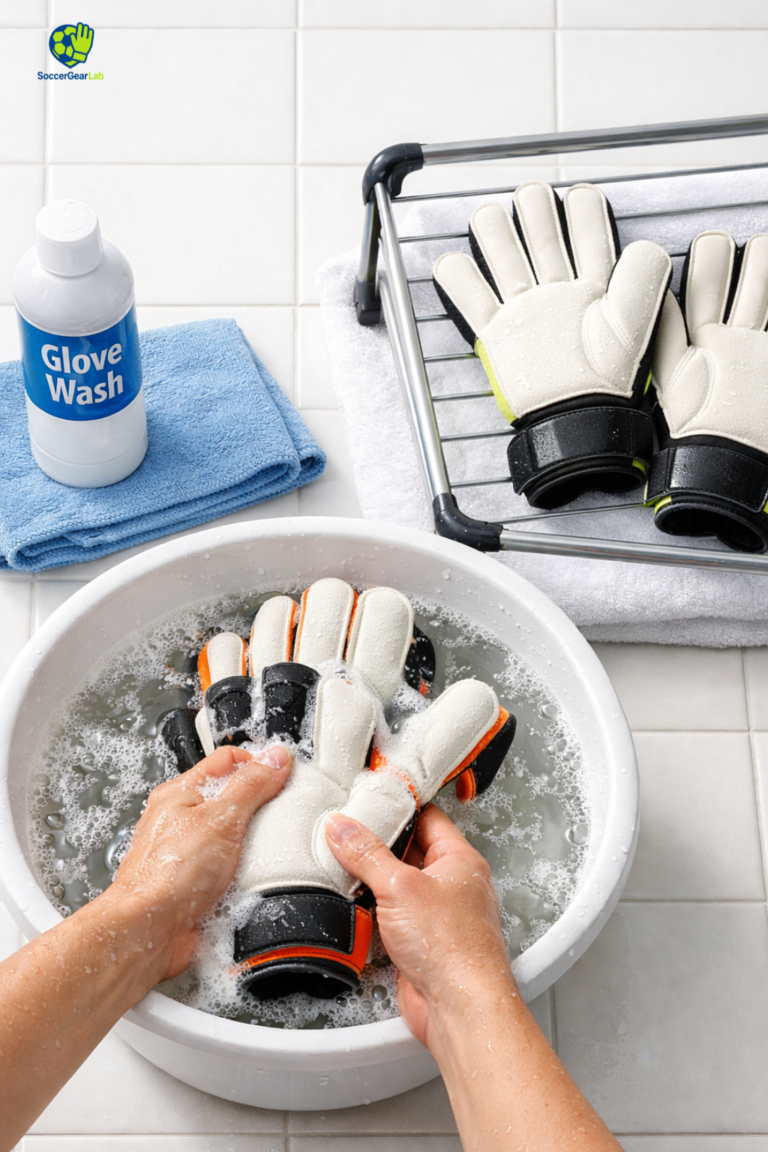
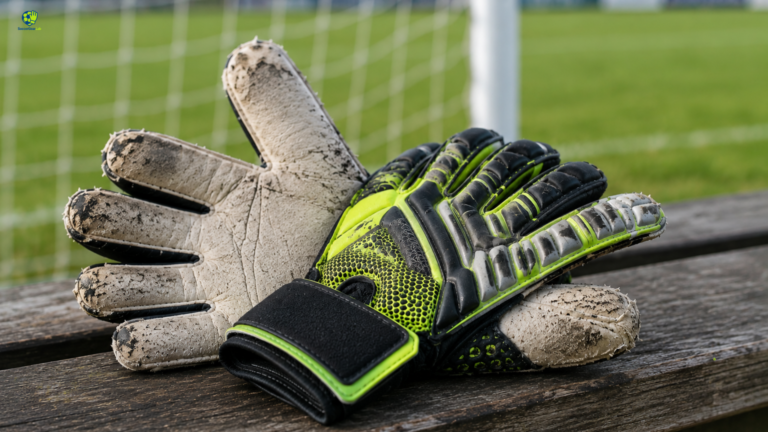
Why does my child’s grip disappear after only a few sessions? Three most common causes. Surface abrasion — soft latex worn down by repeated contact with artificial turf. Salt degradation — dried sweat crystals in the latex pores breaking down the material from inside between sessions. Heat damage — drying gloves near a radiator or in a hot car permanently destroying the latex compounds. The fix: match the latex tier to the actual surface demands rinse gloves within an hour of every session and always air dry in the shade. A proper glove care routine extends the grip life of any latex tier significantly.
Can I use the same gloves for training and matches? Yes — but it significantly reduces lifespan for Tier 2 latex used on artificial turf. Tier 1 training latex is designed for this dual purpose without rapid deterioration. For any child training twice weekly or more the two-pair system — Tier 1 for training and Tier 2 for matches — is more practical and more economical across a full season than replacing one quality pair mid-season.
Related Guides
- How Should Youth Goalie Gloves Feel ? Expert Guide to the Best Fit
- Premium Youth Goalie Gloves: 7 Best Picks on Amazon
- Reusch Youth Goalie Gloves: The Complete Parent Guide
- Youth Goalie Gloves: 5 Best Wash Products for Better Grip
Have a specific question about the right latex for your child’s surface age or weather conditions? Drop it in the comments — every question gets a straight answer.