Youth Goalie Gloves Size chart : How to Choose the Right Fit
As an Amazon Associate, I earn from qualifying purchases. This post also contains affiliate links, if you purchase through my links I may earn a small commission at no extra cost to you.
Introduction :
Buying youth goalie gloves for a child sounds simple until you actually try to do it. Sizes vary a bit by brand, kids grow fast, and many parents are left wondering whether they should buy a snug fit now or go bigger so the gloves last longer.
This youth goalie gloves size guide is built for that exact problem. It will help you measure your child’s hand, understand what youth glove sizes really mean, and choose a fit that supports catching, comfort, and confidence on the field.
A good pair of gloves will not turn a beginner into a great goalkeeper overnight. But the wrong size can absolutely make the position harder than it needs to be.
Why goalie glove size matters for young players
For young goalkeepers, glove fit affects more than comfort.
If the gloves are too big, the hands can move around inside them. That makes it harder to catch cleanly, control rebounds, and feel secure when punching or throwing the ball. Oversized gloves can also make young players feel clumsy, especially if they are still learning basic handling.
If the gloves are too small, they can feel tight across the fingers and palm. That can limit movement, create pressure points, and wear out the glove faster.
The right size helps with:
- better grip and ball control
- more natural hand movement
- improved comfort during training and matches
- better confidence for beginners
- less distraction during play
For kids, confidence matters a lot. Gloves that fit well help the position feel more manageable.
How youth goalie glove sizing works
Most goalkeeper gloves are sold by numbered sizes, usually starting around smaller youth sizes and moving up into adult sizing. Youth sizes commonly fall in the lower part of that range, but the exact fit can differ from one brand to another.
That is why parents should treat the size number as a starting point, not a guarantee.
In general, goalie glove size is based on hand measurements, especially around the palm and hand length. Some brands also build youth gloves with slightly different finger proportions, wider openings, or closures that are easier for kids to use on their own.
The key point is simple: do not guess based only on age.
Two children of the same age can need very different glove sizes depending on hand shape and growth stage.
How to measure your child’s hand for goalie gloves
Measuring the hand before you buy is the easiest way to avoid ordering the wrong size.
You only need a flexible measuring tape or a piece of string and a ruler.
Method 1: Measure hand circumference
This is the most common method.
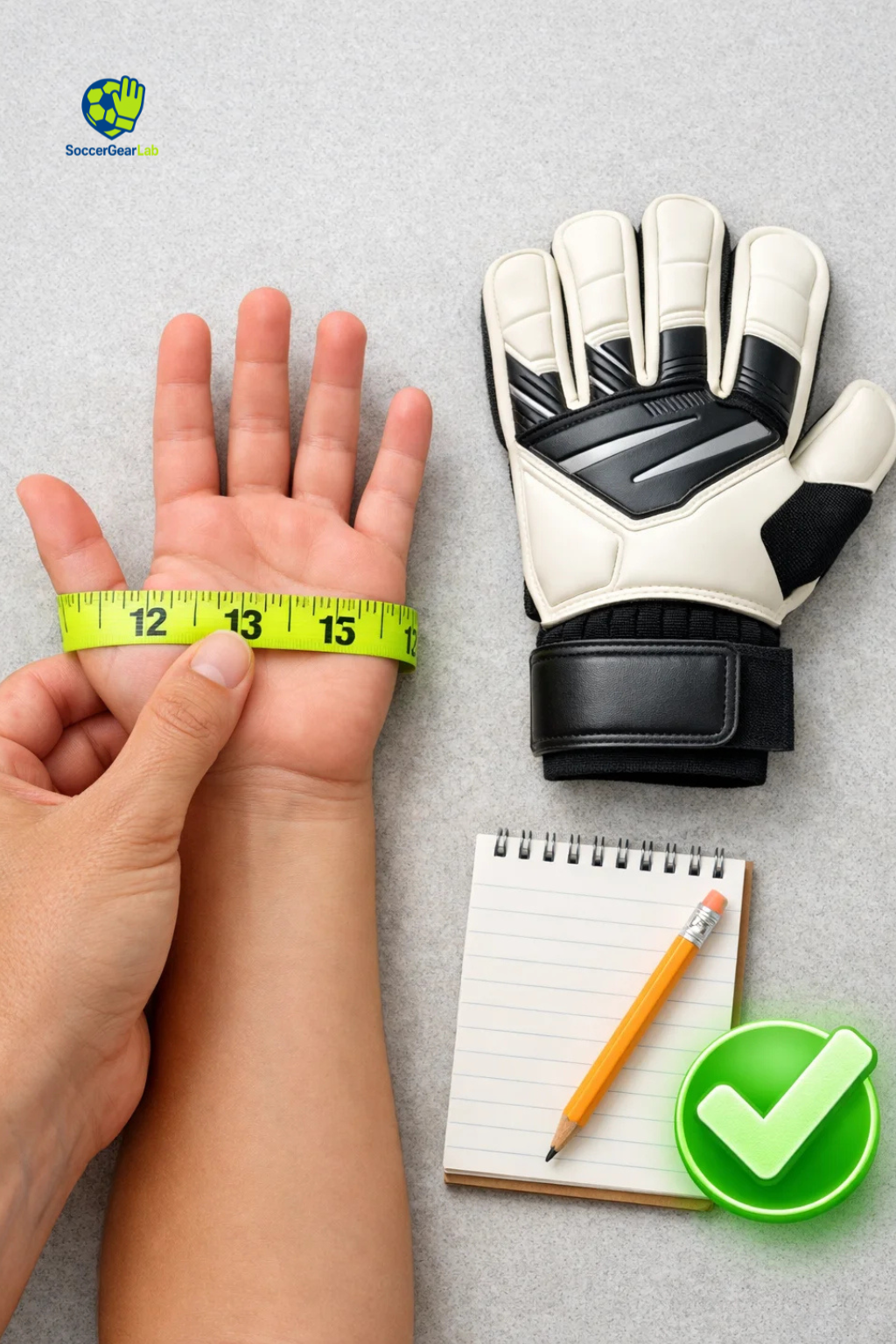
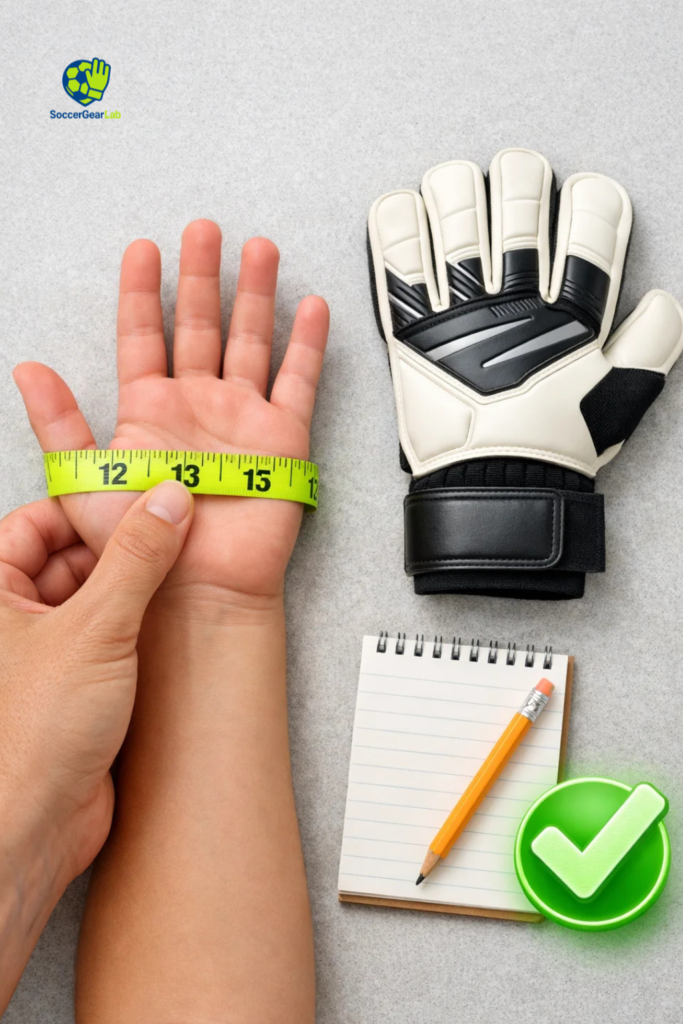
- Ask your child to open their hand naturally.
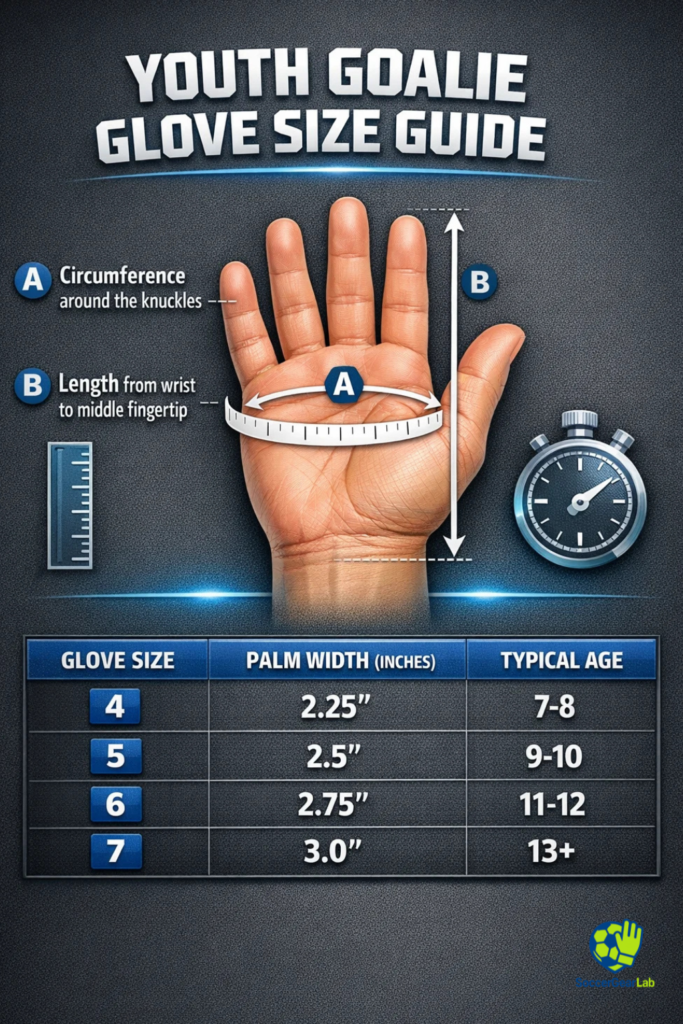
- Wrap the tape measure around the widest part of the hand, usually across the knuckles, not including the thumb.
- Note the measurement in inches or centimeters.
Method 2: Measure hand length
You can also measure from the base of the palm to the tip of the middle finger.
This helps when a child has especially long or short fingers for their palm size.
Best practice for parents
Use both measurements if possible, then compare them with the brand’s size chart. If one measurement points to one size and the other points to another, the brand’s fit notes become important.
For example, a glove with a roomier cut may work better at the smaller size, while a tighter negative cut may require moving up.
Youth goalie glove size chart
This general chart is a useful starting point for youth players. It is not universal, but it helps narrow the range before checking a specific brand.
| Youth Glove Size | Approx. Hand Circumference | Typical Age Range |
|---|---|---|
| Size 3 | 5 to 5.5 inches | 4 to 6 years |
| Size 4 | 5.5 to 6 inches | 6 to 8 years |
| Size 5 | 6 to 6.5 inches | 8 to 10 years |
| Size 6 | 6.5 to 7 inches | 10 to 12 years |
| Size 7 | 7 to 7.5 inches | 12+ years or transition to junior/adult fit |
A few important notes:
- age ranges are rough estimates, not sizing rules
- hand shape matters as much as age
- different glove cuts can change how snug or roomy a size feels
- some older kids may move into adult entry-level sizes sooner than expected
If a retailer provides a brand-specific chart, use that over a general chart.
How goalie gloves should fit
This is where many parents get stuck. The best youth goalie glove fit is usually snug but not tight.
Your child should be able to open and close their hand naturally. The glove should feel secure around the palm and fingers without excess empty space.
What a good fit looks like
A well-fitting pair of youth goalkeeper gloves should have:
- fingertips that sit close to the end without pressing hard against them
- a secure wrap around the palm and backhand
- no major bunching in the fingers
- enough flexibility for catching and throwing
- a wrist closure that feels supportive without digging in
How much room should be at the fingertips?
A small amount of room at the tip is normal. You do not want the fingers jammed into the end. But you also do not want obvious extra space that causes flopping or delayed contact with the ball.
For most kids, a little room is fine. Too much room is not.
Snug is different from restrictive
Parents sometimes worry that a glove that fits properly feels too close. That is understandable, especially if they are used to buying regular winter gloves with extra growing room.
Goalie gloves work differently. They need a performance fit. A little close is normal. Restrictive is not.
If your child says the gloves pinch, press on the fingertips, or feel hard to close, they are probably too small.
Common sizing mistakes parents make
Sizing errors are very common, especially for first-time goalkeeper families.
Buying based on age alone
Age can help narrow the range, but it should never be the only factor. Hand size varies too much.
Going too big to “make them last”
This is probably the most common mistake. It makes sense financially on paper, but oversized gloves often hurt performance enough that the money saved is not worth it.
A child learning to catch should not be swimming inside their gloves.
Ignoring glove cut
Not all goalie gloves fit the same way. Some cuts feel more spacious, while others fit closer to the fingers.
Common cuts include:
- Flat cut: roomier, often a comfortable option for beginners
- Roll finger: more wrapped feel around the fingers
- Negative cut: snugger, tighter fit, often preferred by more advanced keepers
For younger kids or newer goalkeepers, slightly roomier cuts are often easier to adapt to.
Overlooking the wrist closure
A glove can fit the hand reasonably well but still feel unstable if the wrist strap does not secure properly. Younger kids often do best with a closure they can manage without much help.
Should you size up for growth?
This is the big question for parents.
Usually, it is better to avoid sizing up too much.
A very slight amount of extra room is fine, especially if your child is near the top of a size range. But buying clearly oversized gloves for future growth often creates immediate problems with handling and comfort.
A better approach is this:
- buy for fit now, not six months from now
- allow a little space, not a full size of extra space
- prioritize control and confidence over maximum lifespan
If your child trains multiple times a week, gloves will wear down anyway. In many cases, growing room is not the only factor that determines how long the pair will last.
Match gloves vs training gloves for kids
Not every young goalkeeper needs an expensive match glove.
For many children, especially beginners, a durable training glove is the smarter buy. It usually lasts longer and costs less, which matters when kids are growing quickly.
Training gloves make sense when:
- your child is new to goalkeeping
- they play recreationally
- they train on rough surfaces
- you want durability over premium grip
Match gloves make more sense when:
- your child plays competitively
- they already train regularly as a goalkeeper
- grip and feel matter more at their current level
- you plan to keep a separate pair for games only
Many parents end up with one practical training pair and one better-fitting game pair once their child becomes more committed to the position.
Signs it is time for a new pair
Even well-sized goalie gloves do not last forever.
You may need to replace them if you notice:
- fingertips pressing firmly against the ends
- visible splitting or stress in the finger seams
- worn palm latex with very poor grip
- wrist straps that no longer secure properly
- complaints of discomfort during play
- difficulty getting the gloves on or off
Growth and wear usually show up together in youth gloves. Sometimes the glove is not just old. It is also now too small.
Tips for buying youth goalie gloves online
Buying online gives you more options, but it also increases the risk of getting the wrong size.
These tips help:
Check the brand size chart every time
Do not assume one size will translate perfectly across brands.
Read fit notes and reviews
Reviews often reveal whether the glove runs small, large, narrow, or wide.
Measure both hands
If one hand is slightly larger, use the larger measurement.
Look at the return policy
This matters more than many parents realize. Gloves that seem right on paper may still fit awkwardly in person.
Prioritize function over looks
Bright colors are fun, and kids naturally care about design. That is fine. But fit, comfort, and closure should come first.
Final thoughts
Choosing the right youth goalkeeper glove size does not need to be complicated, but it does need a little more thought than picking by age and hoping for the best.
Start with a hand measurement. Use a brand chart when available. Aim for a snug, secure fit with just a little room at the fingertips. Avoid buying gloves that are obviously too big in the name of saving money.
For young keepers, the right glove size supports better handling, better comfort, and a more confident experience in goal. That matters far more than squeezing an extra season out of a glove that never fit properly in the first place.
FAQs
What size goalie gloves should a 10-year-old wear?
There is no single correct size for every 10-year-old. Many fall around youth size 5 or 6, but hand measurement is much more reliable than age alone.
Should youth goalie gloves be tight?
They should feel snug and secure, not loose or restrictive. A close fit helps with control, but the gloves should not pinch the fingers or limit movement.
Is it okay to buy goalie gloves one size bigger?
A small amount of extra room can be okay, but going a full size too big often makes catching and ball control harder for young players.
How do I measure my child for goalie gloves?
Measure around the widest part of the hand across the knuckles, excluding the thumb. You can also measure from the base of the palm to the tip of the middle finger for a more complete fit check.
Do goalkeeper glove sizes vary by brand?
Yes. Size charts and glove cuts can differ, so always check the specific brand’s sizing guide before buying.
What is the best glove cut for beginner kids?
A roomier cut, such as a flat cut, is often a comfortable and practical option for beginners. Tighter cuts may suit more experienced players who want a closer fit.