Youth Goalie Jersey Size Guide: How to Measure Your Child and Get the Right Fit Every Time (2026)
By Carlos Alvares
As an Amazon Associate I earn from qualifying purchases. This post contains affiliate links which means I may receive a small commission at no extra cost to you if you make a purchase through a link. I only recommend gear I have personally researched and evaluated.
Youth Goalie Jersey Sizing: Why Getting This Wrong Costs More Than the Jerse
Most parents buying a youth goalie jersey make one of two sizing mistakes.
They buy their child’s standard shirt size — assuming goalkeeper jersey sizing works the same way as regular clothing. Or they buy one size larger than needed — assuming the extra room will give their child freedom of movement.
Both assumptions produce the same result. A jersey that sits wrong on a young goalkeeper in ways that directly affect performance and protection simultaneously.
A youth goalie jersey that is too small pulls across the shoulders during full extension saves — restricting exactly the movement that diving across goal demands. A jersey that is too large bunches up under the arms during dives and causes the elbow padding — the single most important protection feature — to slide away from the joint and sit uselessly on the forearm instead.
Neither is a comfortable problem to discover on match day. Both are completely avoidable with a three-minute measurement process before ordering.
This guide gives you that measurement process — every step clearly explained — plus the brand-specific sizing notes that make the difference between ordering the correct size first time and exchanging a jersey that arrived wrong.
Why Youth Goalie Jersey Sizing Runs Differently From Standard Shirts
The cut of a goalkeeper jersey is fundamentally different from a standard soccer shirt — and that difference affects how sizing works in ways that catch most parents off guard.
A standard outfield soccer shirt is cut generously through the torso and arms — designed for general athletic movement across a range of body types. A youth goalkeeper jersey is cut more athletically — slimmer through the torso to prevent bunching during diving saves while maintaining specific dimensions through the shoulders and arms for goalkeeper movement.
The practical result is that the same child may wear a size 10 to 12 in a standard soccer shirt and a size 12 to 14 in a goalkeeper jersey from the same brand — not because the goalkeeper jersey is smaller but because the athletic cut distributes the fit differently across the body.
This is why the standard advice — buy your child’s usual shirt size — consistently produces incorrectly fitting goalkeeper jerseys for parents who follow it without measuring first.
The Three-Measurement Method
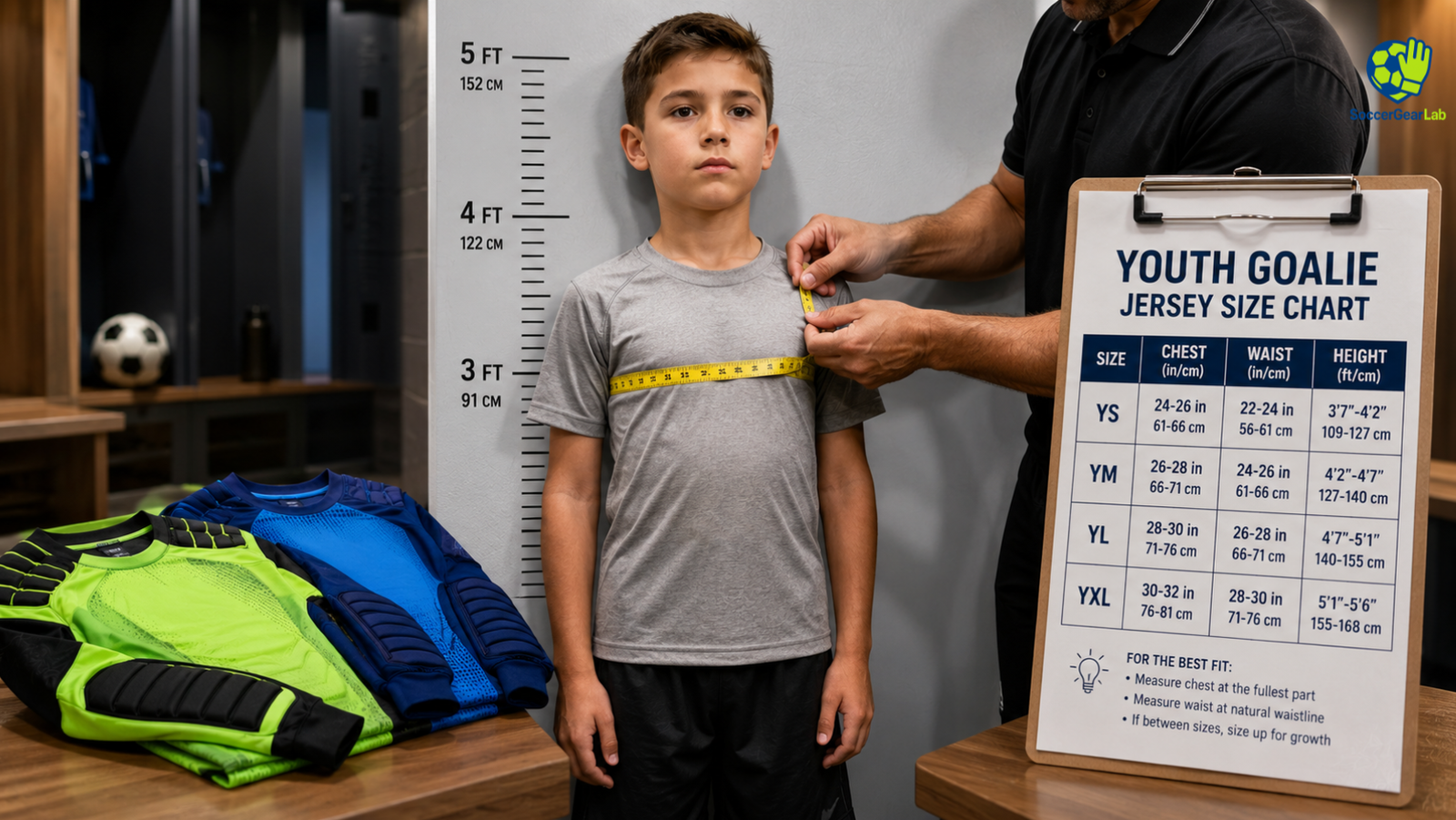
These three measurements take under three minutes and eliminate every sizing uncertainty before you order.
Measurement 1 — Chest Circumference
Wrap a soft measuring tape around the fullest part of your child’s chest — horizontally level under the armpits. Keep the tape snug but not tight — you want the measurement to reflect the chest at rest not compressed.
Record this measurement. This is the primary sizing reference for every brand size chart. Most goalkeeper jersey size charts are built around chest circumference first and age second — always use the measurement not the age when the two produce different sizes.
Measurement 2 — Sleeve Length
Start at the base of the back of the neck — the prominent bone at the top of the spine. Run the tape over the shoulder following the natural curve of the arm down to the wrist bone.
This measurement is critical specifically for padded goalkeeper jerseys — and it is the one most parents skip. Here is exactly why it matters.
The elbow padding in a youth goalie jersey is positioned to sit over the elbow joint during a dive. If the sleeve length is too short the padding rides above the joint — leaving the elbow unprotected at the moment of ground contact. If the sleeve is too long the padding sits below the joint on the forearm — equally useless for elbow protection.
The sleeve length measurement tells you whether the padding will actually sit where it needs to be on your child’s arm — not just whether the jersey fits in general.
Measurement 3 — Torso Length
Measure from the top of the shoulder straight down to where your child’s hip bone sits — roughly where the top of their shorts waistband would sit.
This measurement confirms whether the jersey will cover the lower back during diving saves. A jersey that is long enough standing upright but too short through the torso will ride up and expose the lower back during forward bends and dives — producing the lower back abrasion that parents of young goalkeepers recognize immediately.
How to Use Your Measurements
With chest circumference sleeve length and torso length recorded — match them against the specific brand size chart for the jersey you are purchasing.
The rule when measurements fall between sizes is always the same regardless of brand — size up. A slightly roomier fit is always preferable to restricted movement during a diving save. The exception is jerseys specifically noted as slim or athletic cut — these should be sized up regardless of where your child’s measurements fall within the range.
Brand-Specific Sizing Notes
Every brand on the verified youth goalie jersey list has specific sizing characteristics that affect which size to order. Here is the honest breakdown for each:
Nike — Size Up for Athletic Cut
Nike goalkeeper jerseys including the Gardien V run slim. The athletic cut sits closer to the body than standard Nike soccer shirts — which is intentional and correct for a goalkeeper jersey but catches parents off guard when they order based on their child’s usual Nike size.
If your child’s measurements fall within a size range on the Nike chart — order the larger size. If they are solidly within a size — order true to chart. Nike sleeve lengths are accurate to chart — the slim torso fit is the primary adjustment needed.
Adidas — True to Size
Adidas goalkeeper jerseys including the Tiro 26 GK run consistently true to size. The chest measurement maps accurately to the Adidas size chart without the slim-cut adjustment that Nike requires. Check the sleeve length measurement carefully — Adidas sleeve lengths vary between youth sizes more than chest circumference does.
Storelli — Follow Chart With Layer Allowance
Storelli ExoShield jerseys run true to athletic size — but the compression construction sits closer to the body than standard alternatives. If your child plans to layer a compression undershirt underneath in cold weather — size up one from your chest measurement. For standalone summer use the chart measurement is accurate.
Reusch — True to Size
Reusch goalkeeper jerseys run true to size with consistent sizing across their youth range. Note that Reusch is one of the few brands where the torso length measurement is particularly important — Reusch jerseys sit shorter through the torso than equivalent Nike or Adidas alternatives. If your child has a longer torso relative to their chest size consider sizing up to ensure adequate lower back coverage during dives.
KELME — Size Down From Chart
This is the most important brand-specific sizing note on this list. KELME goalkeeper jersey sizing is widely documented in Amazon reviews as running significantly larger than the chart indicates. Multiple parents report ordering by age recommendation and receiving a jersey that is two sizes too large for their child.
The reliable approach for KELME is to order based on your chest circumference measurement and then go one size smaller than the chart suggests. If the chart suggests size 10 to 12 for your child’s chest measurement — order size 8 to 10. Read the most recent Amazon reviews for the specific colorway you are ordering before purchasing — sizing consistency has varied across production runs.
Vizari — Slim in Torso
Vizari Arroyo jerseys run slim through the torso with adequate arm room. Broader body types should size up one from their chest measurement. The sleeve length is accurate to chart — the torso fit is the primary consideration for correct Vizari sizing.
DRHOM — Size Up at Least One
DRHOM jerseys run small across their youth range. Size up at least one size from your child’s standard shirt size regardless of which size the chart suggests for their age. Ordering true to age consistently produces jerseys that are too small — the sleeve length in particular runs short which shifts the elbow padding above the joint.
The Three Fit Checks Before Every Match
After the jersey arrives these three checks confirm whether the sizing is correct — and should become the pre-match routine for every goalkeeper parent:
Raise both arms fully above the head. The jersey should stay down across the torso and the elbow pads should remain positioned at the elbow joint. If the pads slide toward the forearm the jersey is too small.
Bend forward at the waist as if diving forward. The back of the jersey should still cover the lower back. If it rides up and exposes skin the torso is too short for your child’s proportions — exchange for the next size up.
Reach as wide as possible to one side — simulating a full extension dive across goal. The jersey should stretch with the movement without pulling across the back or restricting the shoulder. If there is meaningful resistance at full extension the jersey is restricting goalkeeper-specific movement regardless of how it looks standing still.
If all three checks pass — the sizing is correct.
Quick Reference — Youth Goalie Jersey Sizing by Brand
| Brand | Sizing Tendency | Action |
|---|---|---|
| Nike Gardien V | Runs slim — athletic cut | Size up if between sizes |
| Adidas Tiro 26 GK | True to size | Order to chart measurement |
| Storelli ExoShield | True to size — compression fit | Size up if layering underneath |
| Reusch Match II | True to size — shorter torso | Size up for longer torso proportions |
| KELME Kids Kit | Runs significantly large | Size down one from chart |
| Vizari Arroyo | Slim in torso | Size up for broader body types |
| DRHOM Youth Boys | Runs small | Size up at least one always |
Ready to find the right jersey in the right size? our complete Best Youth Goalie Jersey guide covers six verified Amazon picks across every budget and playing surface — with honest assessments of what each one delivers and who it serves best.
Already sorted on the jersey? Make sure the gloves fit correctly too. Our Youth Goalie Gloves Size Chart covers the exact measurement method for every goalkeeper glove brand — including the Reusch half-size adjustment that catches most parents out.
The Bottom Line
Youth goalie jersey sizing is not the same as standard shirt sizing — and ordering without measuring first is the single most common and most avoidable mistake in youth goalkeeper equipment purchasing.
Three measurements — chest circumference sleeve length and torso length — take under three minutes and eliminate every sizing uncertainty. Match them to the specific brand size chart using the brand notes above. When in doubt size up. Run the three fit checks when the jersey arrives.
Get the sizing right and the jersey does its job — protecting your child from elbow abrasion moving freely during saves and staying in place through ninety minutes of competitive play. Get it wrong and none of those things happen regardless of how good the jersey specification is.
Measure first. Order once. And give your young goalkeeper a jersey that fits correctly from the first dive of the season.
FAQ:
Does a youth goalie jersey size the same as a standard soccer shirt?
No — and this is the most common sizing mistake parents make. Goalkeeper jerseys are cut more athletically than standard outfield shirts — slimmer through the torso to prevent bunching during dives with specific dimensions through the shoulders and arms for goalkeeper movement. The same child typically needs one size larger in a goalkeeper jersey than their standard soccer shirt size.
How do I know if the elbow padding is sitting correctly?
With the jersey on have your child bend their elbow to approximately ninety degrees — the natural catching position. The padding should sit directly over the elbow joint. If it sits above the joint toward the upper arm the sleeve is too short. If it sits below the joint on the forearm the sleeve is too long. Either misalignment means the padding will not protect the elbow during a diving save regardless of its quality.
My child is between sizes on the brand chart — which should I order?
Always order the larger size when between sizes on a goalkeeper jersey size chart. The single most common fit problem parents encounter is a jersey that restricts shoulder and arm movement during full extension saves — which happens when the jersey is too small. A slightly roomier fit never causes the same problem.
Why does KELME sizing run so large compared to other brands?
KELME sizing charts are based on European size standards that map differently to actual garment dimensions than US parents expect. The consistent pattern in Amazon reviews — across multiple colorways and production runs — is that KELME jerseys measure approximately two sizes larger than the chart indicates for US children. Order based on chest circumference measurement and go one size smaller than the chart suggests.
Should I size up for a goalkeeper jersey my child will grow into?
No — for goalkeeper jerseys specifically this approach is counterproductive. A jersey that is too large causes the elbow padding to sit incorrectly on the arm and allows the jersey to bunch up during dives. Buy for your child’s current measurements. Goalkeeper jerseys at most budget price points are not a significant enough investment to justify wearing incorrectly fitted protection equipment for a season.
Does the sleeve length matter more for padded or unpadded jerseys?
It matters more for padded jerseys — but it matters for both. For padded jerseys the sleeve length determines whether the elbow pads sit at the correct position on the arm. For unpadded jerseys the sleeve length affects how much arm coverage the jersey provides during ground contact. In both cases the sleeve length measurement taken from base of neck to wrist bone is the most reliable way to confirm correct fit before ordering.
Related Guides
- Best Youth Goalie Jersey 2026 — The Complete Parent Guide
- Best Padded Youth Goalie Jersey 2026: 4 Picks That Actually Protect Young Goalkeepers
- Best Youth Goalie Gloves 2026 — The Complete Parent Guide
- Youth Goalie Gloves Size Chart: How to Choose the Right Fit
Have a specific sizing question about a jersey on this list? Drop it in the comments — every question gets a real answer.