Youth Goalie Gloves: How Long They Really Last (And How to Make Them Last Longer)
By Carlos Alvares
As an Amazon Associate I earn from qualifying purchases. This post contains affiliate links which means I may receive a small commission at no extra cost to you if you make a purchase through a link. I only recommend gear I have personally tested and thoroughly evaluated.
Youth Goalie Gloves Lifespan: The Honest Answer Nobody Gives You
Every goalkeeper parent eventually asks the same question.
How long should youth goalie gloves actually last?
And the honest answer — the one most buying guides skip entirely — is that it depends far less on how much you spent and far more on three specific factors that most parents never think about until they are already replacing their second pair of the season.
I have watched brand new premium gloves get destroyed in three weeks. And I have watched basic mid-range pairs survive a full eight-month season without meaningful deterioration. The difference between those two outcomes was not price. It was surface, technique, and care routine.
This guide gives you the complete picture — what realistic youth goalie gloves lifespan actually looks like at different usage levels, exactly what shortens it, and the specific habits that genuinely extend it without sacrificing the grip performance your child needs in goal.
What Realistic Lifespan Actually Looks Like
Before getting into what affects lifespan it is worth establishing what realistic expectations look like at different usage frequencies — because most parents either expect too much or replace gloves unnecessarily early.
| Usage Level | Expected Lifespan |
|---|---|
| Light use — 1 to 2 sessions weekly on grass | 8 – 12 months |
| Regular use — 2 to 3 sessions plus weekend matches | 4 – 6 months |
| Heavy use — 3 to 5 sessions weekly | 2 – 4 months |
| Regular use on artificial turf | Often significantly shorter |
These are realistic averages with basic care — not worst case scenarios and not optimistic marketing claims.
Youth goalie gloves wear out faster than adult gloves for reasons that are structural and unavoidable rather than indicators of poor quality. Young goalkeepers are still developing proper technique — they fall more frequently push off with open palms more often and drag their hands more regularly than experienced adult goalkeepers who have automated correct ground recovery habits. That additional contact with the surface accelerates latex wear in ways that are predictable and manageable once you understand them.
The Four Things That Actually Determine How Long Youth Goalie Gloves Last
1. Playing Surface — The Single Biggest Factor
If there is one variable that determines youth soccer goalie gloves lifespan more than any other it is the surface your child plays on.
Natural grass is relatively forgiving on latex. The soft ground absorbs impact during dives. The grass itself provides cushioning between the latex palm and the hard surface below. A well-maintained grass pitch is where goalkeeper gloves perform longest.
Artificial turf is the opposite. The synthetic fibers are abrasive. The rubber crumb infill embeds itself in latex pores during every ground contact. The surface provides no cushioning during dives — the full force of impact transfers directly into the latex palm. Goalkeepers training regularly on artificial turf can expect their gloves to wear at two to three times the rate of equivalent grass use.
Hard ground, concrete, and asphalt surfaces accelerate latex degradation further still. Goalkeeper gloves should never be used on concrete or hard paved surfaces — the latex will not survive more than a handful of sessions.
The practical implication is straightforward. If your child trains primarily on artificial turf build the shorter replacement timeline into your budget and prioritize durability focused gloves over the softest most grippy latex available.
2. Ground Recovery Technique — The Factor Parents Rarely Consider
This is the single most underappreciated factor in youth goalkeeper glove lifespan — and the one where a simple habit change produces the most immediate measurable improvement.
Most latex damage on youth goalie gloves does not happen during catches. It happens during recovery. Every time a young goalkeeper pushes themselves off the ground after a dive they make direct contact between the latex palm and the playing surface. Multiply that by the number of training sessions in a season and the cumulative abrasion is significant.
The correct recovery technique — pushing off with a closed fist rather than an open palm — keeps the latex palm off the surface entirely during recovery. This single change extends glove lifespan meaningfully without any other intervention.
Young goalkeepers who learn this habit early protect their gloves automatically. Those who push off with open palms every time they get up from a dive accelerate latex wear in a way that no care routine can fully offset.
Teaching this technique costs nothing. The impact on glove lifespan is real and immediate.
3. Care Routine — Where Most Lifespan is Lost
The majority of premature youth goalie gloves deterioration is not caused by use. It is caused by what happens — or does not happen — in the hours after use.
Goalkeeper glove latex is porous. Sweat deposits salt crystals into those pores during every session. Those salt crystals are corrosive to latex compounds — breaking them down from the inside and accelerating the brittleness and grip loss that parents notice as premature wear.
Water alone does not remove salt deposits. Dish soap and laundry detergent contain chemicals that actively damage latex. And heat drying permanently bakes latex rigid in a single cycle.
The five most common care mistakes — and what to do instead — are covered in detail in the section below.
4. Using Match Gloves for Training — The Most Expensive Mistake
Premium and match level goalkeeper gloves use soft tacky latex formulations engineered for maximum grip performance. That softness produces outstanding grip. It also produces significantly faster latex wear under the abrasion demands of regular training.
A child who uses their match gloves for every training session is subjecting the most delicate latex available to the highest abuse conditions possible. The combination is predictably destructive.
The solution that every serious youth goalkeeper coach recommends — and that most parents discover only after replacing expensive gloves far too quickly — is maintaining two pairs: a more durable pair specifically for training and a better quality pair reserved for matches.
The training pair takes the daily abuse of sessions on turf and grass. The match pair is used only for competitive games and maintained at peak condition throughout the season. This rotation extends the life of the match pair significantly — often doubling it — while keeping the training pair performing adequately because it is not being held to match day standards.
Signs It Is Time to Replace Youth Goalie Gloves
Knowing when to replace gloves is as important as knowing how to extend their life. Replacing too early wastes money. Replacing too late means a young goalkeeper is training and competing with equipment that is actively working against them.
Replace youth goalie gloves when you notice any of these signs:
Grip is noticeably and consistently reduced. All latex loses some grip over time with use. When the grip loss becomes noticeable in normal play — balls that should be caught cleanly are slipping — the latex has reached end of useful life regardless of how the gloves look.
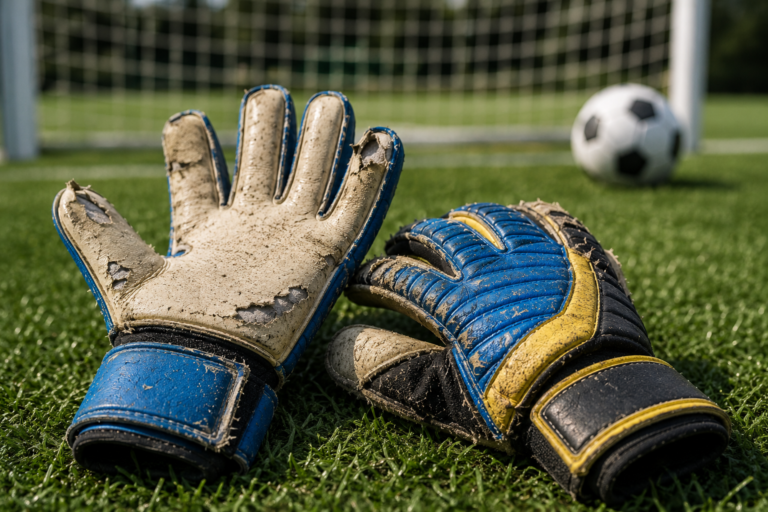
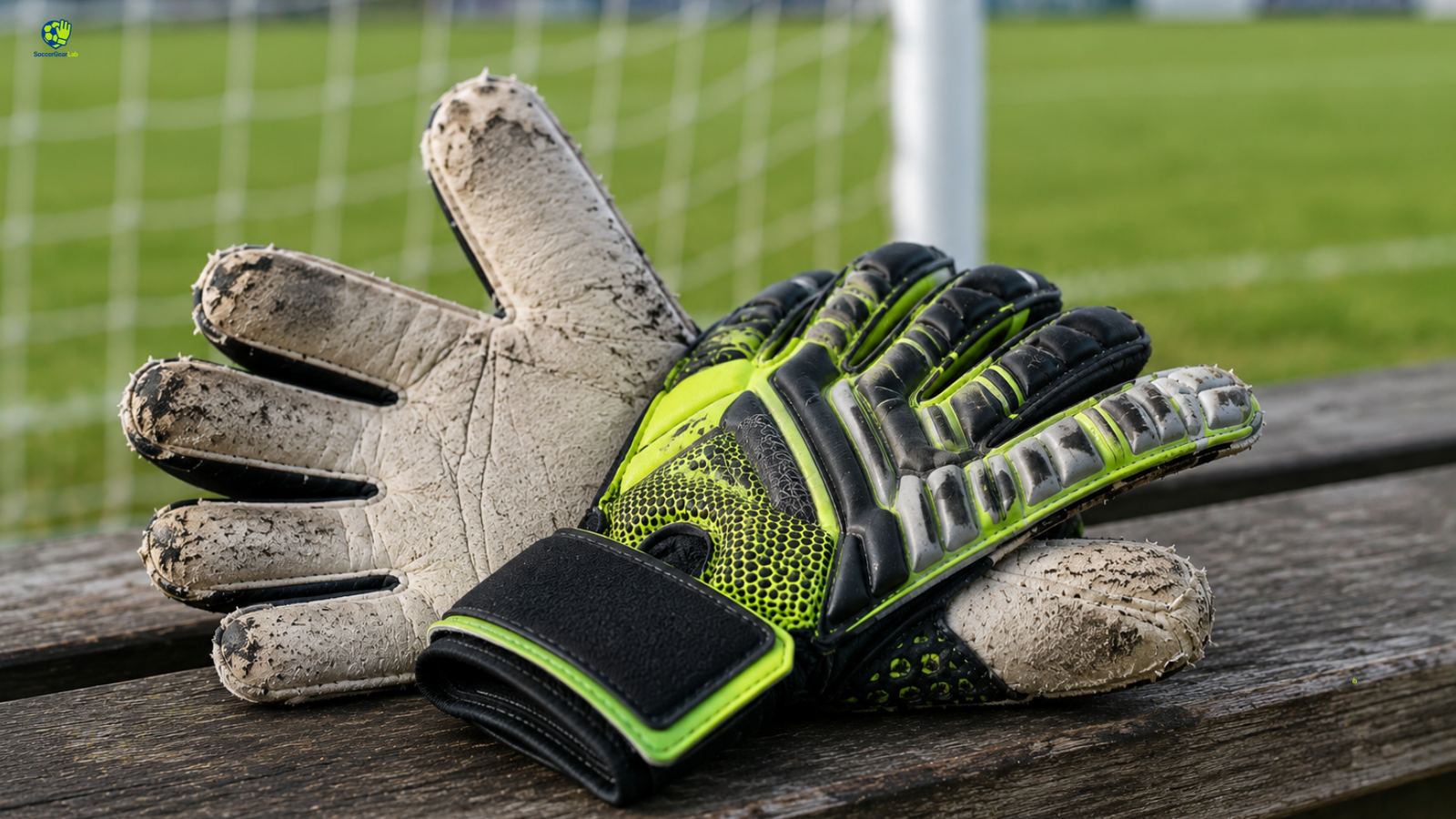
The latex surface is smooth or shiny. Fresh goalkeeper latex has a textured slightly matte surface. When that surface becomes visibly smooth and shiny the porous structure that creates grip has been worn flat. No care product restores structural latex degradation.
Visible holes or tears in the palm. Once the latex layer has worn through to the backing material the glove has no remaining grip surface. This is unrepairable.
The gloves feel stiff and dry even after washing. Latex that has permanently lost its moisture content due to heat damage or salt degradation will feel stiff and inflexible even when properly washed and damp. This stiffness does not recover.
The fit has changed noticeably. This is growth rather than wear but the effect is the same — a glove that no longer fits correctly no longer performs correctly. When the fingertips are pressing firmly against the end of the glove it is time for the next size regardless of the condition of the latex.
The young goalkeeper’s confidence is declining. This is the most practically important sign. A goalkeeper who has started hesitating on shots that they would previously have attacked is often responding to equipment that has stopped being reliable without being able to articulate why. Trust this signal.
How to Make Youth Goalie Gloves Last Significantly Longer
These are not theoretical suggestions. Each one produces a measurable difference in how long youth goalie gloves perform at the level your child needs.
Rinse After Every Single Session — Without Exception
This is the most impactful single care habit available and the most consistently skipped.
Rinse both gloves thoroughly under lukewarm water — never hot — within an hour of the final session or match. Gently work the palms with your thumbs to remove surface dirt and loose debris. The rinse does not need to be elaborate — two to three minutes of thorough rinsing after every use removes the salt deposits before they have time to begin degrading the latex from inside the pores.
The difference between gloves rinsed after every session and gloves rinsed occasionally is visible by mid-season. The rinsed pair maintains grip and flexibility. The neglected pair becomes brittle and loses its surface texture progressively from the first missed wash onward.
Never use dish soap or laundry detergent. Both contain compounds that strip the natural moisture from latex. A dedicated goalkeeper glove wash removes dirt and salt without damaging the latex compounds that provide grip.
Air Dry Only — Always
This is the rule that most parents break once and regret immediately.
After rinsing press — never wring — both gloves between two clean dry towels to remove excess moisture. Then hang them open in a cool shaded location with good air circulation. A hook or glove clips in a ventilated room is ideal. Allow 12 to 24 hours for complete drying before storage.
Never use a tumble dryer. Never place gloves near a radiator or heater. Never leave them in direct sunlight or in a hot car. Heat permanently destroys latex compounds in a single exposure — the resulting stiff cracked palm cannot be softened or restored by any subsequent care.
The most expensive care mistake a parent can make is rushing the drying process once.
Teach Correct Ground Recovery
As covered above — push up with a closed fist not an open palm. This is the ground recovery technique used by professional goalkeepers at every level for exactly this reason. The latex palm stays off the surface during recovery. The accumulated abrasion of an entire season of training sessions never happens.
Teach it on the first day. Reinforce it consistently. The habit takes one or two sessions to become automatic and then protects every pair of gloves the child owns for the rest of their goalkeeping career.
Keep a Dedicated Training Pair
Separate gloves for training and matches is not a luxury recommendation. For any child training twice weekly or more it is the most cost-effective approach to youth goalkeeper glove ownership.
A durable mid-range pair handles the daily demands of training — the surface contact the repetition the varying weather conditions. A quality pair is kept specifically for match days — maintained carefully between games and never subjected to the accumulated abuse of training frequency.
The training pair gets replaced when worn. The match pair lasts significantly longer because it is used only a fraction as often and maintained at peak condition throughout.
Rotate Between Two Pairs When Possible
If budget allows maintaining two pairs in rotation — even two pairs of the same training level glove — extends both pairs meaningfully. Allowing gloves 48 hours to fully dry and recover between intensive sessions preserves the latex compounds that repeated use without recovery accelerates degrading.
Even basic gloves last noticeably longer when rotated than premium gloves used every session without rest.
Store Correctly Between Sessions
Gloves stored balled up in a sealed gear bag after a session are being damaged between uses. Wet latex in a sealed environment is ideal for bacterial growth. The bacteria that cause persistent glove odor are the same bacteria actively degrading the latex foam structure.
After drying store gloves flat or hanging open — not compressed and not sealed. A breathable glove bag allows continued air circulation and keeps gloves in their correct shape between sessions.
Do More Expensive Youth Goalie Gloves Last Longer
This is the question most parents assume has an obvious answer. It does not.
More expensive goalkeeper gloves generally use softer more responsive latex formulations. That softer latex delivers outstanding grip — the kind that makes the most demanding catches feel confident and controlled. It also wears faster under abrasion demands than the denser more durable latex used in mid-range and training-oriented gloves.
The practical implication is genuinely counterintuitive. For a child who trains heavily on artificial turf a quality mid-range glove with durable latex will often outlast a premium match glove while delivering adequate grip for training demands. The premium glove is better — but not for training in conditions that will destroy its soft latex quickly.
The right approach is matching the glove specification to the use case:
For training: A durable mid-range glove with abrasion resistant latex. Something that handles the abuse of regular sessions on varying surfaces without rapid deterioration.
For matches: The best quality latex your budget allows. Used only for competitive games where grip performance matters most and durability demands are lower because frequency is lower.
This combination is not about buying two expensive pairs. It is about buying the right pair for each purpose — which frequently means the training pair costs less than the match pair and that is entirely correct.
Common Mistakes That End Gloves Early
These are the mistakes that consistently produce the three-weeks-and-done result that sends parents back to Amazon far sooner than necessary:
Buying professional level soft latex gloves for daily training. The best match day latex is the worst choice for heavy training use. The softness that makes it grip excellently makes it wear rapidly under abrasion.
Sizing too large to grow into. Oversized gloves contact the ground at different angles during dives creating additional abrasion beyond what correctly sized gloves experience. They also perform worse in every measurable way.
Machine washing. A single machine wash cycle — even on the most delicate setting — generates enough mechanical stress and heat to deform the palm latex and loosen the finger seams. Always hand wash only.
Letting gloves dry anywhere near heat. Radiators hot cars sunny windowsills tumble dryers. Any heat source permanently damages latex in a single exposure. This mistake cannot be undone.
Ignoring early wear signs. A glove showing early grip deterioration can have its remaining life extended meaningfully with proper care. Continuing to use it without intervention accelerates the deterioration that makes it unreplaceable at end of life.
Allowing use on concrete or hard paved surfaces. Goalkeeper gloves are not designed for concrete. A single session of diving on a hard paved surface produces latex damage equivalent to weeks of normal use.
The Bottom Line
Youth goalie gloves last between two months and a year depending on three factors that have nothing to do with how much you spent — surface, technique, and care routine.
The parents who replace gloves every few weeks are almost always making at least one of the common mistakes above. The parents whose children get a full season from a quality pair are almost always doing the basics consistently — rinsing after every session, air drying correctly, teaching proper ground recovery, and separating training from match gloves.
None of those habits are complicated. None of them require additional spending. They require consistency — and consistency in five minutes of post-session care produces measurable results across a full season of youth goalkeeper development.
Buy the right gloves for the right purpose. Care for them correctly after every use. And give your young goalkeeper equipment that performs at its best for as long as it possibly can.
.