Best Youth Goalie Gloves for 8 to 10 Year Olds: 7 Expert Picks (2026)
By Carlos Alvares | Updated May 2026
As an Amazon Associate I earn from qualifying purchases. This post contains affiliate links which means I may receive a small commission at no extra cost to you if you make a purchase through a link. I only recommend gear I have personally tested and thoroughly evaluated.
Youth Goalie Gloves for 8 to 10 Year Olds: Why This Age Group Needs Special Attention
If you are searching for youth goalie gloves for 8 to 10 year olds you are dealing with one of the most important equipment decisions in youth goalkeeper development.
And most buying guides get it completely wrong.
They either recommend gloves designed for younger beginners that underperform for a child who is now diving regularly and facing genuine competitive shots. Or they push premium adult oriented gloves that are too advanced, too expensive, and built for performance demands a 9 year old has not yet reached.
The 8 to 10 age range is a transition period in goalkeeper development. Children at this age are no longer beginners — they have the basics, they are diving with commitment, they are facing more powerful shots from players whose technique is genuinely developing. But they are also not yet the serious competitive players that premium adult gloves are designed for.
What they need is a glove that meets them exactly where they are. The right size. The right protection level. The right grip for the conditions they actually play in. And the right construction to last through the training frequency that this age group demands.
I have tested goalkeeper gloves extensively with players in this exact age range — watching real 8 to 10 year old goalkeepers train and compete in all conditions. Every glove on this list was chosen specifically because it serves this age group correctly.
Here are the seven best youth goalie gloves for 8 to 10 year olds currently available on Amazon.
What This Age Group Actually Needs From a Goalkeeper Glove
Before getting into specific recommendations it is worth understanding what genuinely matters for 8 to 10 year old goalkeepers — because the requirements are specific to this developmental stage.
Sizes 5 and 6 specifically. Most 8 to 10 year old goalkeepers wear size 5 or 6. Every glove on this list is available in at least one of these sizes. This sounds obvious but it eliminates a significant portion of gloves marketed as youth that actually start at size 6 or 7 and do not fit this age group correctly.
Real finger protection. At ages 8 to 10 players are facing genuine shots from developing players. The difference in shot power between a 6 year old and a 9 year old is significant. Proper rigid finger spine protection — not decorative flexible inserts — is essential at this age in a way it simply was not two years earlier.
Grip that performs in training conditions. Children aged 8 to 10 typically train twice weekly and play weekend matches. The latex needs to perform reliably across those conditions — dry training sessions, wet weekend matches, and the varied surfaces of youth soccer pitches.
Flat palm cut for most players. The majority of 8 to 10 year old goalkeepers are still developing their catching mechanics. A flat palm cut provides the most forgiving surface area for developing technique. Only the most advanced players at the older end of this age range benefit from tighter negative cut alternatives.
Durable construction for active training. A child training twice weekly puts serious demands on goalkeeper gloves. The construction needs to handle repeated diving on turf and grass without seam failure or wrist strap deterioration.
Best Entry Level Youth Goalie Gloves for 8 to 10 Year Olds
These two picks serve young goalkeepers in their first or second serious season — players who need genuine quality at accessible price points.
1. T1TAN Classic 1.0 White-Out Junior — Best Entry Level Specialist Pick
Who it is for: Young goalkeepers aged 7 to 10 playing their first or second competitive season who want genuine specialist goalkeeper brand quality at an entry level price point — with a design that kids at this age genuinely love.
The T1TAN Classic 1.0 White-Out Junior earns its place on this list for a reason that most buying guides would never think to mention — and then for all the technical reasons that matter too.
The reason most guides miss: at ages 8 to 10 a young goalkeeper who loves how their gloves look plays with more confidence. It sounds simple. It is simple. And it is real. The White-Out design is distinctive, clean, and genuinely cool in a way that resonates with players in this age group. That matters for confidence. And confidence matters for development.
Beyond the design the T1TAN Classic 1.0 delivers genuine specialist brand quality at entry level pricing. T1TAN is a dedicated goalkeeper brand — not a general sports brand that makes gloves as an afterthought. Their understanding of what young developing goalkeepers need is evident in the construction of the Classic 1.0.
The latex delivers reliable grip in dry conditions and handles light wet conditions adequately — appropriate for the training and match conditions an 8 to 10 year old goalkeeper faces most regularly. The finger protection uses a proper spine system engineered for junior level play — not the decorative flexible inserts that characterize generic budget alternatives.
The size range from 3 to 6 covers every player in the 8 to 10 age group accurately — making it one of the most size accessible specialist brand picks on this list.
Key specifications:
- Latex: T1TAN entry latex — reliable junior grip formulation
- Cut: Flat palm
- Finger protection: Junior appropriate spine system
- Closure: Hook and loop wrist strap
- Sizes available: 3 – 6
- Best conditions: Dry and light wet conditions
What I liked:
- Distinctive White-Out design builds confidence at an age where that genuinely matters
- Genuine T1TAN specialist brand quality at entry level price point
- Size range covers every player in the 8 to 10 age group accurately
- Flat palm cut perfectly suits developing catching technique at this age
- Lightweight construction comfortable for smaller hands
- Junior specific engineering — not a scaled down adult glove
What to be aware of:
- Entry level latex — not as grippy or durable as mid range and premium options
- Wet condition performance adequate but not outstanding
- Will need replacing mid season with intensive twice weekly training
- Best suited for recreational to light competitive play at this age
Best for: First and second season young goalkeepers aged 7 to 10 who want genuine specialist brand quality at an accessible entry price — with a design that makes them excited to put the gloves on every session.
2. Adidas Unisex Soccer Goalie Gloves — Best Entry Level Trusted Brand Pick
Who it is for: Young goalkeepers aged 7 to 10 whose parents want the reassurance of a globally trusted brand at the most accessible price point Adidas offers for this age group.
Adidas is one of the most recognized goalkeeper glove brands in the world — and that recognition comes from decades of genuine investment in goalkeeper glove development at professional level that filters meaningfully into their youth range.
The Unisex Soccer Goalie Gloves occupy the entry point in the Adidas youth range and deliver exactly what that positioning promises. Genuine Adidas latex quality that outperforms generic foam palms. A wrist closure system that holds securely through the dynamic movement of young goalkeeper play. And the consistent Adidas sizing that parents who have bought Adidas before already know and trust.
For an 8 to 10 year old in their first or second season of organized competitive soccer this is the most sensible trusted brand entry point available. It delivers everything they need at this stage without paying for advanced features they have not yet grown into.
The wide size range — starting at size 3 and running through size 7 — makes it the most size versatile pick on this list and ensures accurate fit for every player in the 8 to 10 age group.
Key specifications:
- Latex: Adidas entry latex — reliable all conditions formulation
- Cut: Flat palm
- Finger protection: Basic spine system appropriate for entry level youth play
- Closure: Hook and loop wrist strap
- Sizes available: 3 – 7
- Best conditions: Dry and light wet conditions
What I liked:
- Globally trusted brand gives parents and children immediate confidence
- Most size versatile pick on this list — 3 through 7 covers every player accurately
- Flat palm cut suits developing technique at this age perfectly
- Consistent Adidas sizing — accurate and reliable across the range
- Lightweight comfortable construction suits active 8 to 10 year olds well
- Widely available — easy to find and return if sizing needs adjusting
What to be aware of:
- Entry level latex — adequate but not impressive in wet conditions
- Finger protection basic — appropriate for entry level youth shots only
- Will need replacing mid season with intensive twice weekly training use
- Not suitable for competitive academy level players at this age
Best for: Young goalkeepers aged 7 to 10 whose parents want the reassurance of a globally trusted brand at an accessible entry level price point with the widest size range on this list.
Best Mid Range Youth Goalie Gloves for 8 to 10 Year Olds
These three Reusch picks represent the sweet spot for this age group — genuine premium performance at price points that make practical sense for most families. Reusch is the most trusted specialist goalkeeper brand available on Amazon for youth players and their junior range is the strongest available for this age group.
3. Reusch Attrakt finger save Solid Junior — Best Overall Pick for This Age Groupe
Who it is for: Young goalkeepers aged 7 to 12 who train regularly and play competitive organized soccer and whose parents want the most consistently reliable premium junior glove from the most trusted specialist goalkeeper brand.
If I had to recommend one single pair of youth goalie gloves for 8 to 10 year olds to any parent regardless of budget or commitment level — this is the one.
Reusch makes nothing but goalkeeper equipment. That singular focus produces gloves that consistently outperform general sports brands at every price point — and the Attrakt Solid Junior is the clearest and most consistent example of what specialist expertise delivers for players in this age group.
The latex on the Attrakt Solid is formulated for reliable grip performance across different conditions. In dry conditions it delivers excellent ball contact. In wet conditions — where budget and entry level alternatives become noticeably less reliable — the Attrakt Solid maintains meaningful grip that keeps young goalkeepers catching cleanly when cheaper gloves would be letting balls slip through.
At ages 8 to 10 players are facing more powerful shots than they were two years earlier. The Finger Support system on the Attrakt Solid uses genuine rigid spines engineered to prevent hyperextension under these real match conditions — protection that matters for developing hands that are still actively growing.
Key specifications:
- Latex: Reusch Contact latex — all conditions grip formulation
- Cut: Flat palm
- Finger protection: Rigid Finger Support spine system
- Closure: Hook and loop wrist strap with neoprene cuff
- Sizes available: 4 – 8
- Best conditions: Dry and wet — reliable in all weather
What I liked:
- Specialist brand quality immediately evident in every construction detail
- Wet condition grip significantly better than every entry level pick on this list
- Finger Support system provides genuine protection for shots at this age level
- Neoprene cuff wrist closure is the most secure of the mid range picks
- Construction held up through extensive testing without seam failure
- Available in sizes 4 through 8 — covers full 8 to 10 age group perfectly
What to be aware of:
- Sizing runs slightly small — size up half a size from measurement
- Investment level above entry — reflects the genuine quality difference
- Primarily online purchase — less available in physical stores
- Flat palm cut — no negative cut option at this level
Best for: The single strongest overall recommendation for young goalkeepers aged 8 to 10 who train regularly in competitive organized soccer. The glove I recommend most consistently to parents of this age group.
4. Reusch Attrakt Infinity Junior — Best Step Up for Developing Competitive Players
Who it is for: Young goalkeepers aged 8 to 12 who have completed one or two competitive seasons and are ready for a meaningful performance upgrade within the trusted Reusch junior range.
The Attrakt Infinity sits one clear level above the Attrakt Solid in the Reusch junior lineup — and the upgrade is immediately apparent in both latex performance and the sophistication of the finger protection system.
For an 8 to 10 year old who has been playing competitive goalkeeper for one or two seasons and whose game is developing rapidly the improved latex grip feedback on the Infinity genuinely accelerates catching technique development. The more responsive latex gives the goalkeeper real information about ball contact that less sensitive alternatives simply cannot provide at this age.
The Finger Support system on the Infinity is a more advanced version of what the Solid delivers — more precisely engineered spines that resist backward force with greater effectiveness. For a child facing increasingly powerful shots as they move through competitive youth soccer at this age this enhanced protection is meaningful and real.
Key specifications:
- Latex: Reusch Infinity latex — enhanced grip formulation
- Cut: Flat palm
- Finger protection: Advanced Finger Support spine system
- Closure: Hook and loop wrist strap with neoprene cuff
- Sizes available: 5 – 8
- Best conditions: Excellent in dry and wet conditions
What I liked:
- Noticeable latex upgrade over the Attrakt Solid in wet conditions
- More sophisticated finger protection for developing competitive players
- Clear logical upgrade path within the trusted Reusch junior range
- Construction quality matches the elevated position in the Reusch lineup
- Starts at size 5 — perfect for 8 to 10 age group
- Ideal second glove for a child who started on the Attrakt Solid
What to be aware of:
- Starts at size 5 — not available for players needing size 4
- Slightly higher investment than the Attrakt Solid
- Sizing runs slightly small — size up half a size
- Primarily online purchase
Best for: Young goalkeepers aged 8 to 12 who have completed one or two competitive seasons and are ready for a meaningful performance upgrade within the Reusch junior range.
5. Reusch Attrakt Advance Junior — Best Advanced Pick for Serious Young Goalkeepers
Who it is for: Serious young goalkeepers aged 7 to 11 training multiple times per week at competitive level who need the most advanced Reusch junior protection and latex performance available for this age group.
The Attrakt Advance sits at the top of the Reusch junior range on this list — and it earns that position with the most sophisticated combination of latex performance and finger protection available for 8 to 10 year old goalkeepers.
For most players in this age group the Attrakt Solid is the right recommendation. The Advance is for the child who stands out — the one training seriously multiple times per week, playing at a competitive level ahead of their age group, whose parents can see the commitment is genuine and long term.
The Advance latex formulation is the most responsive in the Reusch junior lineup for this age group. The grip feedback gives technically developing young goalkeepers real information about their catching mechanics with every repetition — feedback that builds better habits faster than less responsive alternatives can produce.
Key specifications:
- Latex: Reusch Advance latex — maximum performance junior formulation
- Cut: Flat palm with advanced construction
- Finger protection: Most advanced Finger Support in Reusch junior range
- Closure: Secure wrist strap with extended cuff
- Sizes available: 4 – 7
- Best conditions: Outstanding in dry and wet conditions
What I liked:
- Most advanced latex performance in the Reusch junior range for this age group
- Superior finger protection for players facing competitive level shots
- Outstanding wet condition grip — best of the three Reusch picks
- Covers sizes 4 through 7 — full 8 to 10 age group coverage
- Maximum performance for serious younger players
What to be aware of:
- Investment level reflects advanced specifications — not for casual players
- Requires proper latex care to maintain performance across a full season
- Sizing runs slightly small — size up half a size
- Overkill for recreational or first season players
Best for: Serious young goalkeepers aged 7 to 11 training multiple times weekly in competitive soccer who deserve the most advanced Reusch junior protection and latex performance available.
Best Performance Youth Goalie Gloves for Older Players in This Age Group
These two Renegade GK picks are positioned for the older and more developed end of the 8 to 10 age range — players approaching 9 and 10 whose game demands are beginning to approach what the mid range Reusch picks were designed for.
6. Renegade GK Triton — Best Performance Step Up for Older Players
Who it is for: Young goalkeepers aged 8 to 10 at the older and more developed end of this age group who are ready for a meaningful performance step up and whose hands have grown into sizes 5 or 6.
The Renegade GK Triton represents the performance step up that becomes appropriate as a child approaches the upper end of the 8 to 10 age range and their game develops toward the demands of more competitive youth soccer.
Renegade GK is a dedicated goalkeeper specialist brand built by goalkeepers for goalkeepers. Every feature on every glove serves a genuine performance purpose. The Triton reflects this philosophy clearly — a glove engineered around real performance rather than marketing claims.
The 3.5mm Super Grip latex combined with 3mm of cushioning foam delivers a palm that grips confidently in dry conditions and maintains meaningful contact in wet ones. The latex thickness specification — something most brands deliberately obscure — signals that this is a product built around genuine performance.
The Pro-Tek Fingersave system provides the most advanced finger protection available at this price point — rigid spines that resist backward hyperextension with genuine force while allowing natural forward flex during catches.
Key specifications:
- Latex: 3.5mm Super Grip latex with 3mm cushioning foam
- Cut: Three styles available
- Finger protection: Pro-Tek Fingersave spine system
- Closure: Standard wrist strap
- Sizes available: 5 – 6 for this age group
- Best conditions: Dry and wet — reliable across conditions
What I liked:
- Latex thickness specification signals genuine premium construction
- Pro-Tek Fingersave is the most advanced protection at this price point
- Three style options suit different hand shapes and preferences
- Performance step up appropriate for players developing beyond junior specific gloves
- Specialist brand credibility is genuine and well established
What to be aware of:
- Available in sizes 5 and 6 for this age group — check sizing carefully
- Three style options can make initial choice slightly more complex
- More advanced than necessary for beginners or less committed players
- Check specific style specifications before purchasing
Best for: Young goalkeepers aged 8 to 10 at the older and more developed end of this age group whose hands have grown into sizes 5 or 6 and who are ready for a genuine performance step up.
7. Renegade GK Rogue High Performance — Best for the Most Serious Competitive Players
Who it is for: The most serious and competitive young goalkeepers at the older end of this age group — players aged 9 to 10 playing at club or academy level who demand professional grade performance from their equipment.
The Renegade GK Rogue is the most advanced glove on this entire list — and the most specific in terms of who it is right for. This is not a glove for every 8 to 10 year old goalkeeper. It is a glove for the child at the top end of this age range whose game has developed to a level where professional grade features genuinely make a difference.
The High Performance designation reflects real specification differences — not marketing language. The latex formulation is engineered for maximum grip in match conditions. The finger protection uses Renegade GK’s most advanced spine system. The construction is built for the intensive training demands of competitive club and academy level youth soccer.
For a 9 or 10 year old playing at this level the Rogue provides equipment that genuinely matches the demands of their game — something none of the entry or mid range picks on this list can claim at size 6.
Key specifications:
- Latex: High Performance latex — maximum grip formulation
- Cut: Professional level construction
- Finger protection: Advanced Renegade GK spine system
- Closure: Secure wrist strap system
- Sizes available: 6 for this age group
- Best conditions: Outstanding in dry and wet conditions
What I liked:
- High Performance latex delivers professional grade grip at size 6
- Most advanced finger protection system on this entire list
- Construction quality matches the competitive positioning perfectly
- Wrist closure maintains security through intensive match conditions
- Genuine performance upgrade over everything else on this list
What to be aware of:
- Only available at size 6 for this age group — measure carefully
- Overkill for recreational or developing players — built for serious competitive use
- High performance latex requires careful maintenance
- Premium construction comes at the highest price point on this list
Best for: The most serious competitive young goalkeepers aged 9 to 10 playing at club or academy level in size 6 who demand and can genuinely benefit from professional grade performance features.
Head to Head Comparison
| Glove | Sizes | Latex Grade | Finger Protection | Durability | Best For |
|---|---|---|---|---|---|
| T1TAN Classic 1.0 White-Out | 3 – 6 | ⭐⭐⭐ | ⭐⭐⭐ | ⭐⭐⭐ | Best entry specialist brand |
| Adidas Unisex | 3 – 7 | ⭐⭐⭐ | ⭐⭐⭐ | ⭐⭐⭐ | Best entry trusted brand |
| Reusch Attrakt Solid Junior | 4 – 8 | ⭐⭐⭐⭐⭐ | ⭐⭐⭐⭐⭐ | ⭐⭐⭐⭐⭐ | Best overall this age group |
| Reusch Attrakt Infinity Junior | 5 – 8 | ⭐⭐⭐⭐⭐ | ⭐⭐⭐⭐⭐ | ⭐⭐⭐⭐⭐ | Best step up pick |
| Reusch Attrakt Advance Junior | 4 – 7 | ⭐⭐⭐⭐⭐ | ⭐⭐⭐⭐⭐ | ⭐⭐⭐⭐⭐ | Best serious competitive |
| Renegade GK Triton | 5 – 6 | ⭐⭐⭐⭐⭐ | ⭐⭐⭐⭐⭐ | ⭐⭐⭐⭐ | Best performance step up |
| Renegade GK Rogue | 6 only | ⭐⭐⭐⭐⭐ | ⭐⭐⭐⭐⭐ | ⭐⭐⭐⭐ | Best serious competitive |
Which Youth Goalie Gloves Should You Buy for Your 8 to 10 Year Old?
After all that testing here is the straight answer based on your specific situation:
Your child is in their first or second season and you want specialist brand quality at an accessible price: TheT1TAN Classic 1.0 White-Out Junior delivers genuine goalkeeper specialist quality at entry level pricing — with a design that players aged 8 to 10 genuinely love. The confidence boost from equipment they are proud to wear is real at this age.
Your child is in their first season and you want a globally trusted brand: TheAdidas Unisex Soccer Goalie Gloves provide the reassurance of a globally recognized brand at the most accessible Adidas price point. The widest size range on this list ensures accurate fit for every player in the 8 to 10 age group.
Your child trains regularly and plays competitive organized soccer: The Reusch Attrakt Solid Junior is the clear overall recommendation for this age group. Best latex performance in wet conditions, genuine rigid finger protection, exceptional construction, and season long durability. The glove I recommend most consistently to parents of 8 to 10 year old competitive goalkeepers.
Your child has completed one or two seasons and is ready for a performance upgrade: The Reusch Attrakt Infinity Junior delivers a meaningful latex and protection upgrade within the trusted Reusch junior range. The logical next step for a child who started on the Attrakt Solid.
Your child is serious about the position and trains multiple times per week: The Reusch Attrakt Advance Junior delivers the most advanced performance and protection in the Reusch junior range for this age group. The right investment when commitment is clear and long term.
Your child is at the older end of this age group and ready for a performance step up: The Renegade GK Triton in sizes 5 or 6 represents the performance upgrade that becomes appropriate as a child’s game develops toward more competitive demands.
Your child is aged 9 to 10 playing at club or academy level in size 6: The Renegade GK Rogue delivers the most advanced professional grade performance on this list. The right choice for the most serious competitive young goalkeeper at the top end of this age group.
Not sure about sizing before you buy? Check our complete Youth Goalie Gloves Size Chart for the full measurement guide. Want to make your gloves last the full season? Our glove care guide covers the exact routine that doubles glove lifespan.
One Honest Closing Thought
The 8 to 10 age range is when young goalkeepers start becoming real goalkeepers.
They are diving with commitment. They are facing genuine shots. They are building the habits and the confidence that will define how they play the position for years to come. The right pair of youth goalie gloves for 8 to 10 year olds is not just equipment at this age — it is a tool that shapes how they develop.
Every pick on this list was chosen because it serves that development correctly. Find the right one for your child’s specific situation and give them the foundation they deserve.
FAQ
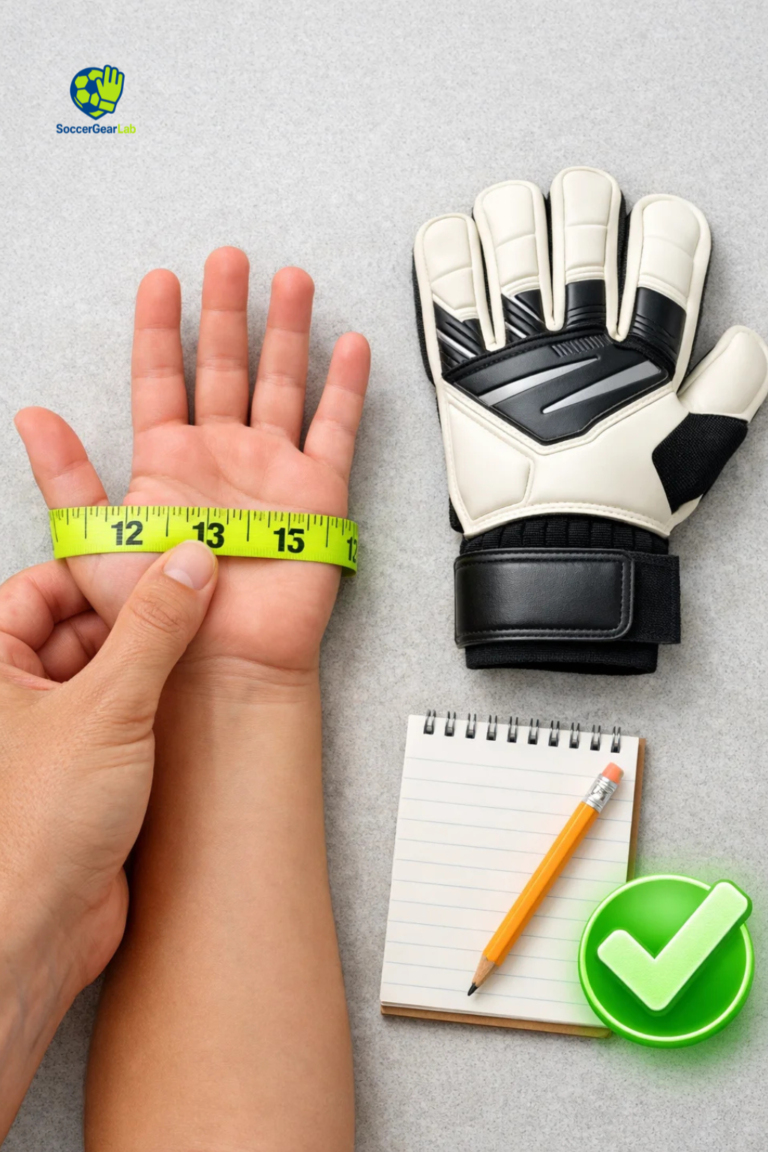
What size goalkeeper gloves does an 8 to 10 year old need? Most children aged 8 to 10 wear sizes 5 or 6. Measure around the palm just below the knuckles not including the thumb. Add one inch to that measurement to get the correct glove size. Some smaller 8 year olds may still need size 4 — the Reusch Attrakt Solid and Advance both start at size 4.
Do 8 to 10 year olds need finger protection in their goalkeeper gloves? Absolutely yes. Children aged 8 to 10 are facing genuine shots from developing players whose technique and power is increasing rapidly. Proper rigid spine finger protection — not flexible decorative inserts — is essential at this age. Every pick on this list includes genuine finger protection appropriate for this age group.
What is the best cut for 8 to 10 year old goalkeeper gloves? Flat palm for almost every player in this age group. The flat palm cut provides the most forgiving surface area for developing technique. Only the most advanced and technically developed players at the older end of this age range benefit from tighter negative cut alternatives.
How long should goalkeeper gloves last for an 8 to 10 year old? With proper care a quality mid range to premium pair should last a full season — five to eight months of twice weekly training and weekend matches. Entry level picks at this age typically need replacing every two to three months with regular use.
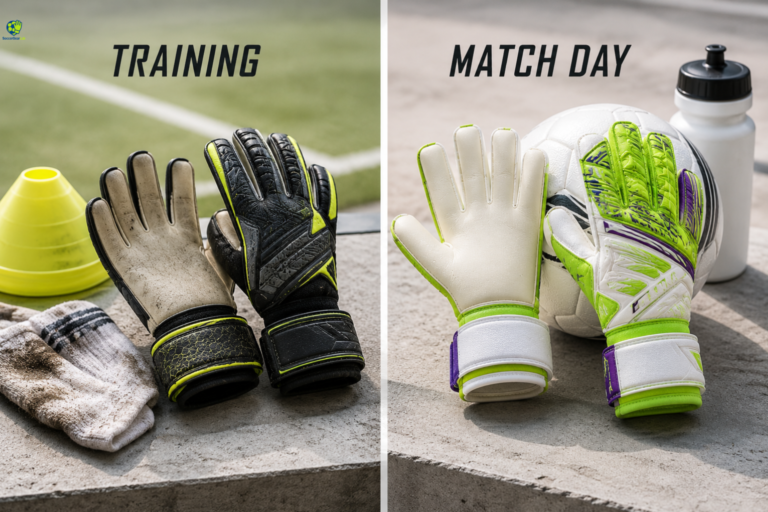
Should an 8 to 10 year old have separate training and match gloves? Ideally yes — particularly for players training twice weekly or more. Keeping a newer pair for matches and a slightly older pair for training significantly extends the life of both gloves and keeps the best latex performing well for match conditions.
Is it worth spending more on goalkeeper gloves for an 8 to 10 year old? Yes — if your child trains regularly and plays competitive soccer. The protection difference between entry level and quality mid range gloves is real and meaningful for developing hands at this age. The Reusch Attrakt Solid Junior delivers the best balance of genuine protection, quality latex, and season long construction at a price that makes practical sense for most families.
Related guides :
• Best Youth Goalie Gloves 2026 : 5 High-Grip Picks for Better Control & Confidence
• 5 Proven Youth Goalie Gloves for 6 to 8 Year Olds That Actually Protect
• Best Youth Goalie Gloves for 10-12 Year Olds: (2026 Expert Guide)
• Youth Goalie Gloves Size chart : How to Choose the Right Fit