Best Youth Goalie Gloves for 10-12 Year Olds: (2026 Expert Guide)
As an Amazon Associate, I earn from qualifying purchases. This post also contains affiliate links, which means I may receive a small commission, at no extra cost to you, if you make a purchase through a link
Introduction: Why This Age Group Needs Special Attention
The 10 to 12 age range is one of the most important windows in a young goalkeeper’s development.
At this stage, something shifts. The casual “anyone want to go in goal?” years are over. Your child is choosing the position deliberately. They are starting to understand positioning, communication, and the responsibility of being the last line of defense. They are facing bigger players, harder shots, and more competitive match environments than ever before.
And they are doing all of this with hands that are still growing, tendons that are not yet fully developed, and technique that is still being formed.
The gloves they wear at this stage matter more than most parents realize. The wrong pair — too big, too slippery, too rigid, or simply too cheap — does not just hurt performance. It can knock a developing goalkeeper’s confidence at exactly the moment when that confidence is most fragile. It can cause finger injuries that sideline them for weeks. It can make a position they love feel unreliable and frustrating.
The right pair does the opposite. It gives them grip they can trust. It protects their fingers without restricting their natural movement. It fits the hand precisely enough that the ball feels controlled and the saves feel earned.
This guide gives you the complete picture — the seven best youth goalkeeper gloves specifically suited to the 10 to 12 age range, a clear explanation of what to look for at this developmental stage, and everything you need to make the right choice without wasting money on the wrong pair.
What Makes a Goalkeeper Glove Right for a 10-12 Year Old
Before the product recommendations, here is what specifically matters for this age group because the priorities are genuinely different from younger beginners or older teenage goalkeepers.
Finger Protection — Still Essential, But Evolving
At age 10 to 12, finger protection remains strongly recommended. Players in this age group are facing significantly harder shots than younger players, and their finger tendons are still not mature enough to safely absorb full-power impact without structural support.
However, the type of protection that works best is beginning to evolve. The heavy, rigid fixed spines that are ideal for ages 7 to 9 can start to feel overly restrictive for a 10 to 12 year old who is developing more refined catching technique. At this age, the best gloves offer finger protection that is either removable — allowing customization as technique develops — or uses a flexible spine system that protects against hyperextension without creating a stiff, mechanical feel in the fingers.
This is the age where removable spine systems genuinely pay for themselves. A goalkeeper who starts the year at 10 with full protection can progressively reduce it as their technique and confidence develop, without needing a new pair of gloves.
Latex Quality — Stepping Up From Entry Level
A 10 to 12 year old goalkeeper who is playing competitively deserves genuine latex grip — not the hard, abrasion-resistant foam compound found in beginner gloves. At this age, players are starting to understand the difference between a ball that sticks and a ball that feels uncertain, and their confidence is directly affected by it.
Look for mid-grade to upper-mid-grade latex compounds — typically 3mm to 4mm of genuine grip latex rather than basic training foam. The grip should be noticeably tacky in both dry and lightly damp conditions. The durability should be sufficient for regular training use without the latex crumbling within weeks.
Sizing — The Most Critical Practical Factor
The 10 to 12 age range typically corresponds to glove sizes 6 through 7.5 in most brands, though individual variation is significant. A physically larger 11 year old may be in a size 8, while a smaller-framed 10 year old may still be in a size 6.
Never buy based on age alone. Always measure the hand width across the knuckles in centimeters before every new purchase. Children’s hands in this age group can grow by a full glove size within a single season.
The correct fit has 5mm to 10mm of space at the fingertips — enough for the hand to spread naturally during catching without the glove feeling loose or bunching at the ends.
Glove Cut — Ready to Step Up
Most 10 to 12 year olds are ready to move beyond basic flat cut construction. Roll finger gloves — which wrap the latex around each finger for maximum grip contact — are appropriate and beneficial for most players in this age range. The improved grip contact helps developing technique, and the snugger feel builds better hand awareness.
Negative cut remains more appropriate for experienced older players. Flat cut is still perfectly valid for players who prefer a roomier fit or who are on the newer end of position experience.
The 5 Best Youth Goalkeeper Gloves for 10-12 Year Olds
. Reusch Attrakt Freegel (Best Overall)
A premium glove built for performance and control.
- Grip: Excellent in all conditions
- Fit: Evolution Negative Cut (snug, precise)
- Protection: Flexible Ortho-Tec spines
Best for: Competitive youth goalkeepers
2. Uhlsport Powerline Absolutgrip (Best Protection)
Maximum safety without sacrificing performance.
- Grip: Elite all-weather latex
- Protection: Bionikframe support system
- Feel: Strong but flexible
Best for: Keepers facing powerful shooters
3. Renegade GK Vulcan
Designed to survive harsh playing surfaces.
- Grip: Durable German latex blend
- Protection: Removable finger saves
- Bonus: Extended palm for added durability
Best for: Turf players
4. Renegade GK Eclipse (Best Value)
High-quality performance without the high price.
Grip: 3.5mm German Hyper Grip latex
Protection: Removable finger spines
Durability: Built for training and matches
Best for: Youth players needing grip + protection at a great value
5. adidas Predator GL Pro (Best for Control & Agility)
Built for advanced, technical players.
- Fit: Tight, strapless design
- Feel: Lightweight, second-skin
- Note: No finger protection
Best for: Advanced keepers with strong hands
How to Choose the Right Goalie Gloves
1. Glove Cut (Fit & Control)
- Flat Cut: Looser fit (better for wider hands)
- Negative Cut: Tight, secure fit (best for youth)
- Roll Finger: Maximum contact and cushioning
Most 10–12-year-olds benefit from negative cut
2. Proper Sizing (Critical Step)
Bad sizing ruins everything.
How to measure:
- Measure palm width (no thumb)
- Add 1 inch = glove size
Most players in this age group wear Size 5–7
read our youth goalie gloves size chart
Pro Tip: Aim for about ¼ inch space at the fingertips for optimal performance.
3. Understanding Latex (Grip vs Durability)
There’s always a trade-off:
- High grip latex: Best performance, faster wear
- Durable latex: Longer lifespan, less grip
Best choice: Hybrid latex (balance of both)
How to Make Goalie Gloves Last Longer
Most gloves don’t fail—they’re just poorly maintained.
1. Always Pre-Wash New Gloves
Removes factory coating → improves grip instantly
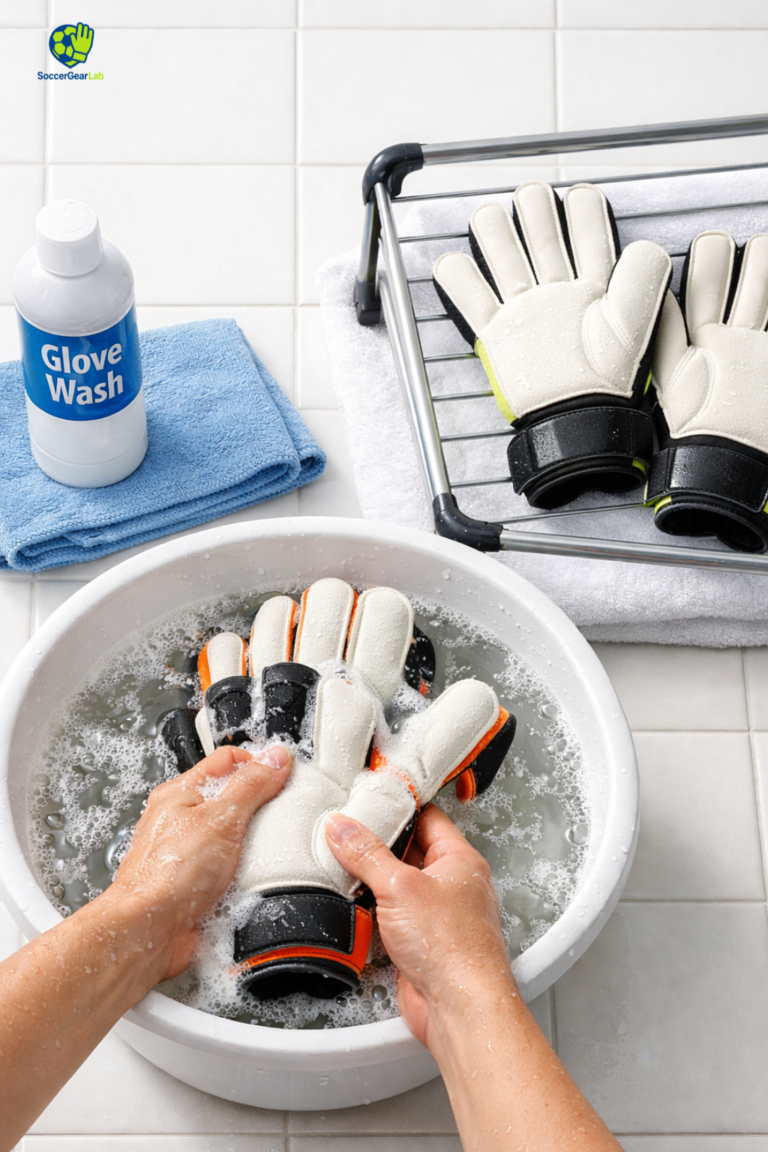
2. Clean After Every Game
- Use lukewarm water
- Gentle cleaning only
- No scrubbing tools
3. Dry Properly
Never:
- Use heat
- Leave in sunlight
- Put in dryer
Always air dry in a cool place
Final Verdict
At the 10–12 age level, the right gloves can completely change a goalkeeper’s development.
The best gloves will:
- Protect their hands
- Improve confidence
- Help them perform under pressure
Best overall: Reusch Attrakt Freegel
Best durability: Renegade GK Vulcan
Best value: Renegade GK Eclipse
Got Questions?
Not sure which glove fits your child best?
Drop a comment—I personally respond to help you make the right choice.
And if you want more:
- Gear reviews
- Buying guides
- Goalkeeper tips
Stay tuned for weekly updates built for youth goalkeepers
Frequently Asked Questions
Q: What size goalkeeper gloves does a 10-year-old need? Most 10-year-olds need size 6 to 6.5 goalkeeper gloves. Hand width at this age typically measures between 8cm and 9cm across the knuckles. Always measure rather than assuming — children of the same age can differ by one to two full sizes. A physically larger 10-year-old may be in a size 7.
Q: What size goalkeeper gloves does a 12-year-old need? Most 12-year-olds fall into the size 7.5 to 8 range, with hand widths typically between 9.5cm and 10.5cm. Some 12-year-olds with larger hands begin transitioning into adult small sizing at this point. Measure and use the fingertip test to confirm fit.
Q: Should 10-12 year old goalkeepers use finger protection? Yes — for most players in this age range, finger protection is strongly recommended. Hard shots at U11 and U12 level can cause genuine hyperextension injuries in hands that have not yet fully developed tendon strength. Removable spine systems are the best choice for this age group as they allow protection to be progressively reduced as technique and strength develop.
Q: How often do goalkeeper gloves need replacing at this age? Children in the 10 to 12 age range grow rapidly — both in hand size and in playing intensity. Expect to replace gloves once per season at minimum and measure hands before each new purchase. A glove that fit perfectly at the start of the season may be a full size too small by the end of it.
Q: Can I use the same gloves for training and matches? You can, but it shortens the lifespan of quality latex significantly — particularly on artificial turf. For a goalkeeper training two or more times per week, having a separate training pair and match pair is the most cost-effective approach over a full season. If budget allows only one pair, choose a glove with a durable training-grade latex rather than the softest match compound.
The right gloves will not turn a developing goalkeeper into a professional overnight. But they will give your child the grip to make saves they should make, the protection to stay safe when hard shots arrive, and the confidence to command their goal without doubting their equipment.
That confidence compounds. Every save made with a glove they trust builds the next one.
Give your goalkeeper gear they can trust. Everything else follows from there.
Ready to choose? Click the product links throughout this article to check current prices and availability on Amazon.