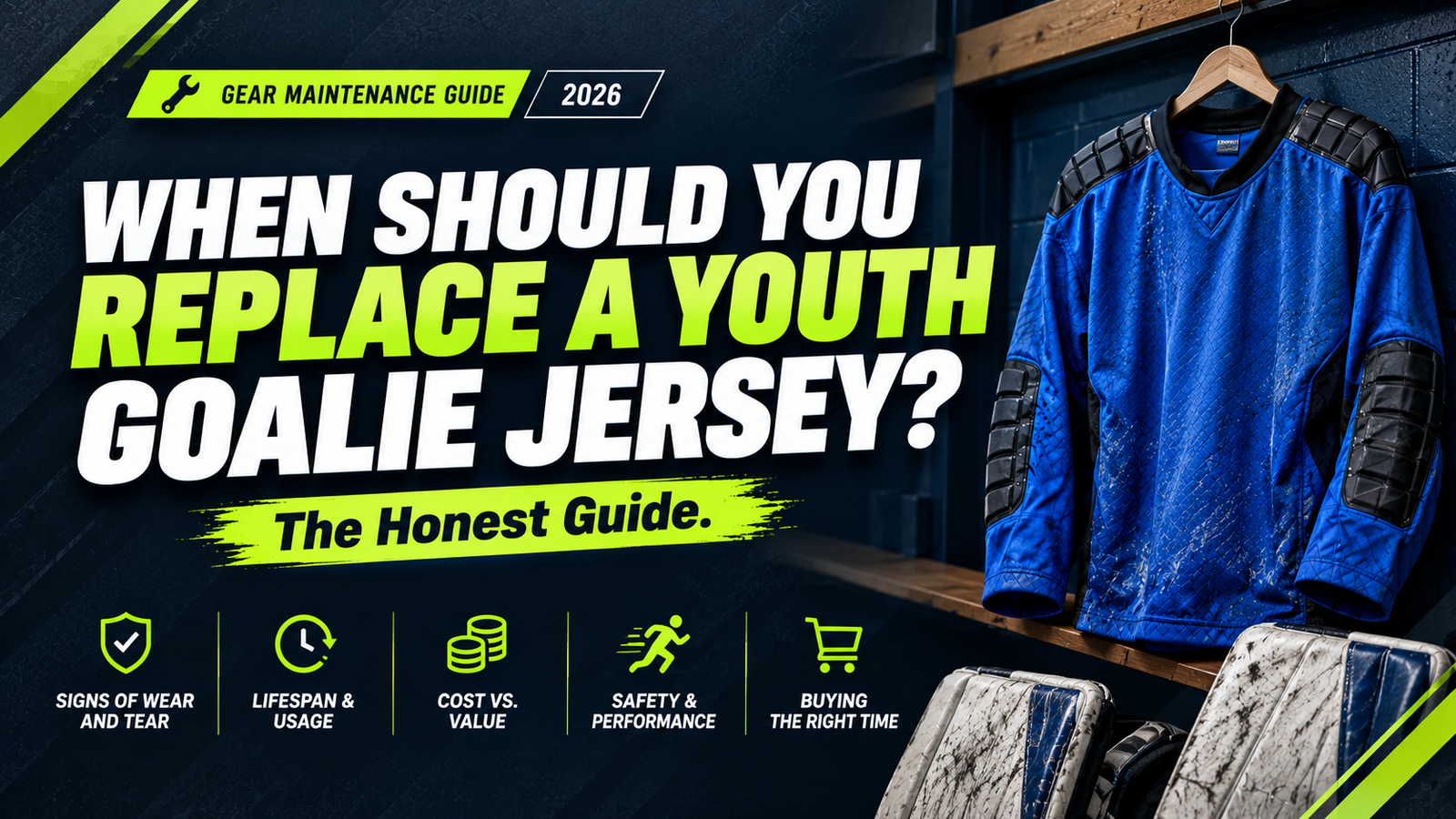
When Should You Replace a Youth Goalie Jersey? The Honest Guide for Goalkeeper Parents (2026)
By Carlos Alvares |
𝑆𝑜𝑚𝑒 𝑜𝑓 𝑡ℎ𝑒 𝑙𝑖𝑛𝑘𝑠 𝑖𝑛 𝑡ℎ𝑖𝑠 𝑎𝑟𝑡𝑖𝑐𝑙𝑒 𝑎𝑟𝑒 𝑎𝑓𝑓𝑖𝑙𝑖𝑎𝑡𝑒 𝑙𝑖𝑛𝑘𝑠, 𝑚𝑒𝑎𝑛𝑖𝑛𝑔 𝑡ℎ𝑎𝑡 𝑎𝑡 𝑛𝑜 𝑎𝑑𝑑𝑖𝑡𝑖𝑜𝑛𝑎𝑙 𝑐𝑜𝑠𝑡 𝑡𝑜 𝑦𝑜𝑢, 𝐼 𝑚𝑎𝑦 𝑒𝑎𝑟𝑛 𝑎 𝑠𝑚𝑎𝑙𝑙 𝑐𝑜𝑚𝑚𝑖𝑠𝑠𝑖𝑜𝑛 𝑖𝑓 𝑦𝑜𝑢 𝑐𝑙𝑖𝑐𝑘 𝑡ℎ𝑟𝑜𝑢𝑔ℎ 𝑎𝑛𝑑 𝑚𝑎𝑘𝑒 𝑎 𝑝𝑢𝑟𝑐ℎ𝑎𝑠𝑒. 𝐴𝑠 𝑎𝑛 𝐴𝑚𝑎𝑧𝑜𝑛 𝐴𝑠𝑠𝑜𝑐𝑖𝑎𝑡𝑒 𝐼 𝑒𝑎𝑟𝑛 𝑓𝑟𝑜𝑚 𝑞𝑢𝑎𝑙𝑖𝑓𝑦𝑖𝑛𝑔 𝑝𝑢𝑟𝑐ℎ𝑎𝑠𝑒𝑠.
The Jersey Question Most Goalkeeper Parents Get Wrong in Both Directions
Most goalkeeper parents replace a youth goalie jersey either when its too late , or when its too early ,and both mistakes cost more than replacing it at the right time .
Replacinng it Too late is the more common mistake. The jersey that should have been replaced at the end of last season , is still in the kit bag at the start of this one. The elbow padding that absorbed meaningful impact in September , is flattened and ineffective by March. The moisture-wicking treatment that kept the jersey comfortable through warm training sessions , has been stripped by months of incorrect washing. The jersey still looks like a jersey , it fits reasonably well, and it goes in the kit bag without anyone questioning it. But it has stopped functioning as goalkeeper equipment several months ago.
Too early is the mistake that costs money unnecessarily. A well-made youth goalie jersey washed correctly and cared for properly has a meaningful useful life. Replacing it because the design looks slightly faded ,or because a newer model is available wastes money that serves a young goalkeeper better spent on higher-quality gloves or better boots.
Getting the replacement timing right is what this guide is for . By the end, you will know exactly when your child’s current jersey has reached the end of its useful life , and exactly when it still has a full season ahead of it.
The Four Signs a Youth Goalie Jersey Needs Replacing Now
These four signs are listed in order of importance. If you see the first one, the jersey needs replacing regardless of what the others show. If you see the fourth one alone, it may or may not require replacement depending on additional context.
Sign 1 — The Elbow Padding Has Flattened and No Longer Rebounds
This is the only sign that requires immediate replacement regardless of everything else about the jersey’s condition. A youth goalie jersey whose elbow padding has permanently flattened is no longer a goalkeeper equipment. It is a colored athletic shirt with a decorative foam sewn into the sleeve.
To check whether the elbow padding has reached end of life, press firmly on the padded zone with your thumb and release. Quality EVA foam that is still functional springs back toward its original thickness within one to two seconds. Foam that has reached the end of its protective life , compresses under thumb pressure and stays compressed , or recovers very slowly over five or more seconds.
This test matters because the degradation of foam padding is invisible during normal inspection. A jersey whose padding has failed looks identical to one whose padding is fully functional. The only way to know is to test the rebound actively.
The rate at which elbow padding degrades depends on three factors. Training frequency — a child training three times weekly exhausts foam faster than one training once weekly. Playing surface — artificial turf abrasion degrades foam faster than natural grass impact. And care routine — tumble drying a goalkeeper jersey even once permanently accelerates foam degradation by altering the polymer structure of the foam material in ways that are irreversible regardless of subsequent care.
A properly cared-for goalkeeper jersey with EVA foam padding used twice weekly on natural grass will typically maintain functional padding for one to two full seasons. The same jersey used three or more times weekly on artificial turf and accidentally tumble dried twice , may reach padding failure within four months of the season starting.
When the foam fails — replace the jersey. There is no repair for permanently compressed goalkeeper jersey padding.
Sign 2 — The Jersey No Longer Fits Correctly Through the Shoulders
Children grow. This is the most obvious fact in youth sports equipment and the one that still catches parents off guard with goalkeeper jerseys specifically — because the fit problem that matters most in a youth goalie jersey is not the fit problem most parents check for.
Most parents notice when a jersey is too short through the torso — when it rides up and exposes the lower back during normal movement. That is a real fit problem and worth addressing.
The fit problem that damages goalkeeper development is subtler and more serious. It is the shoulder seam that has migrated from its correct position on the shoulder toward the neck as your child has grown. When the shoulder seam sits off the shoulder toward the neck, the jersey restricts the arm extension that overhead punches and wide-reaching saves demand. Your child compensates by keeping their arms slightly lower than correct technique requires. That compensation becomes a habit. That habit becomes a technical problem that a coach has to identify and correct — spending session time on something that the right jersey would have prevented.
Check shoulder seam position every time you wash the jersey. It should sit on the actual shoulder — at the natural joint where the arm meets the torso. If it is pulling toward the neck when the jersey is on your child, the jersey is too small and has been for longer than you realized. Replace it.
The second fit check is the wrist test. With the jersey on, have your child extend one arm straight out to the side. The cuff should reach the wrist bone. If it stops at the mid-forearm, the sleeve is too short — the elbow padding is sitting above the joint rather than over it and has been providing no meaningful protection during saves regardless of how intact the foam is.
Both fit problems require jersey replacement. Neither can be corrected by washing technique or care routine. The jersey has been outgrown and the goalkeeper has been underequipped as a result.
Sign 3 — The Moisture-Wicking Function Has Degraded Noticeably
This sign is less immediately critical than the first two but matters significantly for your child’s comfort and performance across a full season of training and competitive play.
A youth goalie jersey whose moisture-wicking treatment has been damaged by incorrect washing — fabric softener, hot water cycles, or repeated tumble drying — absorbs sweat rather than transporting it to the outer surface for evaporation. The practical result is a jersey that becomes progressively heavier and more restrictive as training intensity increases. By the sixty- or seventy-minute mark of a competitive match, a child in a moisture-management-failed jersey is visibly uncomfortable — pulling at the collar, adjusting the sleeves, losing the concentration that the position demands at exactly the moments when focus matters most.
To test whether the moisture-wicking function is intact, sprinkle a small amount of water on the inner surface of the jersey when it is dry. Quality moisture-wicking polyester with intact treatment beads the water and moves it quickly across the surface. Polyester whose moisture-wicking treatment has been stripped absorbs the water into the fabric and leaves a spreading wet patch that takes significantly longer to evaporate.
If the jersey fails this test, the moisture management that made it comfortable for training is gone permanently — fabric softener damage to moisture-wicking treatment is irreversible. Whether replacement is necessary depends on whether the padding is still functional and the fit is still correct. A jersey that has lost its moisture-wicking but still has functional padding and correct fit may serve adequately for cold-weather training where heat management is less critical. For warm-weather training and summer leagues, a jersey that has failed the moisture test should be replaced.
Sign 4 — The Design Has Faded, Cracked, or Peeled Significantly
This is the sign that matters least in isolation and most in combination with others.
Visible design deterioration — fading that affects the goalkeeper’s ability to be seen clearly on the pitch, cracking that creates rough surface patches against the skin, or peeling that produces loose fabric edges that catch on goalkeeper gloves during saves — is worth addressing. A goalkeeper whose jersey has deteriorated to the point of affecting their visibility or causing physical irritation during play needs a replacement regardless of the padding and fit status.
Fading that is cosmetic only — the jersey looks slightly less vibrant than it did at the start of the season, but the color remains distinct and the goalkeeper is clearly visible — does not require immediate replacement if the padding is functional and the fit is correct. A slightly faded jersey that still protects and fits correctly still serves its purpose. Replace it at the end of the season rather than mid-season.
The practical test for color-based replacement is visibility rather than aesthetics. Ask your child’s coach whether the jersey color still clearly distinguishes the goalkeeper from both outfield teams and the referee. If the answer is yes, the jersey can serve out the rest of the season. If the answer is uncertain, replace it.
The Situations That Require Mid-Season Replacement
Most youth goalie jersey replacements happens at the end of a season , because its a natural assessment point, and a reasonable budget moment to make this decision. Some situations require mid-season replacement regardless of cost, timing, or inconvenience.
Foam padding failure mid-season. If the foam test described above reveals that the elbow padding has permanently flattened during the season, the jersey requires immediate replacement. A young goalkeeper training on artificial turf with failed elbow padding is developing the hesitation habit with every unprotected dive. Every additional session in a jersey with failed padding makes that habit more embedded and more time-consuming to correct.
Rapid growth that shifts the shoulder seam mid-season. Children in growth phases can change clothing size within weeks rather than months. If a mid-season check reveals that the shoulder seam has migrated toward the neck since the start of the season, replace the jersey without waiting for the season to end. The technical habit that shoulder restriction creates develops faster than most parents expect.
Accidental tumble drying that destroys the padding. A single tumble-drying cycle permanently alters the polymer structure of goalkeeper jersey foam in ways that are invisible but immediately functional. If the jersey has been tumble dried, perform the foam rebound test immediately. If the foam no longer rebounds correctly within one to two seconds, the jersey requires replacement regardless of where you are in the season.
The Situations Where Replacement Can Wait
Equally important is knowing when the pressure to replace a jersey is unnecessary — and when the budget is better preserved for the end-of-season replacement at the right moment.
Minor color fading that does not affect visibility. A slightly faded jersey that still clearly identifies the goalkeeper on the pitch has useful life remaining. Complete the season and replace it at the natural end-of-season point.
Surface-level wear on the outer fabric. Light pilling or minor surface texture changes to the outer polyester are normal across a full season of regular training and washing. They do not indicate padding failure or functional degradation. A jersey with surface wear but functional padding, correct fit, and adequate color still serves your child effectively.
The emergence of a newer model. Marketing cycles for goalkeeper jerseys are frequent. A jersey that was released six months after your child’s current one is not a reason to replace a jersey that is still functional. Buy the newer model when the current jersey has genuinely reached end of life — not before.
How Long a Youth Goalie Jersey Should Last
A well-made youth goalie jersey washed correctly after every session on a cold, gentle cycle, air dried, and stored properly between sessions should deliver the following useful life across common training situations.
A recreational player training once weekly on natural grass can expect one to two full seasons from a quality mid-range goalkeeper jersey before padding degradation or fit changes require replacement. A competitive player training two to three times weekly on a combination of natural grass and artificial turf should expect one full season from the same jersey — and should plan for replacement at each season’s end rather than carrying the jersey into a second season. A serious competitive player training three or more times weekly on artificial turf may find that padding degradation requires mid-season assessment rather than end-of-season replacement — particularly on abrasive older turf surfaces where rubber crumb infill produces the harshest foam degradation conditions.
The Replacement Decision Made Simple
Before replacing your child’s youth goalie jersey, run through these four checks in order. They take under three minutes , and eliminate every ambiguity from the replacement decision.
Press firmly on the elbow padding and release , If it rebounds within two seconds, the foam is functional. If it stays compressed or recovers slowly, it has failed — replace the jersey immediately regardless of everything else.
Check the shoulder seam position with the jersey on. If it sits on the shoulder, the fit is correct. If it has migrated toward the neck, the jersey has been outgrown — replace it.
Extend one arm to the side and check where the cuff sits. Wrist bone means correct sleeve length and correct padding position. Mid-forearm means the sleeve is too short and the padding has been sitting above the joint — replace the jersey.
Perform the water bead test on the inner surface. Quick beading and movement means intact moisture management. Slow absorption means the treatment is gone — decide based on whether padding and fit are still correct whether replacement is immediate or end-of-season.
Four checks , three minutes. One clear answer on whether the jersey still serves your child , or whether it is time for the necessary replacement .
Ready to find the replacement jersey your child needs ? Our complete Best Youth Goalie Jersey guide covers six verified Amazon picks across every budget — every product assessed for padding quality, construction, durability, and honest value .
Replacing a jersey for a child just starting out in goal ? Our Best Youth Goalie Jersey for Beginners guide covers five honest picks matched specifically to first-season goalkeepers at the most appropriate price points.
The Bottom Line
A youth goalie jersey that has reached the end of its useful life is not goalkeeper equipment. It is a colored shirt that creates the impression of proper gear while leaving a young goalkeeper without the elbow protection, moisture management, and correct fit that the position demands and that their development depends on.
Replace when the foam fails. Replace when the shoulder seam has migrated. Replace when the sleeve no longer reaches the wrist bone. And assess the moisture management and color integrity as secondary factors that inform the timing of a replacement that padding and fit have already made necessary.
Get the replacement timing right, and a youth goalie jersey will provide a full season or two of genuine goalkeeper protection and performance. Get it wrong , in either too early or too late , and your money is wasted , and the young goalkeeper’s development journey will pay the price.
The foam test takes ten seconds. Run it now before the next session and know whether your child’s jersey is still serving them ,or whether it stopped doing so some time ago.
FAQ: When Should You Replace a Youth Goalie Jersey
How do I know if my child’s goalkeeper jersey elbow padding has failed?
Press firmly on the padded zone with your thumb and release. Functional EVA foam rebounds toward its original thickness within one to two seconds. Failed foam stays compressed or recovers very slowly over five or more seconds. This test takes ten seconds and is the single most important replacement indicator in any youth goalie jersey, regardless of how the rest of the jersey looks.
How long should a youth goalkeeper jersey last?
A well-made jersey washed correctly after every session — cold, gentle cycle, air dried, never tumble dried — lasts one to two full seasons for a recreational player training once weekly on natural grass. For a competitive player training two to three times weekly on mixed surfaces, plan for one full season before replacement. For serious competitive players on artificial turf three or more times weekly, mid-season padding assessment is worth performing rather than waiting for end-of-season review.
My child’s goalkeeper jersey looks fine, but the padding feels flat — does it need replacing?
Yes — immediately. The appearance of a goalkeeper jersey and the functional status of its elbow padding are completely independent. A jersey can look perfectly acceptable while the padding has permanently failed to provide any meaningful protection during dives. The foam rebound test is the only reliable indicator of padding status. Appearance alone tells you nothing about whether the padding still protects your child.
Can I repair or restore goalkeeper jersey elbow padding rather than replacing the jersey?
No. Permanently compressed EVA foam has undergone physical changes at the polymer level that cannot be reversed by any consumer-available product or technique. Once the foam fails to rebound, the jersey requires replacement. There is no repair for failed goalkeeper jersey padding.
My child’s jersey has faded — does it need replacing?
It depends on whether the fading affects visibility. If the goalkeeper is still clearly distinguishable from both outfield teams and the referee, the jersey can complete the season. If the color has faded to the point where visibility is compromised, replace it. Ask your child’s coach for an honest assessment of whether the jersey color still clearly identifies the goalkeeper on the pitch.
How does tumble drying affect goalkeeper jersey lifespan?
Significantly and irreversibly. The heat inside a tumble dryer permanently alters the polymer structure of goalkeeper jersey foam , witch accelerates the degradation and reduces the rebound properties that make the padding functional. A jersey that has been tumble dried even once should be tested with the foam rebound check immediately. If the foam no longer rebounds correctly within two seconds, the jersey has been functionally compromised and requires replacement regardless of its age or previous condition.
Should I replace my child’s goalkeeper jersey every season as a rule?
Not necessarily , and doing so wastes money when a jersey still has functional padding, correct fit, and an adequate color. The end-of-season assessment using the four checks described in this guide tells you whether replacement is necessary , or whether the jersey has another season ahead of it. Replace when the evidence says replace. Not on a calendar schedule.
Related Guides
- Best Youth Goalie Jersey 2026 — The Complete Parent Guide
- How to Wash a Youth Goalie Jersey — Complete Care Guide
- Best Youth Goalie Jersey for Beginners — 5 Honest Picks
- Best Budget Youth Goalie Jersey Under $30 — 7 Verified Picks
- Youth Goalie Jersey Materials Explained — Complete Parent Guide
- Best Youth Goalie Gloves 2026 — The Ultimate Parent Guide
Have a specific question about whether your child’s goalkeeper jersey still has useful life or needs replacing? Drop it in the comments — every question gets a real answer.