Best Youth Goalie Gloves with Finger Protection ( ultimate 2026 guide)
As an Amazon Associate, I earn from qualifying purchases. This post may contain affiliate links, which means I may earn a small commission at no extra cost to you if you make a purchase through a link.
Why Youth Goalkeepers Need the Right Gloves Now More Than Ever
Watching a young goalkeeper face a powerful shot is stressful—no way around it.
At ages 6 to 16, players are still developing strength, coordination, and technique. But the speed of the game doesn’t slow down to match that learning curve. One mistimed save can turn into a painful finger injury in an instant.
And here’s the part most parents don’t realize right away .
A finger injury doesn’t just hurt physically—it changes how a child plays.
They start hesitating. Pulling their hands away from shots. Second-guessing dives. That confidence they built? It disappears fast.
That’s exactly why modern finger protection youth goalie gloves exist.
By 2026, youth goalie gloves have evolved significantly. Today’s finger-save technology is lighter, more flexible, and far more effective than older stiff systems. The goal is simple :
Protect young hands without limiting natural catching ability.
This guide breaks down the best youth goalie gloves with finger protection for 2026, so your keeper can play boldly, safely, and confidently.
Key Takeaways
- Finger protection prevents confidence-killing injuries
- Latex quality = grip vs durability balance
- Correct sizing is non-negotiable for protection to work properly
- Removable spines = better long-term development flexibility
- Comfort matters as much as performance for young players
Why Finger Protection Matters for Youth Goalkeepers
Youth goalkeepers don’t just need gloves—they need support systems for developing hands.
Bones, ligaments, and tendons are still strengthening during these years. A hard shot or awkward landing can easily push a finger beyond its natural range.
What Finger Spines Actually Do
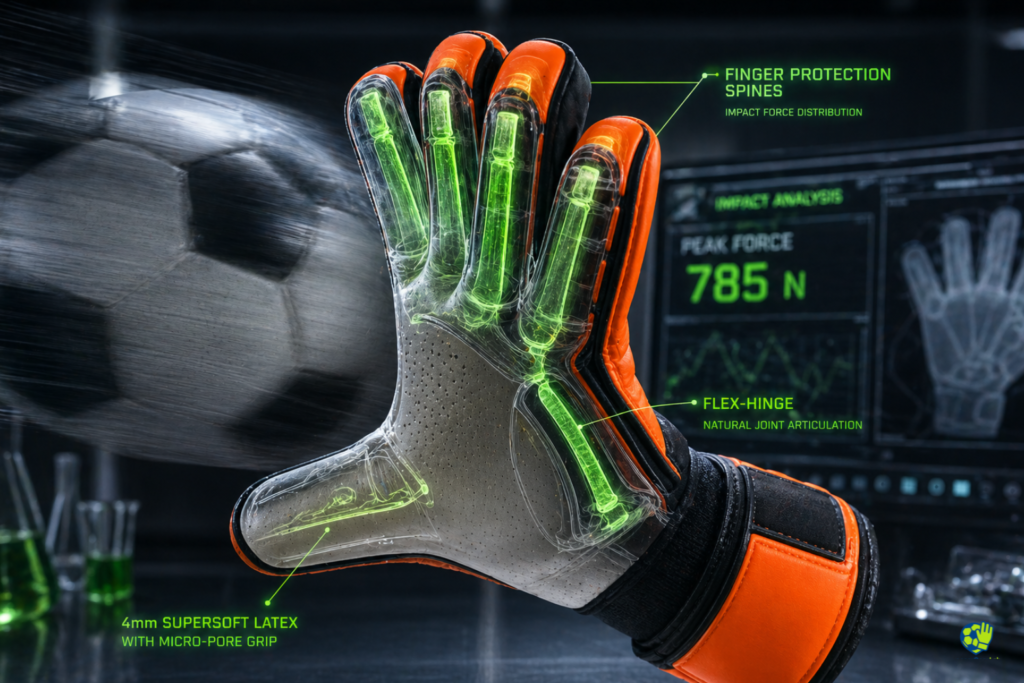
Finger protection systems use flexible plastic or composite spines placed along the back of each finger.
They do two key things:
- Flex naturally during normal catching and movement
- Lock when a finger bends backward under pressure
This prevents hyperextension injuries while still allowing full catching motion.
Important Coaching Insight
Finger protection is not a replacement for a good technique.
A young keeper should still learn :
- “W” hand position
- Soft hands on catches
- Proper ball absorption
The Gloves can protect the hands , but it is the technique that protects the goalkeeper in the long run .
Top 5 Best Youth Goalie Gloves with Finger Protection (2026 Edition)
These picks are based on :
- Grip performance
- Protection level
- Durability
- Comfort for youth players
- Real match/training usability
1. Reusch Attrakt Freegel Unisex Soccer Goalie(Best Overall)
Reusch continues to set the standard for youth goalkeeper performance.
Feels lightweight but highly controlled on the hands.
Grip: Fusion latex for all-weather performance
Fit: Evolution Negative Cut (tight, natural feel)
Protection: Lightweight fixed finger support system
Why it stands out
It strikes the perfect balance between elite grip and flexible protection. Nothing feels bulky, and the gloves perform well in both training and match environments.
Best for: Competitive youth goalkeepers who need consistent match performance
2. Renegade GK Vortex Goalie Gloves (Best Value + Durability)
A strong option for parents who want performance without overspending.
Feels solid, durable, and confidence-building.
Grip: 4mm German Giga Grip latex
Fit: Roll finger cut for maximum ball contact
Protection: Removable finger spines
Why it stands out
You can customize protection per finger, which is rare at this price level. It also handles heavy training use better than most competitors.
Best for: Budget-conscious families and high-training-volume players
3. Storelli Gladiator 3 GK Gloves (Best Protection)
Built like armor—but still usable for young players.
Grip: 3.5mm German latex
Fit: Flat palm construction
Protection: Reinforced spines + heavy backhand padding
Why it stands out
This glove is designed for maximum safety. It absorbs impact better than most gloves on the market.
Best for: Physical leagues, hard ground play, or injury recovery
4. adidas Unisex-Child Match Fingersave Predator Goalie Gloves (Best Grip Feel)
A modern, sleek option with elite-level grip technology.
Feels tight, responsive, and highly controlled.
Grip: URG 2.0 latex (very tacky)
Fit: Negative cut (second-skin feel)
Protection: Fixed Fingersave system
Why it stands out
Exceptional grip right out of the box and strong brand confidence for young players.
Best for: Advanced youth keepers focused on control and aesthetics
5. uhlsport | Absolutegrip HN Pro Jr (Best Innovation Pick)
A tech-forward glove with advanced structural design.
Feels natural, not stiff or bulky.
Grip: Supergrip+ foam
Fit: Flat cut with ergonomic thumb wrap
Protection: 3D bionic spine system
Why it stands out
The spine system adapts to finger movement instead of restricting it—very modern approach.
Best for: Tech-focused players or parents wanting premium European design
How to Choose the Right Youth Goalie Gloves
Buying gloves shouldn’t be guesswork. Focus on three things:
1. Cut Type (Fit Matters Most)
- Negative Cut: Tight, modern, better control
- Roll Finger: More cushioning, larger surface area
- Flat Cut: Roomier, best for beginners
2. Finger Protection Type
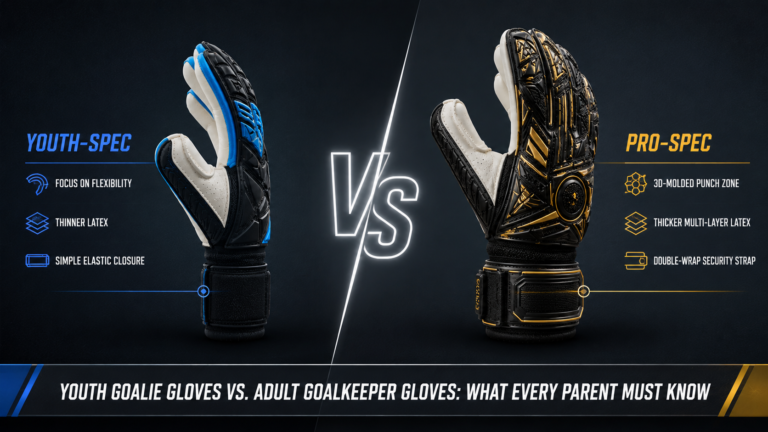
- Fixed spines → simple, reliable
- Removable spines → adjustable, long-term flexibility
3. Latex Quality
- Softer latex → better grip, faster wear
- Harder latex → more durability, less stickiness
- Hybrid latex → best balance for youth players
Sizing Guide (Do Not Skip This)
Incorrect sizing is the #1 reason gloves fail.
How to measure:
- Measure palm width (excluding thumb)
- Add 1 inch
- Match to manufacturer size chart
Rule of thumb:
- 5–10mm fingertip space = perfect fit
- Too big = protection fails
- Too small = comfort loss
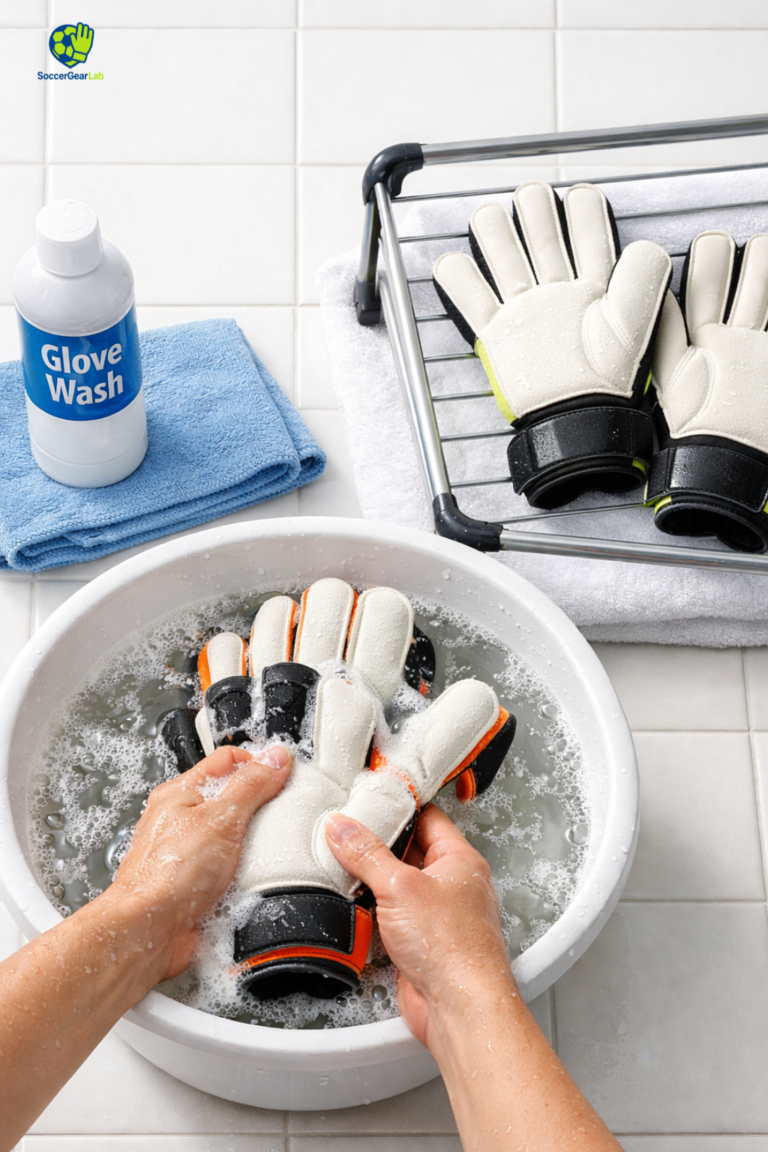
How to Maintain Goalie Gloves (This Extends Their Lifespan )
Good gloves can last months longer with proper care.
Before first use:
- Rinse off factory coating to activate grip
After each session:
- Rinse with lukewarm water
- Air dry naturally (never heat)
Pro habit:
- Lightly dampen palms before matches for better grip .
Final Thoughts
Choosing the right youth goalie gloves isn’t just about performance—it’s about confidence, safety, and long-term development.
If your young keeper feels protected, they play boldly. If they trust their grip, they attack the ball without hesitation.
Whether you go with Reusch, Renegade GK, Storelli, Adidas, or Uhlsport, the key is simple:
Match the glove to the player—not just the brand.
Ready to upgrade your young goalkeeper’s gear?
Check the links above for current prices and availability on Amazon.
If you’re unsure about sizing or choosing the right model, drop a question—I’ll help you pick the right glove for your player.
Frequently Asked Questions
1. Do youth goalie gloves really need finger protection?
Yes—especially for beginners and intermediate players. Finger protection helps prevent hyperextension injuries when stopping hard shots or making awkward saves. It’s one of the most important safety features for developing goalkeepers.
2. Are finger save gloves harder to use for kids?
Not necessarily. Modern finger protection systems are much more flexible than older versions. While they may feel slightly stiff at first, most young goalkeepers adjust quickly and benefit from the added support and confidence.
3. Should I choose removable or fixed finger spines?
Removable spines are usually the better choice. They allow you to customize the level of protection as your child improves. Beginners often start with full protection and gradually remove spines for better flexibility.
4. Do finger protection gloves reduce grip?
No—grip mainly depends on the latex quality, not the finger spines. High-quality gloves with finger protection still provide excellent grip for catching and holding the ball.
5. How long do youth goalie gloves last?
It depends on usage and care. On average:
- Training + matches: 2–4 months
- Matches only (with proper care): longer
Proper washing and storage can significantly extend their lifespan.