5 Proven Reasons Premium Youth Goalie Gloves Are Worth It
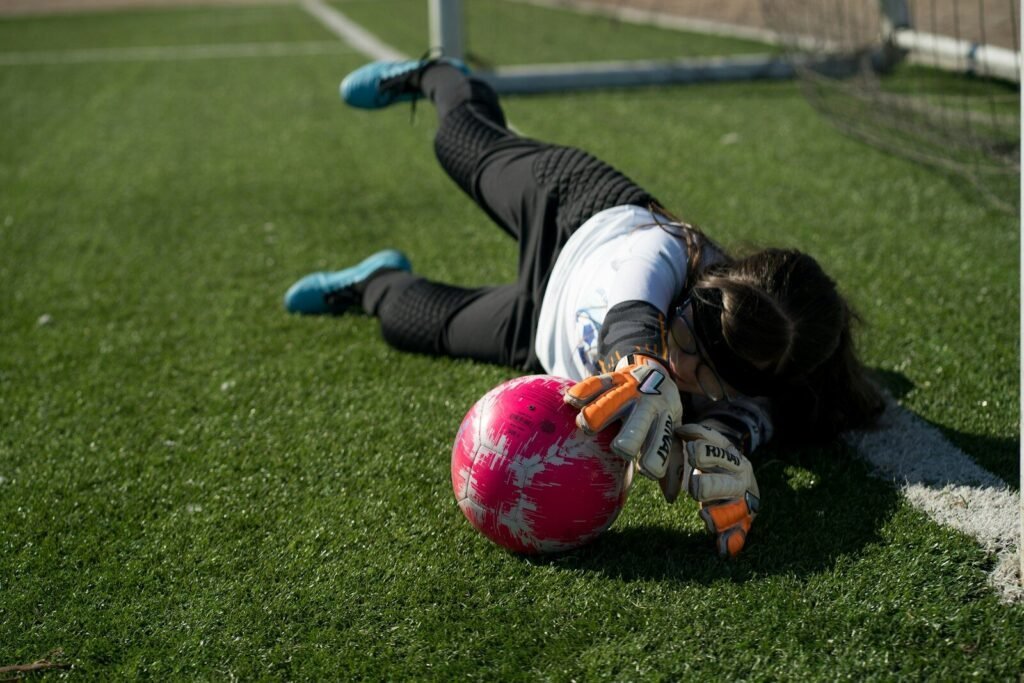
By Carlos Alvares
As an Amazon Associate, I earn from qualifying purchases. This post also contains affiliate links, which means I may receive a small commission, at no extra cost to you, if you make a purchase through a link. I only gear I trust and have evaluated thoroughly.
Premium Youth Goalie Gloves: Are They Really Worth the Extra Money?
Here is a moment I have seen play out on youth soccer sidelines more times than I can count.
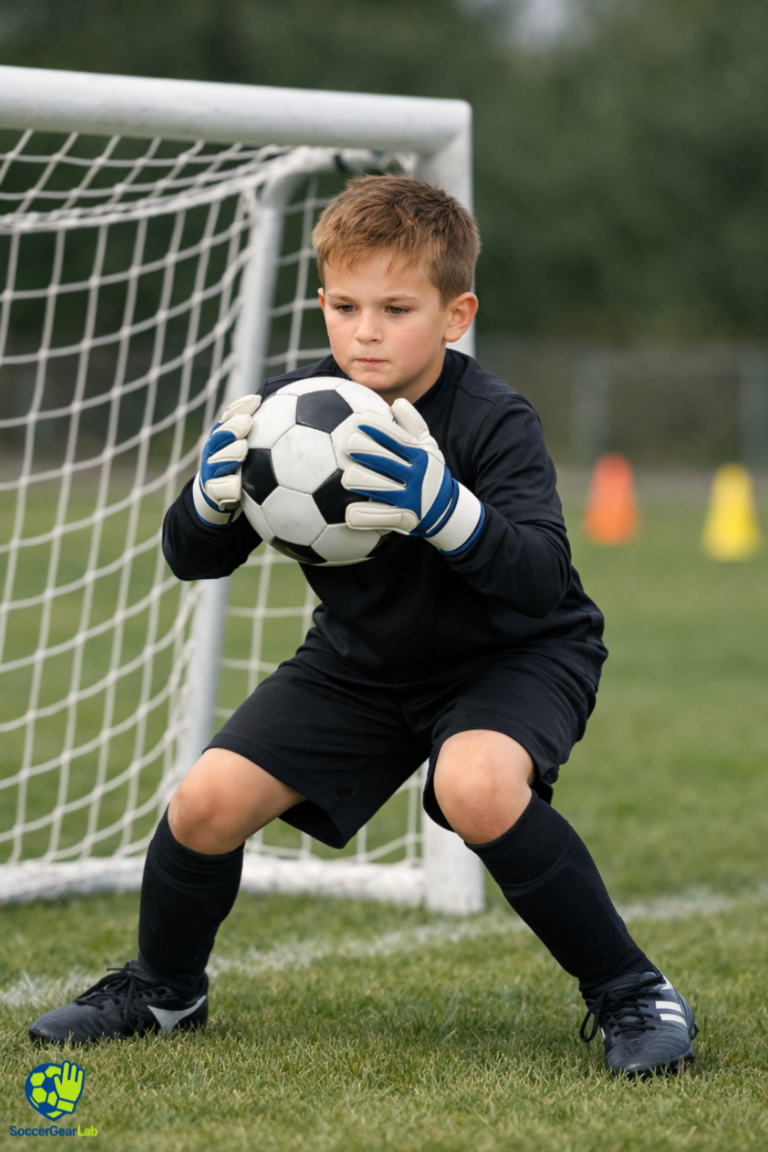
A striker winds up and drills a heavy shot from close range. The young goalkeeper gets both hands behind it — good positioning, decent technique — and the ball squirts straight through their gloves and into the net.
The goalkeeper looks down at their hands. Confused. Frustrated. A little embarrassed.
And the parent on the sideline who bought those expensive youth goalie gloves last week is standing there wondering what just happened.
Usually the answer is not the technique. It is not the positioning. It is not even the goalkeeper.
It is the gloves.
I have spent years testing goalkeeper equipment across every price point — watching real young players train and compete in all conditions. And the difference between cheap youth goalie gloves and genuinely expensive ones is not subtle. It is not marketing. It is not a logo on the backhand.
It is five specific things — and each one of them shows up on the pitch in ways that matter.
Key Takeaways Before We Dive In
- Finger protection on expensive gloves is engineered — not decorative
- Premium latex maintains grip in wet conditions where budget foam completely fails
- Durability means expensive gloves frequently cost less over a full season
- Fit systems on quality gloves eliminate the slipping that ruins saves
- Wrist support on premium gloves prevents real injuries that cheap straps cannot
1. Finger Protection That Actually Protects
This is where I want to start — because it is the most important difference and the most misunderstood one.
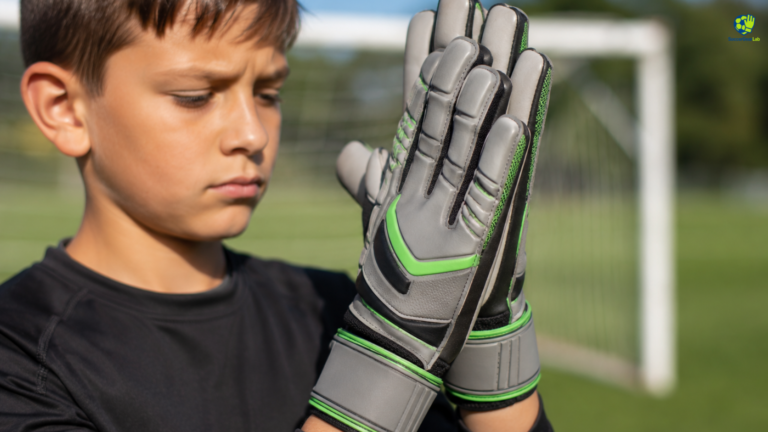
Walk into any sporting goods store and you will find cheap youth goalie gloves with “fingersave” printed boldly on the packaging. It sounds reassuring. It looks like a feature. In practice it is often almost meaningless.
I have tested the finger protection on budget gloves by pressing the spine backward with my thumb. On most cheap pairs it folds easily in every direction — including the dangerous ones. That is not finger protection. That is plastic stitched into a glove for marketing purposes.
Genuine fingersave technology on premium youth goalie gloves works completely differently.
The spines are engineered to a specific flex profile. They bend forward naturally — which is exactly how a goalkeeper’s finger moves when catching a ball — and they lock rigid under backward force. That backward force is what causes hyperextension. That is the injury that sends young goalkeepers off the pitch with swollen, painful fingers that take weeks to heal properly.
For children between 8 and 14 whose hand bones and connective tissue are still actively developing, this distinction is not a minor feature difference. It is a safety difference that shows up in real match conditions every single week.
The confidence difference is just as significant as the physical protection. A young goalkeeper who knows their fingers are genuinely protected attacks the ball differently. They dive for shots they would previously have left. They come off their line for crosses they would previously have punched away out of uncertainty.
That attacking mentality — that willingness to commit fully — is one of the most important qualities in a developing goalkeeper. The right gloves build it. The wrong ones quietly undermine it.
What to look for: Removable finger spines are worth prioritizing if your budget allows. As your child’s catching technique develops and their hands strengthen, removing the spines gives them better ball feel without needing to buy a completely new pair. Two glove styles for the price of one.
2. Latex That Grips When It Matters Most
The palm of a goalkeeper glove is the engine. Everything else is secondary. And the gap between budget latex and premium latex is larger than most parents realize until they see it side by side in real conditions.
Budget gloves use basic synthetic foam. It feels adequate in a store. It performs acceptably in dry conditions for the first few sessions. But it has two fundamental problems that show up quickly with regular use.
First — it breaks down fast. The foam on cheap youth goalie gloves starts deteriorating within four to six weeks of twice-weekly training. Once budget latex loses its tackiness it cannot be revived. The glove is finished regardless of how well the rest of it holds up.
Second — it fails in wet conditions. This is the one that matters most for youth soccer played through autumn and winter. Budget foam in the rain becomes close to useless. The surface loses its tackiness almost completely and the ball slides off palms that should be catching cleanly.
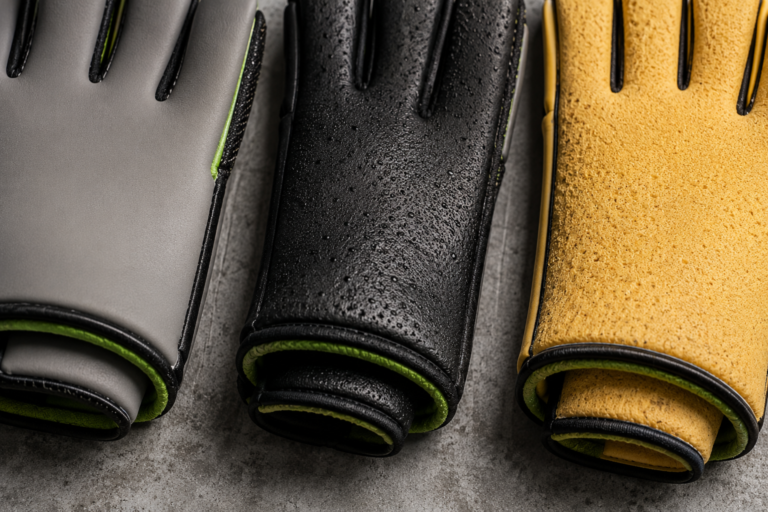
Expensive youth goalie gloves use professional grade latex — formulations that maintain real grip across conditions. Quality latex in wet conditions does not just perform adequately. It actually activates. The slight moisture enhances the tackiness rather than destroying it. I have watched young goalkeepers catch balls cleanly in steady drizzle wearing premium gloves that would have slipped straight through the budget pairs we tested in the same session an hour earlier.
The latex thickness matters too. Premium youth gloves typically feature 4mm of contact latex backed by 3mm of cushioning foam. That combination delivers grip and shock absorption simultaneously — protecting fingers and wrists from the impact of powerful shots while maintaining the surface contact that makes clean catches possible.
Practical tip: Always wash new expensive youth goalie gloves before the first session. Factory preservative coatings on fresh latex actually reduce initial grip. A quick wash with lukewarm water and mild soap removes this coating and immediately unlocks the full grip performance the glove was built to deliver.
3. Durability That Makes the Price Make Sense
There is a persistent myth that expensive goalkeeper gloves are fragile. It needs addressing directly.
Ultra-soft professional match gloves — the ones worn by Premier League goalkeepers — do wear faster because the latex is optimized entirely for grip rather than longevity. But expensive youth goalie gloves are engineered differently. They balance elite grip performance with the durability demands of young players who train multiple times per week, dive on artificial turf, and push themselves off the ground with open palms.
The durability gap between budget and premium becomes obvious when you run the actual numbers.
A $25 budget pair used twice weekly typically needs replacing every six to eight weeks. Over a nine month season that is four to five replacements — a total spend of $100 to $125 on gloves that never performed particularly well.
A quality pair of expensive youth goalie gloves at $70 to $90 — maintained properly — should last the full nine month season. One purchase. Better performance throughout. Lower total cost.
The construction differences that produce this durability are specific and meaningful. Double stitching at every stress point instead of single stitching. Reinforced palm zones at the base where young goalkeepers push themselves off turf — the area that destroys cheap gloves fastest. Backhand materials that resist abrasion and sweat breakdown rather than pilling and thinning within weeks.
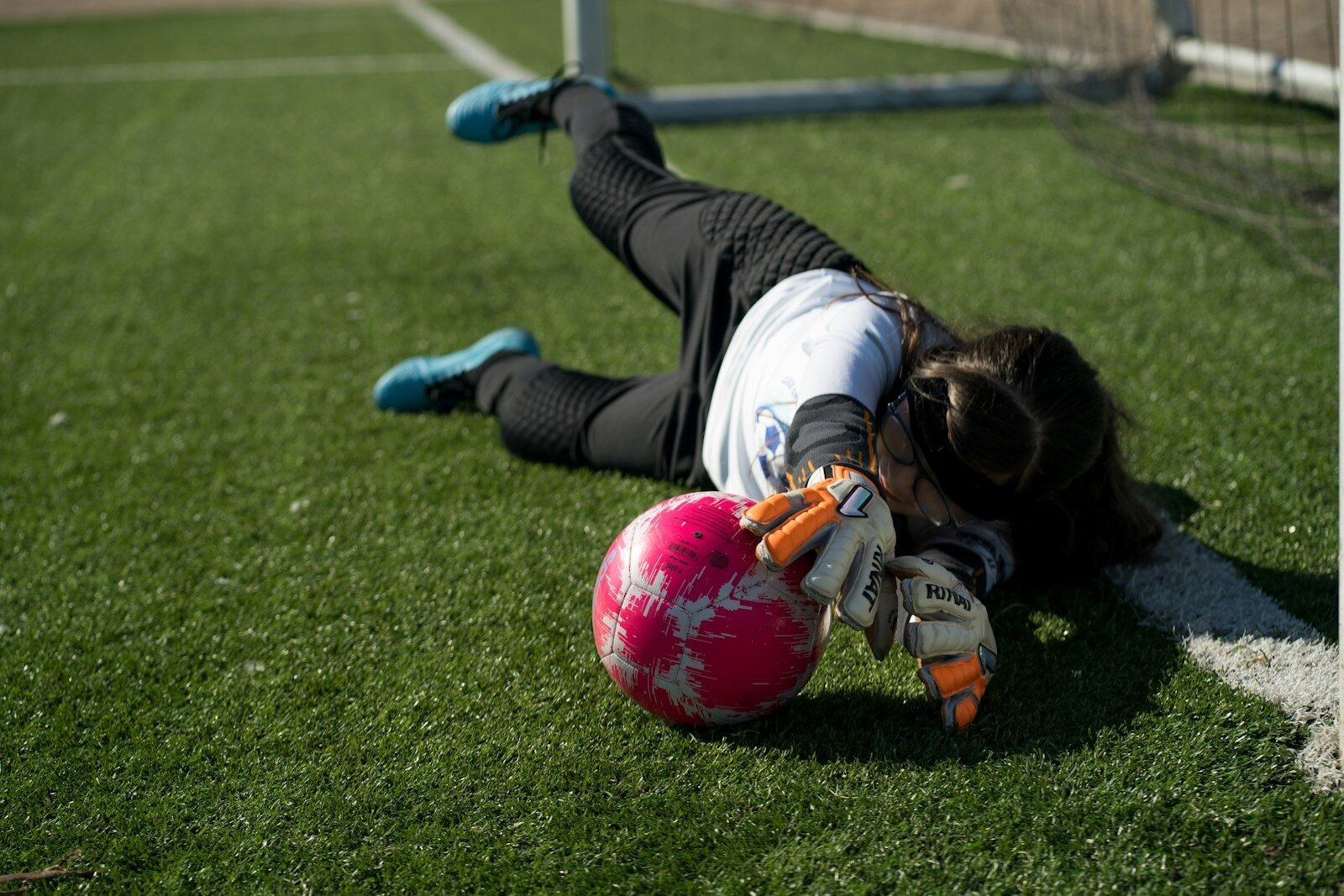
One habit that saves expensive gloves from early failure : Teach your young goalkeeper to push themselves off the ground with a closed fist rather than an open palm. Most latex damage happens not from catching balls but from turf abrasion during recovery after dives. This single technique adjustment can double the lifespan of any pair of premium gloves.
4. Fit Systems That Change How the Glove Performs
Fit is not a comfort issue. Fit is a performance issue. And the difference between how cheap and premium youth goalie gloves fit is one of the most immediately noticeable differences when you put both categories side by side.
Ninety percent of budget gloves use a flat palm construction. This is the cheapest manufacturing method available and it produces a boxy, loose fitting glove where the hand moves around inside during dynamic saves. When a goalkeeper dives and their hand shifts inside the glove mid-catch, the finger protection misaligns, the grip surface shifts, and the catch that should have been clean becomes uncertain.
Expensive and premium youth goalie gloves offer fit systems that eliminate this problem entirely.
Negative cut construction places all stitching on the inside of the glove. The result is a snug second skin fit that moves with the hand rather than around it. This is the most popular cut among technically developed players because it provides the most direct ball feel — the goalkeeper can genuinely sense the ball through the palm rather than catching through a layer of loose material.
Roll finger cut wraps the latex completely around each finger rather than stitching it flat. This maximizes the latex surface area in contact with the ball and produces outstanding grip — particularly useful for young goalkeepers still developing the hand strength to secure powerful shots cleanly.
Hybrid cuts combine the tight feel of negative construction on the middle fingers with the expanded catching surface of roll finger on the index and pinky. This is an intelligent compromise that suits a wide range of hand shapes and playing styles.
Many premium gloves also include internal silicone grip nodes — small raised elements inside the glove that lock the fingers in position during diving saves. The hand stays exactly where it needs to be regardless of the force and angle of impact.
Fitting advice by hand shape: Long slender fingers suit negative cut best. Wider hands with shorter fingers typically find roll finger or hybrid cuts more comfortable without sacrificing performance. When genuinely uncertain have your child try both cuts before committing — the right fit is immediately obvious.
5. Wrist Support That Prevents Real Injuries
The wrist is one of the most vulnerable joints in the goalkeeper position and one of the least discussed when parents are evaluating glove purchases.
Budget gloves address the wrist with a single layer velcro strap. After a few weeks of contact with turf, mud, and general match day conditions that velcro loses most of its grip. The strap loosens during play. The glove shifts. And when a powerful shot hits an unsupported wrist at an awkward angle the joint absorbs force it was never designed to handle alone.
Premium and relatively expensive youth goalie gloves treat the wrist closure as a genuine performance and safety component.
Double wrap elastic strapping systems allow the goalkeeper to determine exactly how tightly and supportively the glove closes around their wrist. Combined with asymmetrical neoprene cuffs that contour naturally to the forearm this creates a locked-in stability that genuinely protects the joint under match conditions.
For growing athletes whose wrist joints are still developing this support is not a luxury feature. A wrist sprain in a young goalkeeper means weeks away from training at exactly the age when consistent development matters most. The right wrist support prevents the kind of awkward landing injuries that interrupt development seasons.
The psychological benefit mirrors what we discussed with finger protection. A young goalkeeper who trusts that their wrists are supported dives without hesitation. They commit fully to saves they would otherwise approach cautiously. That commitment is the difference between a goalkeeper who develops quickly and one who progresses slowly because they are subconsciously managing equipment they do not fully trust.
How to Make Expensive ( premium) Youth Goalie Gloves Worth the Investment
Buying quality expensive youth goalie gloves is the first step. Protecting that investment with proper care is what makes the economics work in your favor over a full season.
Wash after every single session without exception. Sweat, dirt, and artificial turf rubber crumb all accelerate latex breakdown significantly. Lukewarm water and a small amount of mild soap worked gently into the palm then rinsed fully clean. Every session. No exceptions.
Keep latex slightly damp during play. Dry latex grips poorly. Slightly moist latex grips at its best. Wetting gloves before shots is correct goalkeeping technique — not a quirk or superstition.
Air dry only — always. Heat permanently destroys latex compounds. No dryers. No radiators. No sunny windowsills. No hot cars. Cool shaded and flat or hanging after every wash.
Wash before the very first session. Factory coatings on new premium gloves reduce initial grip. A wash before first use removes this immediately and unlocks full grip performance from session one.
Rotate two pairs where possible. Forty eight hours between intense sessions allows latex to recover and extends overall glove lifespan considerably. Keep one pair for matches and a slightly older pair for training — this single habit can extend your premium glove investment through an entire season and beyond.
Budget strategy that actually works: Look for previous season colorways of premium gloves. Glove technology does not change dramatically year to year. Last season’s colors from a premium brand regularly sell at 30 to 40 percent below current season pricing — same latex, same protection, same construction. Different color. Significantly lower price.
The Honest Price Breakdown
| Price Range | What You Actually Get | Best For |
|---|---|---|
| Under $25 | Basic foam palm, decorative finger protection, single stitch construction | First sessions, absolute beginners |
| $25 – $40 | Improved foam, basic spine protection, reasonable first season durability | Recreational players, once weekly training |
| $40 – $70 | Quality latex, genuine fingersave, double stitch, season long durability | Regular training, competitive matches |
| $70 – $100 | Premium latex, advanced fit systems, maximum protection, professional construction | Academy level, three plus sessions weekly |
For most families the $40 to $70 range delivers everything that matters — quality latex, genuine finger protection, and construction that holds up — without crossing into premium territory where you are paying for professional grade features a developing youth player has not yet grown into.
The $70 to $100 range makes clear sense for a child playing at academy or competitive club level who trains three or more times per week and whose game has developed to the point where premium ball feel and maximum protection genuinely affect performance.
The Bottom Line
Expensive youth goalie gloves are not a luxury for parents who want to spend more. They are a practical investment for any child who plays goalkeeper seriously — and they are frequently the more economical choice when you calculate total season cost rather than upfront price.
The five differences covered in this guide — finger protection that actually works, latex that grips in all conditions, construction that lasts a season, fit systems that eliminate slipping, and wrist support that prevents real injuries — are not theoretical advantages.
They show up every single training session. They show up in wet weather matches. They show up in the confidence of a young goalkeeper who trusts their equipment completely and plays without hesitation because of it.
Give your young goalkeeper the tools they need to develop properly, stay healthy, and love what they do between the posts. The right pair of premium youth goalie gloves is a meaningful part of making that possible.
FAQs :
At what age should a child move from budget to Premium youth goalie gloves? Around age 8 to 9 when organized competitive play begins and shots become more powerful and frequent. Before that age a mid range pair is usually sufficient.
Do Premium youth goalie gloves last longer than cheap ones? Yes — significantly. A quality pair maintained properly should last a full nine month season. Budget pairs typically need replacing every six to eight weeks with regular use.
Are expensive gloves suitable for training as well as matches? Quality mid range gloves handle both well. Truly premium gloves are best reserved for matches with an older pair used for daily training to protect the latex.
What is the most important feature to look for in Premium youth goalie gloves? Finger protection quality followed closely by latex grade. Everything else — fit, wrist support, construction — matters but these two features have the most direct impact on safety and performance for developing young goalkeepers.
Can I buy expensive youth goalie gloves online without trying them on? Yes — if you measure correctly first. Measure the palm below the knuckles not including the thumb. Add one inch to get the glove size. Check the specific brand size chart before purchasing as sizing varies between manufacturers.