Expensive Youth Goalie Jerseys: Are They Worth the Money? (2026)

By Carlos Alvares
As an Amazon Associate I earn from qualifying purchases. This post contains affiliate links which means I may receive a small commission at no extra cost to you if you make a purchase through a link. I only recommend gear I have personally researched and evaluated.
The Question Every Goalkeeper Parent Asks Eventually
You are standing in front of two youth goalie jerseys on Amazon.
One is seventeen dollars. One is eighty-five dollars. Both claim to be the best goalkeeper jersey for young players. Both have decent reviews. Both come in your child’s size.
The seventeen dollar one has foam elbow padding and moisture-wicking polyester. The eighty-five dollar one has military-grade Poron XRD impact protection a compression fit and a brand name you recognize from watching professional soccer.
Is the expensive one actually five times better. Or are you paying mostly for branding and marketing that a seven year old goalkeeper will never notice or benefit from.
This is the question most goalkeeper parents ask eventually — and it deserves a completely straight answer rather than a diplomatic response designed to avoid offending any brand or budget bracket.
The Short Answer
It depends entirely on three factors — playing surface training frequency and your child’s commitment to the position.
For a child training once or twice weekly on natural grass whose commitment to the goalkeeper position is still being established — an expensive youth goalie jersey is not worth the money. A quality budget option under thirty dollars delivers everything that child’s situation actually requires.
For a child training three or more times weekly on artificial turf at competitive club level whose commitment is confirmed and sustained — a premium youth goalie jersey is not just worth the money. It is the correctly calibrated investment for their actual situation.
The honest truth is that most youth goalkeeper parents buy at the wrong tier for their child’s real situation — either overspending on premium jerseys for recreational players or underspending on budget jerseys for serious competitive players. Understanding which tier serves your specific child is the most valuable thing this guide delivers.
What You Actually Get When You Spend More on a Youth Goalie Jersey
The price difference between a fifteen dollar and an eighty-five dollar youth goalie jersey is not arbitrary. There are genuine engineering differences at each price tier — and understanding exactly what those differences are helps parents decide whether they are worth paying for their specific child
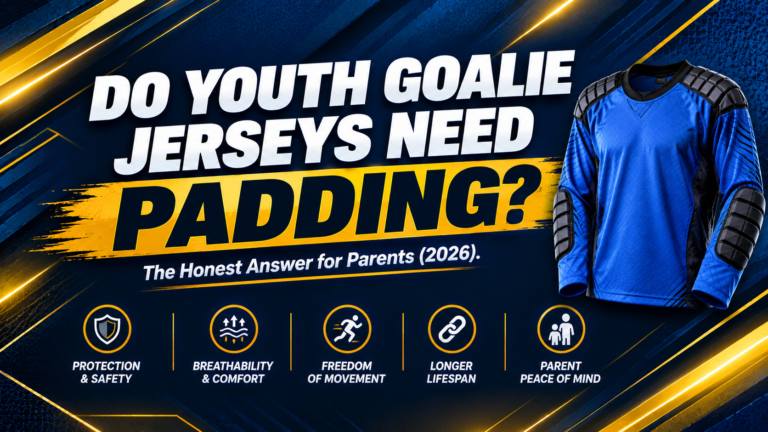
Padding Technology — The Most Meaningful Difference
This is where the price gap produces the most genuine performance difference across youth goalie jersey tiers.
Budget youth goalie jerseys at ten to twenty-five dollars use basic EVA foam or sponge padding at the elbows. This foam absorbs impact adequately for recreational training frequency on natural grass. It maintains its protective properties through a recreational season of once or twice weekly washing and use. It does what foam elbow padding needs to do for the vast majority of youth goalkeepers at the recreational level.
Mid-range youth goalie jerseys at twenty-five to fifty dollars use denser more precisely positioned foam padding — stitched into the sleeve rather than loosely inserted — and construction that keeps the padding at the elbow joint rather than sliding toward the forearm across a season of regular use. The difference from budget is real and meaningful for a child training two to three times weekly.
Premium youth goalie jerseys at fifty to ninety dollars use Poron XRD technology — the material that firms up on impact absorbing up to ninety percent of impact force before returning to its flexible resting state. This is a genuinely different category of protection from standard foam. Poron maintains its protective properties under the repeated high-frequency impact that competitive training on artificial turf produces — where standard foam degrades meaningfully across a competitive season.
The honest verdict on padding: For once or twice weekly recreational play on grass — standard EVA foam in a budget youth goalie jersey is adequate protection. For three or more times weekly competitive training on artificial turf — Poron XRD is a genuine performance upgrade that foam cannot match. Do not pay for Poron XRD for a recreational player. Do not expect foam to serve a competitive artificial turf player through a full season.
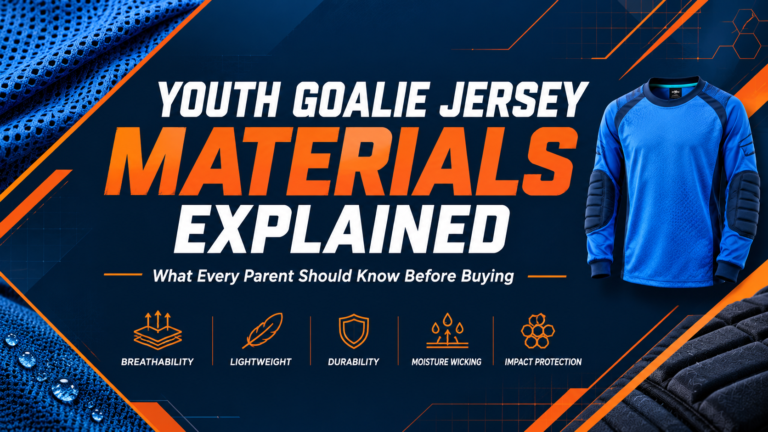
Fabric Technology — Where Diminishing Returns Appear Fastest
This is where the price premium produces the least genuine performance difference for most youth goalkeepers.
Budget youth goalkeeper jerseys use basic moisture-wicking polyester that manages sweat adequately for recreational and developing goalkeeper training loads. It is not premium fabric. It is not the most sophisticated moisture management available. For a child training once or twice weekly in recreational soccer it does not need to be.
Mid-range youth goalie jerseys use better polyester constructions — K-AIR Cool Climacool AEROREADY — that manage moisture more effectively during higher-intensity sustained training. The difference from budget is real but modest for most youth training loads.
Premium youth goalkeeper jerseys use the most advanced fabric constructions available — Nike Dri-FIT circular knit with elastane Storelli compression polyester — that deliver meaningful performance advantages under professional training intensity demands. For a youth goalkeeper training at recreational or semi-competitive frequency the fabric difference between budget and premium is the least justified element of the premium price.
The honest verdict on fabric: The fabric upgrade from budget to premium produces the smallest genuine performance difference for most youth goalkeepers. Do not pay premium prices primarily for fabric technology unless your child trains at genuinely high intensity multiple times weekly.
Construction Quality and Durability — Where Premium Earns Its Keep Over Time
This is where the honest total-cost calculation often surprises parents who focus only on the upfront price difference.
A budget youth goalie jersey at fifteen to twenty dollars used for twice-weekly training on artificial turf will show significant wear — faded fabric degraded padding stability loosening seams — within three to four months of regular use. The mid-season replacement purchase adds fifteen to twenty dollars to the total cost bringing the full-season investment to thirty to forty dollars from a jersey originally purchased to save money.
A mid-range youth goalie jersey at twenty-five to thirty-five dollars used for twice-weekly training on natural grass will hold its construction quality through a full season — twenty to thirty sessions of regular training and washing — without requiring mid-season replacement.
A premium youth goalie jersey at sixty to ninety dollars used exclusively for competitive matches — one match weekly reserved for match days with a separate training jersey for sessions — will last one to two full competitive seasons before showing meaningful wear.
The honest verdict on durability: Total cost across a season is the honest comparison — not upfront price alone. A fifteen dollar jersey replaced twice costs thirty dollars. A thirty dollar jersey lasting the full season costs thirty dollars. Match the construction quality to the actual use demands before comparing prices.
The Three Situations — Matched to the Right Jersey Tier
Situation 1 — Recreational Player Training Once or Twice Weekly on Grass
The right tier: Budget — ten to thirty dollars
A recreational youth goalkeeper training once or twice weekly on natural grass produces the lowest demands on any youth goalie jersey specification — fabric technology padding durability and construction quality. Standard EVA foam elbow protection adequate moisture-wicking polyester and basic goalkeeper-specific cut are all this situation requires.
Spending fifty to ninety dollars on a premium youth goalie jersey for a recreational grass player is the clearest example of buying beyond the situation’s requirements. The Poron XRD protection that justifies the premium price is engineered for artificial turf abrasion demands this player never produces. The compression fabric technology is calibrated for training intensities this player never reaches.
The right youth goalie jersey for this situation: KELME Kids Padded at thirteen to seventeen dollars. Vizari Arroyo at twenty to twenty-six dollars. Both deliver everything this situation requires at the price that correctly reflects the demands being made on the jersey.
Situation 2 — Developing Player Training Two to Three Times Weekly on Mixed Surfaces
The right tier: Mid-range — thirty to fifty dollars
A developing youth goalkeeper training two to three times weekly on a combination of natural grass and artificial turf produces demands that budget jerseys approach their durability limits handling and that premium jerseys significantly overshoot. This is the situation where mid-range youth goalie jerseys deliver their best value proposition.
Mid-range construction quality handles twice to three times weekly washing and training cycles without mid-season degradation. Better foam padding positioning and density handles the increased training frequency without sliding toward the forearm or flattening out by mid-season. And the construction quality supports the full season without requiring replacement.
The right youth goalie jersey for this situation: INTENZ Kids Padded at eighteen to twenty-five dollars. Just 4 Kicks Campeon at approximately thirty dollars. Reusch Match II at thirty to forty-five dollars. Each delivers construction quality matched to developing player training demands without reaching the premium investment that competitive-level artificial turf demands justify.
Situation 3 — Serious Competitive Player Training Three or More Times Weekly on Artificial Turf
The right tier: Premium — fifty dollars and above for match days
A serious competitive youth goalkeeper training three or more times weekly primarily on artificial turf produces the demands that premium youth goalie jerseys are specifically engineered to address. Poron XRD padding absorbs the repeated high-frequency impact of competitive training without degrading across a full competitive season in the way that standard foam does. Premium compression fabric manages the thermal demands of intensive training sessions. And premium construction quality holds through the washing frequency and physical demands of serious competitive goalkeeper use.
But — and this is the most important honest clarification on premium jersey investment — even at this level the two-jersey system is the correct approach rather than one premium jersey serving every purpose. A mid-range training youth goalie jersey for training sessions. A premium youth goalkeeper jersey reserved for match days. Total investment across a full season is consistently lower than replacing one premium jersey that training frequency has exhausted by mid-season.
The right youth goalie jersey system for this situation: Vizari Vallejo or KELME as the training jersey. Storelli ExoShield BodyShield or equivalent premium option as the match day jersey. Two jerseys serving their specific roles produces better protection better performance and lower total season cost than one premium jersey doing everything.
The Honest Price-to-Performance Chart
| Training Situation | Surface | Frequency | Right Tier | Approximate Investment |
|---|---|---|---|---|
| Recreational play | Natural grass | Once weekly | Budget | $13 to $25 |
| Recreational to developing | Natural grass | Twice weekly | Budget to mid-range | $20 to $35 |
| Developing competitive | Mixed surfaces | Two to three times weekly | Mid-range | $25 to $45 |
| Serious competitive | Artificial turf | Three or more times weekly | Two jerseys — mid plus premium | $40 to $80 total |
| Club or academy level | Artificial turf | Four or more times weekly | Two jerseys — mid plus premium | $50 to $100 total |
The Specific Situations Where Premium Is Genuinely Worth It
Premium youth goalie jerseys earn their price in four specific situations. Outside these situations budget and mid-range alternatives serve equally well at a fraction of the cost.
Regular artificial turf training three or more times weekly. This is the single clearest situation where premium Poron XRD protection justifies its cost. The abrasion demands of regular high-frequency training on synthetic surfaces exceed what standard foam handles across a full season. Premium protection here is not a luxury — it is the correctly calibrated specification for the actual demands being placed on the jersey.
Competitive match days for serious players regardless of training jersey choice. A child training seriously who uses a budget jersey for training sessions and a premium jersey for match days is using both tiers correctly. The match day premium investment is justified by the protection confidence it provides and by the lifespan it delivers when not subjected to training frequency demands.
Children who have confirmed long-term commitment to the goalkeeper position. The premium investment makes financial sense when the commitment horizon is long enough to justify it. A child in their second or third season with confirmed sustained enthusiasm for the goalkeeper position has demonstrated the commitment that makes a premium jersey investment appropriate — the same child in their first season has not.
Gift purchases where the psychological impact of premium equipment matters as much as the technical specifications. A premium youth goalie jersey as a significant birthday or holiday gift for a committed young goalkeeper delivers a psychological confidence impact alongside the technical performance improvement. The emotional value of premium equipment for a motivated young player is a real and legitimate purchasing consideration that strictly technical comparisons omit.
The Specific Situations Where Premium Is Not Worth It
First season goalkeepers whose commitment is still being established. The most common overspending mistake in youth goalkeeper equipment. A first season player may commit fully to the goalkeeper position for life — or may decide by December that they prefer playing outfield. The premium investment before that commitment is confirmed is premature regardless of how enthusiastic the child currently appears.
Recreational players training once or twice weekly on natural grass. Budget jerseys handle these demands adequately. The premium price buys protection technology that these conditions never test — Poron XRD for grass impact forces that standard foam already handles — and fabric technology calibrated for training intensities these sessions never reach.
Children who grow rapidly. A young goalkeeper who grows significantly between August and March will outgrow a premium youth goalie jersey within a single season — making the premium investment a one-season purchase that a budget jersey at the same lifespan would have served equally well at a fraction of the cost.
When the budget constrains purchasing the right gloves. Goalkeeper gloves are the most important piece of goalkeeper equipment. If the budget choice is between a premium youth goalie jersey and premium goalkeeper gloves — buy the premium gloves and the budget jersey every time. Grip and finger protection matter more to goalkeeper performance than jersey padding technology.
Ready to find the right youth goalie jersey for your child’s specific situation? Our complete Best Youth Goalie Jersey guide covers six verified Amazon picks across every budget level — honestly assessed for the specific situations each one serves best. On a tight budget? Our Best Budget Youth Goalie Jersey Under $30 Guide covers seven verified picks that deliver genuine protection without premium pricing.
Sorting out the complete goalkeeper kit? Our Best Youth Goalie Gloves guide covers the most important piece of goalkeeper equipment — ten verified picks across every age and budget.
The Bottom Line
The honest answer to whether expensive youth goalie jerseys are worth it is neither yes nor no — it is depends on your child’s specific situation.
Depends on the surface they train on. Depends on how frequently they train. Depends on how long they have been committed to the position. And depends on whether the premium investment is being made at a point in their goalkeeper development where the specifications it delivers are actually being tested by their real use demands.
For a recreational player on grass once a week — the seventeen dollar jersey is worth it and the eighty-five dollar one is not. For a serious competitive player training four times weekly on artificial turf — the premium investment earns its keep through the full season. For every situation between those two extremes — the right youth goalie jersey sits somewhere in the mid-range where construction quality and protection level are matched to the actual demands being placed on the jersey.
Match the jersey tier to the child’s actual situation. Not to their aspirational situation. Not to what they might become. To what they actually are right now — and to what the evidence of their commitment and training demands currently justifies investing in.
FAQ: Are Expensive Youth Goalie Jerseys Worth It
At what price does a youth goalie jersey become genuinely better rather than just more expensive?
The most meaningful performance upgrade occurs at two price thresholds. The move from under twenty dollars to twenty-five to thirty-five dollars produces a genuine improvement in padding stability and construction durability that most youth goalkeepers training twice weekly will notice across a full season. The move from thirty-five dollars to sixty dollars and above produces a genuine improvement in padding technology — from standard foam to Poron XRD — that competitive artificial turf players specifically will notice but recreational grass players will not.
Is the Storelli ExoShield worth it for a youth goalkeeper?
For a young goalkeeper training regularly on artificial turf — yes. The Poron XRD technology delivers protection that standard foam cannot match under the repeated high-frequency impact of artificial turf goalkeeper training. For a recreational grass player — no. The premium price buys protection technology that grass training conditions never test. The Storelli is worth its price for exactly the player it was designed for and not worth it for players whose conditions do not justify the specification.
Should I buy a premium youth goalie jersey or premium goalkeeper gloves if I can only choose one?
Goalkeeper gloves without question. The gloves are in direct contact with the ball on every save — grip finger protection and feel directly affect every save a young goalkeeper makes. A premium glove with a budget jersey outperforms a budget glove with a premium jersey for actual goalkeeper performance in every measurable sense. Buy the best gloves the budget allows and find the right jersey within whatever remains.
How much should I realistically spend on a youth goalkeeper jersey?
For a first season goalkeeper — thirteen to twenty-five dollars. For a developing player training twice weekly — twenty to thirty-five dollars. For a committed competitive player training three or more times weekly on artificial turf — thirty to fifty dollars for a training jersey and fifty to eighty-five dollars for a dedicated match day jersey used exclusively for competition. These ranges reflect what each training situation actually justifies — not what marketing suggests every goalkeeper deserves.
Does the brand name matter when buying a youth goalkeeper jersey?
Brand heritage matters more than brand recognition for goalkeeper jerseys. KELME has genuine Spanish soccer credentials. Vizari has twenty-five years of US soccer market experience. Just 4 Kicks is a dedicated goalkeeper specialist. These brands deliver construction quality that reflects real goalkeeper expertise. Generic brand names with no soccer background attached to impressive-sounding specifications are the purchases most likely to disappoint. Choose brand heritage over brand recognition when both are available within your budget.
Related Guides
- Best Youth Goalie Jersey 2026: The Complete Parent Guide to Every Budget and Playing Surface
- Best Budget Youth Goalie Jersey Under $30 — 7 Verified Picks
- Best Padded Youth Goalie Jersey — 4 Verified Amazon Picks
- Best Youth Goalie Jersey for Beginners — 4 Top Picks
- Youth Goalie Jersey Size Guide: How to Measure Your Child Correctly
- Best Youth Goalie Gloves 2026 — The Ultimate Parent Buying Guide
Have a specific question about whether a partiular jersey investment is right for your child’s situation? Drop it in the comments — every question gets a real answer.