Youth Goalie Gloves: Flat Cut vs Roll Finger — Which One Actually Performs Better?
By Carlos Alvares
As an Amazon Associate I earn from qualifying purchases. This post contains affiliate links which means I may receive a small commission at no extra cost to you if you make a purchase through a link. I only recommend gear I have personally tested and thoroughly evaluated.
Youth Goalie Gloves Cut Types: The Question Every Parent Asks and Nobody Answers Clearly
You found the right brand. You confirmed the right size. You are about to click buy — and then you notice it.
Flat Cut. Roll Finger. Negative Cut. Half Negative Cut. Positive Cut.
Five different terms on five different listings. No explanation of what any of them actually mean. No guidance on which one is right for a nine year old playing competitive soccer twice a week on artificial turf.
Most buying guides skip this question entirely. The ones that address it use technical language that assumes you already understand goalkeeper glove construction. Neither helps a parent standing at the point of purchase trying to make the right decision.
This guide answers the question completely and in plain language. By the end you will know exactly what each cut does how each one feels on a child’s hand and which one serves your specific child’s age level and stage of development — with honest product recommendations for every cut type across your verified youth goalie gloves options.
The Short Answer
For most youth goalkeepers aged 5 to 12 the flat cut is the right choice. It is the most comfortable the most forgiving and the most appropriate for developing catching mechanics.
For older more technically developed players aged 12 and above the roll finger delivers more latex contact with the ball and suits players who have established consistent catching technique.
The negative cut and half negative cut are performance cuts for the most technically developed competitive players — not appropriate for beginners or younger developing goalkeepers regardless of how impressive they look on the product listing.
Everything below explains exactly why.
Why Cut Actually Matters for Youth Goalie Gloves
Most parents assume the cut is a cosmetic difference — a minor construction variation that affects how the glove looks rather than how it performs. It is not.
The cut of a goalkeeper glove determines three things that directly affect how your child performs in goal.
How much latex contacts the ball on every catch. Different cuts produce different amounts of latex surface area in contact with the ball during a save. More contact means more grip. Less contact means more ball feel and control. The right balance depends entirely on the player’s technical development.
How closely the glove fits the hand. Cuts range from roomy and forgiving to snug and performance oriented. A cut that is too tight restricts the natural hand movement that developing catching mechanics require. A cut that is too roomy reduces the grip confidence that competitive play demands.
How the glove responds during dynamic saves. During a dive the hand and glove must move as one unit. Cuts that fit closer to the hand produce better unity of movement. Cuts with more excess material can shift during dynamic saves — reducing the precision of the save regardless of how good the latex quality is.
Understanding cut means understanding that the same glove in a different cut is a fundamentally different experience for a young goalkeeper — not a cosmetic variation.
The Five Cuts Explained — In Plain Language
Flat Cut — The Foundation Cut
The flat cut — sometimes called the standard cut or traditional cut — is the original goalkeeper glove construction and still the most widely used across the youth goalkeeper glove market.
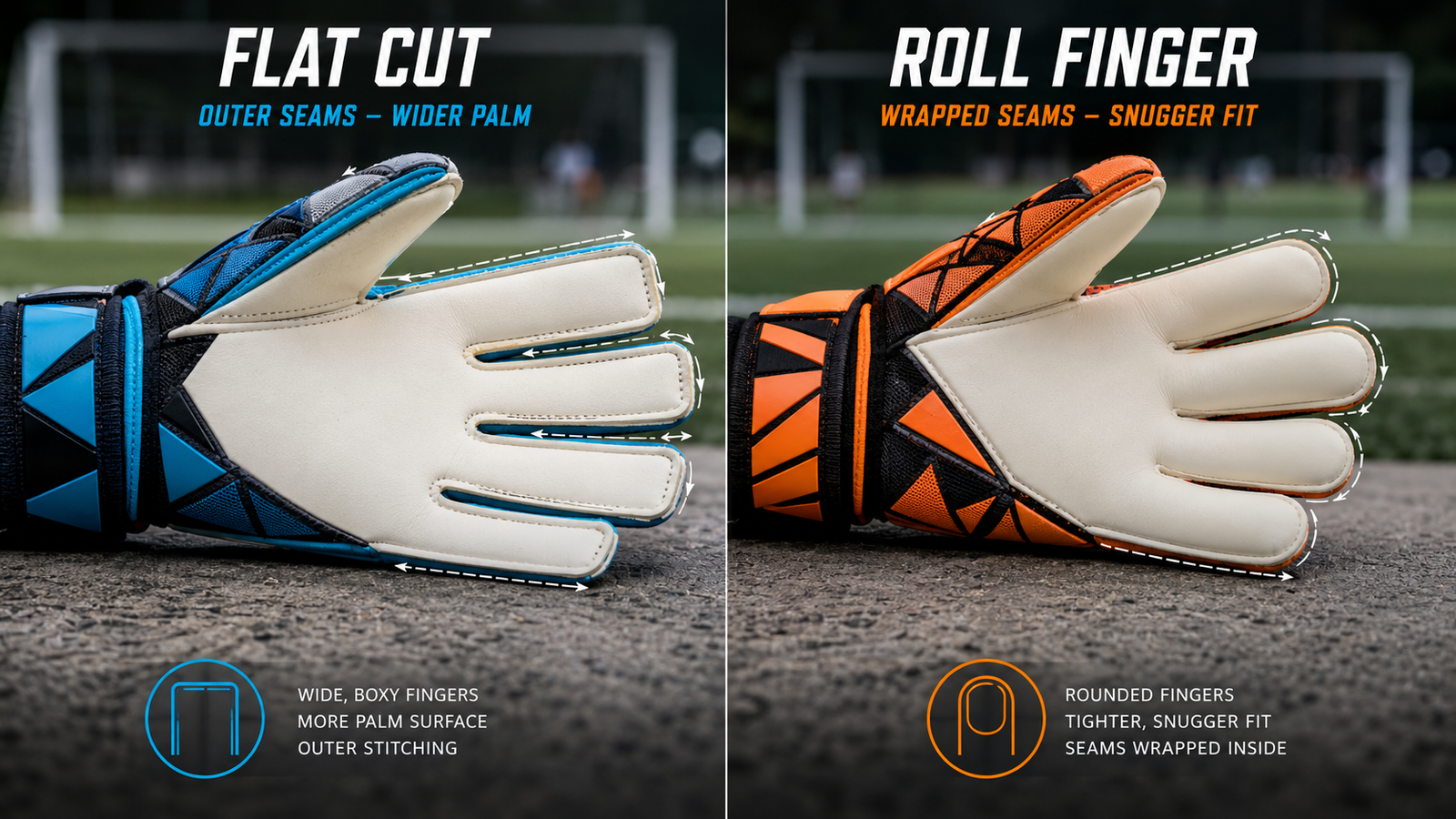
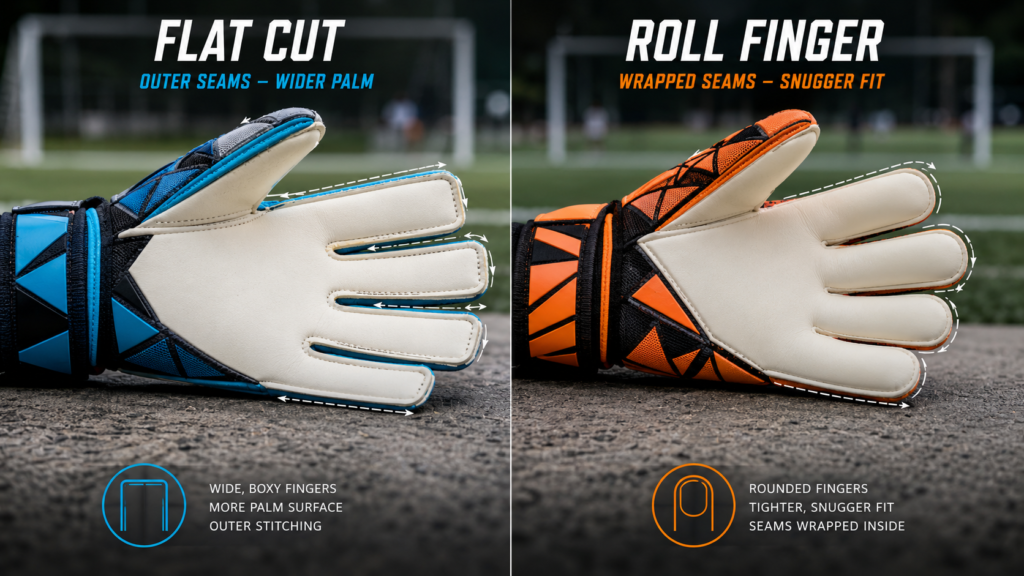
In a flat cut the palm panel and the backhand panel are stitched together on the outside of the glove. This external stitching creates a slightly roomier internal space — the hand sits inside the glove with a small amount of space between the latex palm and the fingers.
What it feels like: Comfortable and natural from the very first session. No break-in period required. The hand moves freely inside the glove without restriction. Young goalkeepers can open and close their hand fully without the glove pulling or tightening against the movement.
What it does for grip: The slightly roomier fit means the latex palm is not pressed tightly against every part of the hand. Grip is reliable and confident but slightly less direct than tighter cut alternatives. For a young goalkeeper still developing consistent catching mechanics this reliability is more valuable than the marginal grip improvement of a tighter cut.
Who it suits: The flat cut is the right choice for every beginner goalkeeper regardless of age. Every child aged 5 to 10 developing their first catching habits. Any player who has not yet established consistent and reliable catching technique. And any parent who wants a forgiving comfortable fit that handles the developing hands of a growing young goalkeeper without restriction.
Verified youth goalie gloves using flat cut:
The Adidas Predator Training Youth uses positive cut construction — the Adidas terminology for flat cut — across their full junior range from size 3 to 7. The positive cut is specifically why this glove is recommended as the training pair for developing players across multiple articles on this site. The comfortable forgiving fit handles the high repetition demands of training sessions without restricting the natural hand movement that technique development requires.
The Reusch Attrakt Solid Junior uses flat palm construction with the slightly wider finger positioning that characterizes Reusch junior engineering. The wider flat palm creates a broader catching surface — more latex in contact with the ball than a standard flat cut while maintaining the roomy forgiving fit that developing players need. For parents who want flat cut performance with specialist brand construction quality the Attrakt Solid is the honest recommendation.
The Reusch Attrakt Infinity Junior and Reusch Attrakt Advance Junior both use flat palm construction — maintaining the comfortable forgiving fit across the Reusch junior range while upgrading the latex performance at each level.
The T1TAN Classic White-Out Junior uses classic flat palm construction — straightforward comfortable and appropriate for the training and recreational competitive demands of developing youth goalkeepers.
Roll Finger Cut — More Grip Surface Contact
The roll finger cut takes the flat cut foundation and makes one specific engineering change — wrapping the latex completely around each finger rather than stitching it flat against the side of the finger.
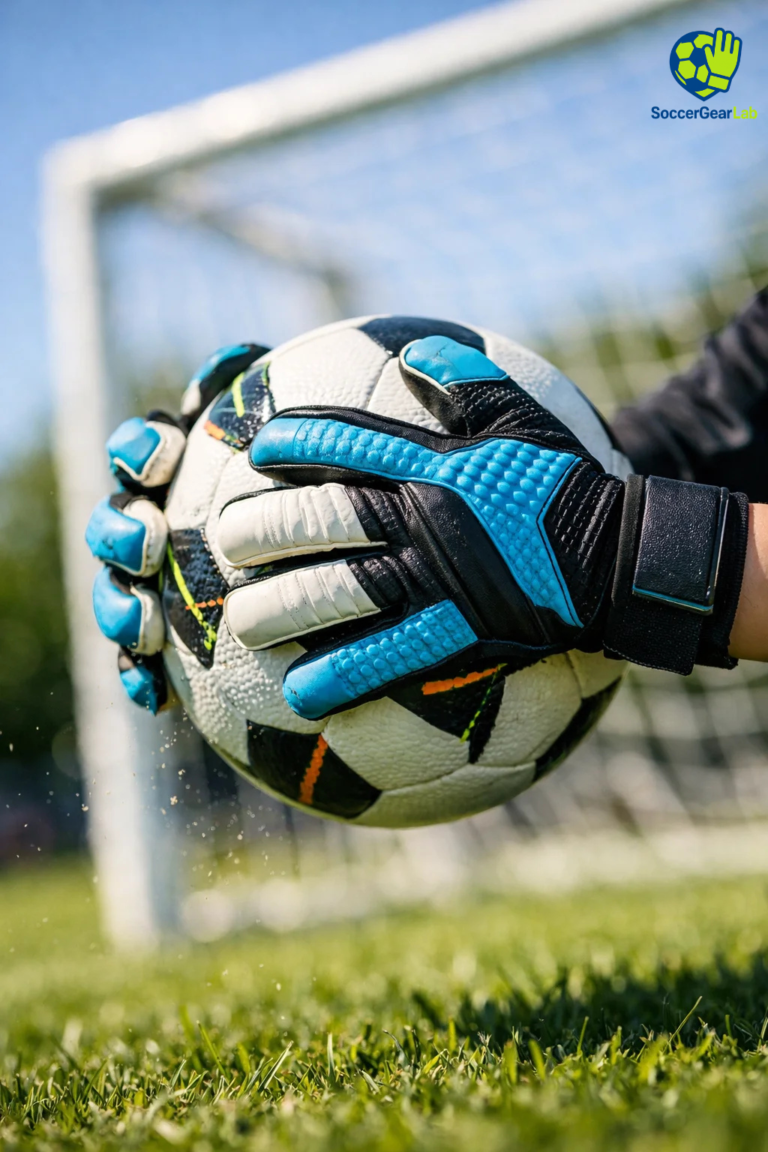
In a flat cut the latex palm panel meets the backhand panel at the side of each finger. In a roll finger cut the latex wraps around the full circumference of each finger — increasing the latex surface area in contact with the ball during every catch.
What it feels like: Noticeably snugger around the fingers than a flat cut. The latex wraps each finger more closely — producing a more connected feeling between the hand and the glove. Some players describe it as feeling like the glove is part of the hand rather than something worn on it.
What it does for grip: The additional latex wrap around each finger increases the grip surface area in contact with the ball. Every catch involves more latex contact — producing more reliable grip particularly when the ball contacts the fingers rather than the full palm. For technically developing players who have established consistent hand positioning this additional grip surface makes a meaningful practical difference.
Who it suits: Roll finger is appropriate for players who have developed consistent catching mechanics and want more latex contact without the snug second-skin feel of a negative cut. Typically appropriate from age 10 to 11 with at least one or two seasons of regular organized goalkeeper training completed. Not suitable for beginners or players who find tighter fitting gloves uncomfortable or restrictive.
Verified youth goalie gloves using roll finger construction:
The Renegade GK Triton offers roll finger style options within their multiple style lineup — check the current Amazon listing for available style variations as these change by season. The Super Grip latex combined with roll finger construction produces the most latex-to-ball contact available in the Renegade GK Level 2 range — the combination that delivers the grip confidence competitive youth goalkeepers feel immediately.
The Renegade GK Eclipse uses construction that wraps closely around the finger structure — producing the direct ball feel that makes the Eclipse the recommended technical development pick for older youth players with established catching mechanics.
Negative Cut — The Performance Cut
The negative cut places all stitching on the inside of the glove rather than the outside. This single construction change produces the snuggest most performance-oriented fit available in goalkeeper gloves — a second-skin feel that wraps the hand as closely as the glove material allows.
What it feels like: Immediately and noticeably tighter than a flat cut. The glove feels like it is part of the hand rather than something worn on it. Ball contact through the palm is direct and immediate — the goalkeeper genuinely senses the ball through the latex rather than through a layer of material. There is no excess material anywhere in the glove.
What it does for grip: Maximum latex-to-hand contact produces maximum ball feel and the most direct catching feedback available. For a technically developed goalkeeper working on catching precision this feedback accelerates technical improvement — every repetition provides real information about hand position timing and contact quality.
Who it suits: Technically developed players aged 12 and above with multiple seasons of organized goalkeeper training. Players who have established fully consistent catching mechanics and who benefit from direct feedback rather than forgiving construction. Not suitable for beginners younger players or any goalkeeper still developing basic catching habits — the snug fit restricts natural hand movement in ways that actively impede technical development at early stages.
Verified youth goalie gloves using negative cut:
The Uhlsport Absolutegrip HN Pro Jr 2025 uses Hyper Negative cut — Uhlsport’s most extreme version of negative cut construction — in confirmed youth sizes 3 and 4. The Absolutegrip latex combined with Hyper Negative construction delivers the most direct ball feel available in any confirmed youth goalkeeper glove at those sizes. For a seriously competitive young goalkeeper aged 5 to 8 in sizes 3 or 4 this is the only premium negative cut option available in the verified youth range.
The Adidas Predator Match Fingersave Junior uses Half-Negative Cut — a construction that places some but not all stitching on the inside of the glove. This produces a fit between flat cut and full negative cut — closer to the hand than flat cut with more direct ball feel but less snug than a full negative cut. The Half-Negative is why the Match Fingersave Junior feels noticeably different from the Training Youth despite both being Adidas products — the cut change is as significant as the latex upgrade in producing the match-day performance difference between the two gloves.
Half Negative Cut — The Middle Ground
The half negative cut — used on the Adidas Predator Match Fingersave Junior — places stitching on the inside of the glove for some panels while maintaining external stitching for others. The result is a fit that sits between flat cut and full negative cut.
What it feels like: Closer to the hand than a flat cut with better direct ball feel — but not as snug as a full negative cut. The compromise between comfort and performance that makes it the most practically useful performance cut for youth players transitioning from training level to match day gloves.
Who it suits: Players aged 10 to 13 whose catching technique is developing consistency and who want improved ball feel without the full commitment of a negative cut. The most appropriate performance cut upgrade for youth players making their first step away from flat cut construction.
Cut Comparison — At a Glance
| Cut Type | Fit | Ball Feel | Best Age | Best For |
|---|---|---|---|---|
| Flat Cut | Roomy and forgiving | Good — reliable | 5 – 12 years | Beginners — all developing players |
| Roll Finger | Snug around fingers | Very good — more contact | 10 – 14 years | Players with established technique |
| Half Negative | Close — between flat and negative | Very good — direct | 10 – 13 years | First performance cut upgrade |
| Negative Cut | Snug — second skin feel | Excellent — maximum direct | 12 years and above | Technically developed competitive players |
Which Cut Is Right for Your Child — Three Questions
Question 1 — How old are they and how long have they been playing goalkeeper?
| Situation | Recommended Cut |
|---|---|
| First or second season — any age | Flat cut — always |
| Age 5 to 10 — any experience level | Flat cut — always |
| Age 10 to 12 — two or more seasons | Flat cut or roll finger |
| Age 12 to 14 — established technique | Roll finger or half negative |
| Age 14 and above — serious competitive | Half negative or negative cut |
Question 2 — Does your child complain that their gloves feel loose or disconnected from the ball?
If yes — they may be ready to move from flat cut to roll finger. The complaint that gloves feel loose and that they cannot feel the ball properly through the palm is the clearest signal that a developing goalkeeper has outgrown flat cut construction and is ready for the closer fit of roll finger.
If no — flat cut is serving them correctly. Do not move to a tighter cut before the player is genuinely ready — the restriction it produces at the wrong developmental stage creates more problems than the additional grip surface solves.
Question 3 — Does their current glove shift on the hand during dynamic saves?
If you notice the glove rotating or shifting on your child’s hand during dives or dynamic saves — the glove is either too large or the flat cut is producing too much internal movement for their current level of play. Correct the size first. If the size is correct and movement persists consider roll finger as the next step.
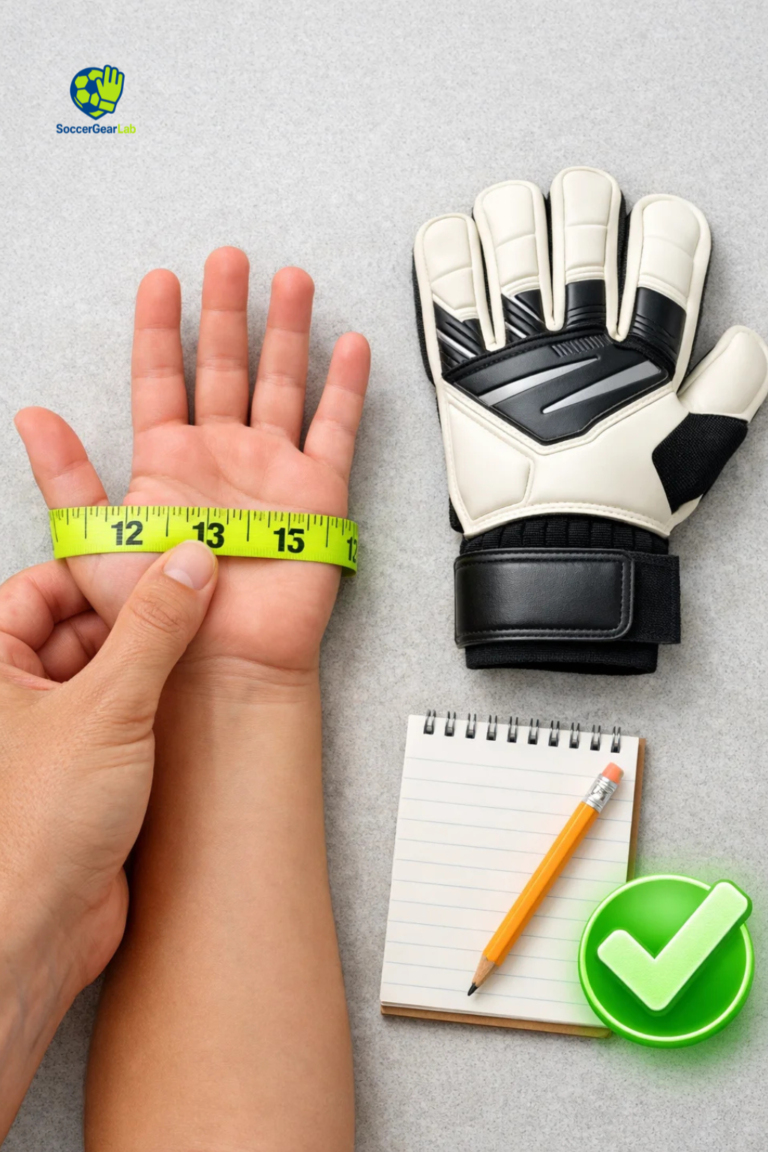
How Cut Affects Sizing
This is the practical consideration most parents miss when switching between cuts — and it causes the most common sizing mistake when upgrading from flat cut to roll finger or negative cut.
A flat cut glove and a roll finger glove in the same size feel noticeably different internally. The roll finger wraps more closely around each finger — producing a snugger feel at the same nominal size. A player who comfortably wears a size 6 flat cut may find a size 6 roll finger uncomfortably tight.
When purchasing a roll finger or negative cut for the first time consider sizing up half a size from your normal flat cut measurement. This is particularly important for the Uhlsport Absolutegrip HN Pro Jr 2025 in Hyper Negative cut — the most snug construction on this list — where sizing up is strongly recommended.
Flat cut and positive cut gloves require no adjustment from your standard measurement. Roll finger — consider half size up. Negative and Hyper Negative — size up half a size without exception.
The Honest Recommendation for Most Parents
If you are reading this guide because you are not sure which cut to choose for your child — the answer for the majority of youth goalkeeper parents is the flat cut.
Here is the complete honest reasoning. Most young goalkeepers aged 5 to 12 are still developing the catching mechanics that make tighter performance cuts genuinely useful. A negative cut on a player who has not yet established consistent hand positioning does not improve their catching — it restricts the natural movement their developing technique requires.
The flat cut allows natural hand movement rewards developing catching mechanics with reliable grip and forgives the imperfect hand positioning that every developing goalkeeper is working to correct. It is the cut that most professional goalkeeper coaches recommend for youth players for exactly these reasons — not because it is cheaper or simpler but because it genuinely serves developmental needs better than performance cuts at this stage.
Move to roll finger when your child starts complaining that their gloves feel disconnected from the ball. Move to half negative when their technique is established and match day performance is the priority. Move to negative cut when they are serious competitive players aged 12 and above with multiple seasons of consistent training behind them.
Not before.
The Bottom Line
The cut of a youth goalie glove is not a cosmetic detail. It determines how the glove fits the hand how much latex contacts the ball and how the glove responds during the dynamic saves that define a young goalkeeper’s development.
Flat cut for beginners and developing players — the construction that serves the majority of youth goalkeepers most effectively across every age group from first season through to early competitive play. Roll finger for players who have established consistent technique and want more latex-to-ball contact. Half negative for the first performance cut upgrade at competitive level. Negative cut for the most technically developed serious competitive players aged 12 and above.
Match the cut to the player’s development stage — not to the most impressive specification on the product listing. The right cut for your child’s current level serves their development better than the most advanced cut available regardless of how much better it looks on paper.
FAQs:
What is the difference between flat cut and roll finger youth goalie gloves? The flat cut stitches the palm and backhand panels together on the outside of the glove — producing a roomy comfortable fit appropriate for developing players. The roll finger wraps the latex completely around each finger — producing a snugger fit with more latex surface area in contact with the ball. Flat cut suits beginners and developing players. Roll finger suits players with established catching technique who want more latex-to-ball contact.
Which cut is better for a beginner youth goalkeeper? Flat cut without exception. The roomy comfortable fit allows natural hand movement that developing catching mechanics require. Tighter cuts restrict the natural hand movement that technique development depends on — actively impeding development at early stages rather than supporting it. Move to roll finger only when your child has established consistent catching mechanics over one or more seasons of regular organized training.
Can a youth goalkeeper use a negative cut glove? Yes — but only at the right developmental stage. Negative cut is appropriate for technically developed competitive players aged 12 and above with multiple seasons of consistent organized goalkeeper training. For younger players or those still developing basic catching habits the snug second-skin fit of a negative cut restricts natural hand movement in ways that create more problems than the additional ball feel solves.
Does the cut affect glove sizing? Yes — and this catches most parents off guard when switching between cuts. A roll finger or negative cut glove in the same nominal size feels noticeably snugger than a flat cut at the same size. When purchasing a roll finger for the first time consider sizing up half a size. For negative cut and Hyper Negative cut gloves — including the Uhlsport Absolutegrip HN Pro Jr 2025 — sizing up half a size is strongly recommended without exception.
What cut does the Adidas Predator Match Fingersave Junior use? The Adidas Predator Match Fingersave Junior uses Half-Negative Cut — a construction that places some stitching on the inside of the glove producing a fit between flat cut and full negative cut. This is one of the key reasons it feels noticeably different from the Adidas Predator Training Youth which uses Positive Cut — the Adidas terminology for flat cut. The cut change is as significant as the latex upgrade in producing the match-day performance difference between the two gloves.
What cut does Reusch use on their junior goalkeeper gloves? Reusch uses flat palm construction across their junior range — the Attrakt Solid Infinity and Advance Junior all use flat palm. The Reusch flat palm has a slightly wider finger positioning than standard flat cut alternatives — increasing the latex catching surface area while maintaining the comfortable forgiving fit that developing youth goalkeepers need. This wider flat palm is one of the specific construction features that makes Reusch junior gloves consistently recommended for younger developing players.
When should a youth goalkeeper move from flat cut to roll finger? When they start complaining that their gloves feel loose or disconnected from the ball — that they cannot feel the ball properly through the palm during catches. This complaint is the clearest signal that a developing goalkeeper has outgrown flat cut construction and is ready for the closer fit of roll finger. It typically emerges after one or two seasons of regular organized training at ages 10 to 12 for most youth goalkeepers.
Related Guides
- Best Youth Goalie Gloves 2026 — The Complete Parent Guide
- Youth Goalie Gloves Grip Types : Easy Guide for Parents
- Youth Goalie Gloves Size Chart: How to Choose the Right Fit
- Adidas Youth Goalie Gloves: A Simple Guide for Parents
- The best Reusch Youth Goalie Gloves: The Complete Parent Guide
- Renegade GK Youth Goalie Gloves: 5 Outstanding Picks That Actually Perform