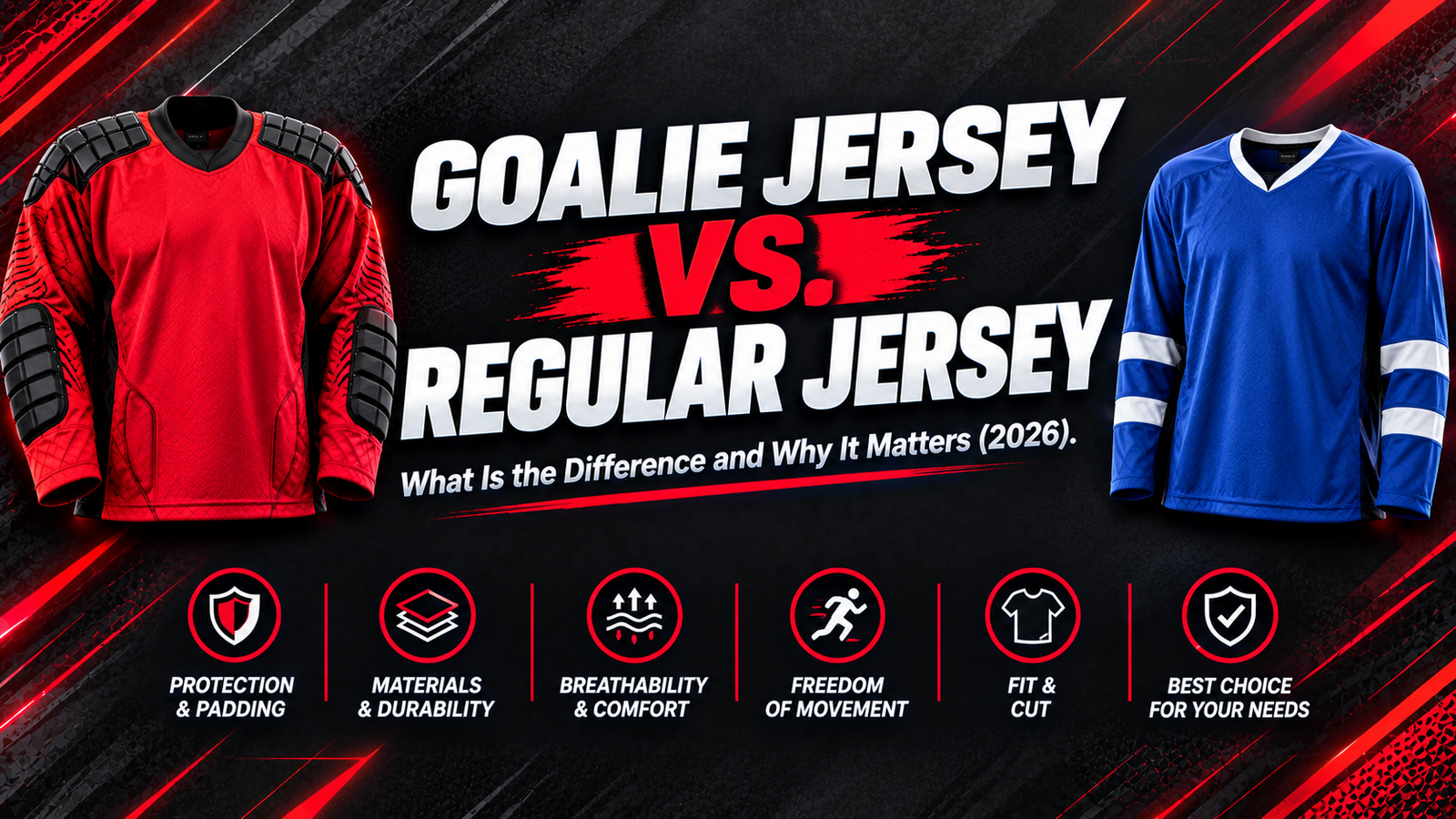
Youth Goalie Jersey vs Regular Soccer Jersey: What Is the Difference and Why It Matters for Young Goalkeepers (2026)
By Carlos Alvares
As an Amazon Associate I earn from qualifying purchases. This post contains affiliate links , which means I may receive a small commission at no extra cost to you if you make a purchase through a link. I only recommend gear I have personally researched and evaluated.
Choosing soccer gear for a young player can be surprisingly confusing. A regular soccer jersey might look perfectly fine, so why spend more on a youth goalie jersey?
The answer comes down to what goalkeepers actually do on the field.
Outfield players spend most of the game running, passing, dribbling, and challenging for the ball. A goalkeeper has a very different job. They may dive, slide, kneel, jump, and land on the ground repeatedly during a single training session or match.
That difference is why goalkeeper clothing is designed differently.
A youth goalie jersey can provide extra coverage, a goalkeeper-specific fit, and in some cases padding around areas that regularly contact the ground. A regular soccer jersey, on the other hand, is usually designed to prioritize lightweight movement and ventilation.
So, does every young goalkeeper need a specialized jersey?
Not necessarily. But understanding the difference can help parents choose gear that makes sense for their child’s age, playing surface, training habits, and budget.
Why the Jersey Matters More for a Young Goalkeeper
A soccer jersey isn’t just about team colors.
For a goalkeeper, the right shirt can affect comfort while diving, moving around the goal, and getting back to their feet. Young goalkeepers are also still developing their technique, which means they may spend plenty of time practicing dives and ground saves.
Think of it like this: a goalkeeper’s jersey is part of their working equipment.
It doesn’t make a young player a better goalkeeper by itself, but comfortable gear can make training easier and help the player concentrate on technique instead of worrying about an uncomfortable shirt.
What Is a Youth Goalie Jersey?
A youth goalie jersey is a soccer shirt designed specifically for young goalkeepers.
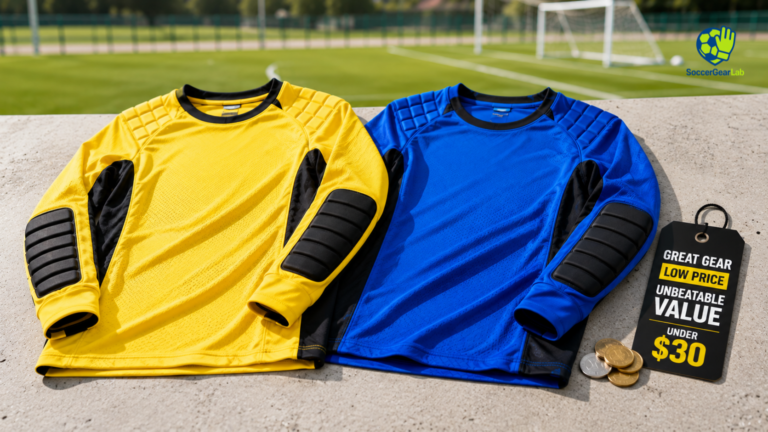
Unlike a standard outfield jersey, goalkeeper shirts may include features intended for repeated contact with the ground. Depending on the model, that can include padded areas around the elbows, forearms, shoulders, or other parts of the upper body.
Built for the Goalkeeper’s Position
Goalkeepers move differently from outfield players.
They don’t simply run from one end of the field to another. They also dive sideways, drop quickly, stretch for shots, and get back up repeatedly.
A goalkeeper jersey is designed with that movement pattern in mind.
Some youth goalkeeper shirts also use slightly different cuts or construction to provide a balance between coverage and mobility.
Padding and Protection
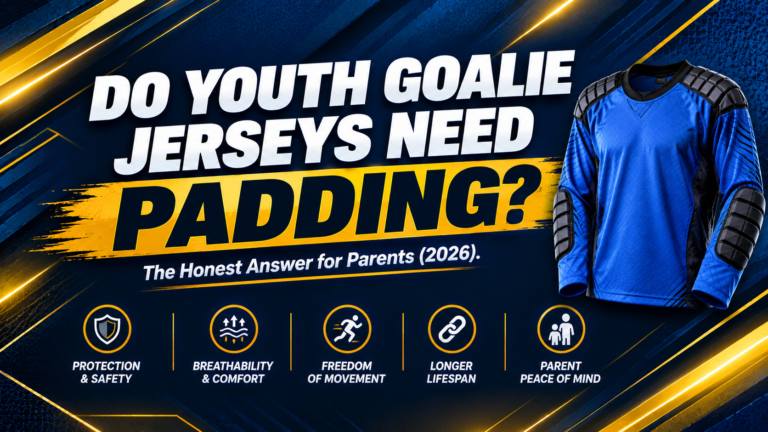
One of the biggest differences you’ll notice is padding.
Some padded youth goalie jerseys include foam or other protective material around the elbows and forearms. The goal isn’t to make a goalkeeper completely protected from impact. No jersey can do that.
Instead, padding can provide another layer between the young goalkeeper and the playing surface.
That can be particularly useful during training sessions where a player is practicing dives again and again.
What Is a Regular Soccer Jersey?
A regular soccer jersey is generally designed for outfield players.
Its main priorities are usually lightweight construction, breath-ability, and unrestricted movement while running.
Designed for Outfield Players
Midfielders, defenders, and forwards spend most of their time moving around the pitch on their feet.
They don’t normally need the same type of repeated elbow or forearm contact that goalkeepers experience.
That’s why a standard soccer jersey typically doesn’t include goalkeeper-style padding.
Lightweight Construction
Regular soccer shirts are often intentionally simple.
Less material can mean less weight, and breathable fabrics can help players stay comfortable while running.
For an outfield player, that design makes perfect sense.
For a goalkeeper, however, the priorities can be slightly different.
Youth Goalie Jersey vs Regular Soccer Jersey: The Key Differences
So what separates the two?
Let’s break it down.
1. Padding and Protection
This is probably the most obvious difference.
A goalkeeper jersey may have padding around areas that commonly hit the ground during dives. A regular soccer jersey normally doesn’t.
Padding isn’t mandatory for every goalkeeper, but it can be useful for young players who are still learning how to dive and land correctly.
It’s best viewed as an extra comfort feature rather than protective equipment that eliminates injury risk.
2. Fit and Freedom of Movement
A goalkeeper needs to move freely.
A shirt that is too tight can feel restrictive when reaching overhead or stretching sideways. A shirt that is excessively loose can become annoying during dives and movement.
The ideal fit gives the goalkeeper enough room to move without hanging excessively from the body.
That’s why sizing matters just as much as the padding itself.
3. Fabric and Breath ability
Goalkeepers can get just as hot as outfield players.
They may not run continuously, but goalkeeper training can still be physically demanding.
A good youth goalie jersey should allow comfortable movement and reasonable airflow. Breathable materials are especially useful during warm-weather training.
Padding can add warmth, though, so parents should consider the climate and playing environment before choosing a heavily padded shirt.
4. Visibility on the Field
Goalkeeper jerseys are often made in colors that stand out from the rest of the team.
That’s not just a fashion choice.
A goalkeeper needs to be easily identifiable by teammates, opponents, and officials. Team uniforms may also have specific requirements regarding goalkeeper colors.
If you’re buying a jersey for matches, always check your club or league’s uniform requirements first.
5. Durability
Goalkeepers can be tough on clothing.
Repeated dives, slides, and contact with artificial turf or grass can put more stress on a jersey than normal running does.
A quality goalkeeper shirt may therefore be constructed with this type of use in mind.
That doesn’t mean every goalkeeper jersey will automatically last longer than every regular soccer shirt. Construction quality, playing surface, washing habits, and frequency of use all matter.
Why Goalkeeper Padding Can Be Useful for Young Players
Young goalkeepers are learning.
That means they’re going to make mistakes, fall awkwardly sometimes, and gradually develop better diving technique.
Padding can make those early repetitions more comfortable.
Protection During Dives
When a goalkeeper dives, the elbows, forearms, shoulders, and sides of the upper body can come into contact with the ground.
A padded shirt adds another layer of material between the player and the surface.
It won’t replace proper technique, and it shouldn’t be treated as guaranteed injury prevention. But it can make repeated training more comfortable.
Comfort on Harder Surfaces
The playing surface matters.
A soft natural-grass field can feel very different from artificial turf or a harder training surface.
If your child regularly trains on surfaces that feel less forgiving, a padded youth goalie jersey may be worth considering.
Does Every Youth Goalie Jersey Have Padding?
No.
This is an important distinction.
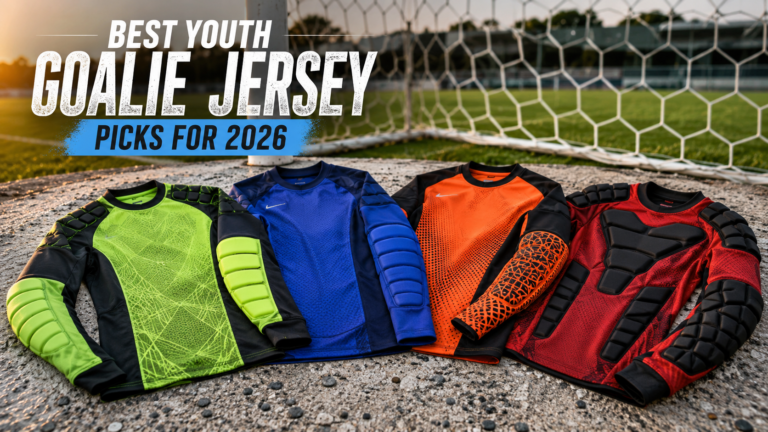
Some goalkeeper jerseys are padded, while others are designed as lightweight shirts without significant protective padding.
You’ll often find different levels of goalkeeper clothing depending on the brand and intended use.
A beginner who mainly plays casual training sessions may be perfectly comfortable in a lightweight goalkeeper shirt.
Another player who trains several times a week and regularly practices diving may prefer additional padding.
The right choice depends on the player rather than simply choosing the most heavily padded option available.
Can a Young Goalkeeper Wear a Regular Soccer Jersey?
Yes, in many training situations.
A regular soccer jersey can work if a young goalkeeper is just practicing basic positioning, distribution, footwork, or catching drills.
However, it doesn’t provide the same goalkeeper-specific features as a dedicated youth goalie jersey.
For regular goalkeeper training, especially sessions involving repeated diving, a goalkeeper shirt may be more practical.
There’s also a difference between can wear and is designed for.
A regular soccer jersey can be worn by a goalkeeper. It simply wasn’t designed specifically around the goalkeeper’s movements.
When a Regular Soccer Jersey Might Actually Be Enough
You don’t always need to buy specialized gear.
For a very young beginner who is only occasionally playing goalkeeper, a regular soccer shirt may be perfectly reasonable.
It can also make sense for casual backyard practice where there isn’t much diving.
Parents don’t need to turn every training session into a professional setup.
As the child becomes more committed to the position and spends more time practicing goalkeeper-specific skills, specialized gear becomes more useful.
How to Choose the Right Youth Goalie Jersey
If you’ve decided that a goalkeeper-specific shirt makes sense, focus on the features that actually matter.
Consider the Playing Surface
Think about where your child normally plays.
Grass, artificial turf, indoor surfaces, and training grounds can all feel different.
A player who rarely dives may have different needs from someone who spends every practice working on low saves and diving technique.
Look at the Fit
Fit should be near the top of your checklist.
The shirt should allow the goalkeeper to reach, stretch, jump, and dive comfortably.
Don’t automatically buy several sizes too large just because children grow quickly. Excess fabric can get in the way.
At the same time, avoid a fit that restricts movement.
Check the Padding
If you’re buying a padded goalkeeper shirt, look at where the padding is positioned.
You don’t necessarily need the thickest padding possible.
The goal is to find a reasonable balance between comfort, mobility, weight, and coverage.
Choose Breathable Materials
Young players can get hot quickly.
A breathable fabric can make a big difference during longer training sessions, particularly in warmer weather.
If the jersey includes padding, pay even more attention to ventilation and fabric construction.
Youth Goalie Jersey Sizing: What Parents Should Know
Sizing is one of the easiest areas to get wrong.
Children grow quickly, but buying too large can create its own problems.
A goalkeeper needs to move freely, and an over sized shirt can bunch up or feel awkward during dives.
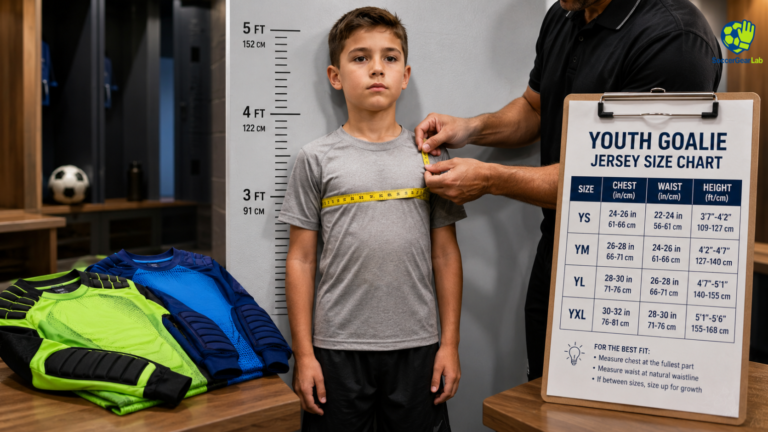
Instead of choosing a size based only on age, check the manufacturer’s measurements whenever possible.
Pay attention to:
- Height
- Chest measurement
- Sleeve length
- Brand-specific sizing
- Intended fit
- Whether the jersey is designed for youth or adult players
If your child sits between two sizes, compare the manufacturer’s size chart with the child’s measurements rather than automatically sizing up.
Short Sleeves vs Long Sleeves for Young Goalkeepers
Both can work.
Long sleeves offer more coverage and can be useful for players who spend a lot of time diving.
Short sleeves, meanwhile, can feel cooler and lighter, especially during warm-weather training.
There’s no universal answer.
A goalkeeper who plays outdoors in a hot climate may prefer short sleeves, while another player training on cooler evenings may appreciate the additional coverage of long sleeves.
Do Young Goalkeepers Need a Matching Goalie Kit?
Not necessarily.
A complete goalkeeper kit might include a jersey, shorts, and socks, but you don’t have to buy everything at once.
If you’re working with a limited budget, start with the pieces that matter most.
For many young goalkeepers, that means a comfortable jersey and appropriate goalkeeper gloves.
You can add matching shorts or other gear later.
The goal isn’t to make the player look like a professional goalkeeper from head to toe. The goal is to give them equipment that suits how they actually play.
Common Mistakes Parents Make When Buying a Goalie Jersey
One common mistake is choosing based entirely on appearance.
A bright color might look fantastic online, but fit and comfort matter much more once the player starts training.
Another mistake is assuming more padding always means a better jersey.
It doesn’t.
Extra padding can add weight and warmth, and some players simply prefer a lighter feel.
Parents also sometimes buy far too large because they want the jersey to last longer.
That’s understandable. Kids grow quickly.
But goalkeeper clothing still needs to fit well enough for the player to move naturally.
Youth Goalie Jersey vs Regular Soccer Jersey: Quick Comparison
| Feature | Youth Goalie Jersey | Regular Soccer Jersey |
|---|---|---|
| Designed for goalkeepers | Yes | No |
| Optional padding | Common on some models | Rare |
| Freedom of movement | Goalkeeper-focused | Outfield-focused |
| Breathability | Varies by model | Usually a priority |
| Ground-contact coverage | May provide more coverage | Usually limited |
| Goalkeeper-specific colors | Often available | Usually team-focused |
| Best use | Goalkeeper training and matches | Outfield play and general training |
| Beginner-friendly | Yes | Can work for casual use |
The biggest takeaway is simple: these shirts are designed around different jobs.
What Should a Beginner Goalkeeper Wear?
For a child just starting out, you don’t need to build an expensive goalkeeper wardrobe.
A practical setup might include a comfortable youth goalie jersey, goalkeeper gloves, suitable soccer shorts or goalkeeper pants, and appropriate footwear for the playing surface.
If the child is only occasionally playing goalkeeper, a regular soccer jersey may be enough at first.
But if they are beginning to take the position seriously, a dedicated goalkeeper jersey can be a sensible upgrade.
The best gear is the gear that fits the player, suits the surface, and doesn’t distract them from learning.
Buying a youth goalie jersey for a child just starting in goal? Our complete Best Youth Goalie Jersey for Beginners guide covers four verified Amazon picks matched specifically to first-season goalkeepers — with honest guidance on exactly how much to spend before you know whether the position will stick.
Already past the beginner stage and ready to see every verified option across every budget and playing level? Our complete Best Youth Goalie Jersey guide covers six verified Amazon picks with honest assessments of what each one delivers and exactly who it serves best.
Final Verdict: Which Jersey Should a Young Goalkeeper Choose?
The difference between a youth goalie jersey and a regular soccer jersey comes down to purpose.
A regular soccer jersey is designed primarily for outfield movement. It’s lightweight, simple, and perfectly suitable for many soccer situations.
A youth goalkeeper jersey is built with the goalkeeper’s unique movements in mind. Depending on the model, it may provide padding, additional coverage, goalkeeper-specific construction, and a fit designed for diving and reaching.
Does every young goalkeeper need one?
No.
But if your child regularly trains as a goalkeeper, especially if they spend a lot of time diving and making ground saves, a dedicated youth goalie jersey can be a practical addition to their kit.
The smartest approach is to look beyond the label and focus on the things that actually affect the player: fit, comfort, padding, breath-ability, playing surface, and how often the jersey will be used.
After all, the best goalkeeper jersey isn’t necessarily the most expensive one hanging on the rack. It’s the one that lets a young goalkeeper move confidently, stay comfortable, and focus on the next save.
FAQs
Can a goalkeeper wear a regular soccer jersey?
Yes. A regular soccer jersey can be used for casual goalkeeper training, especially when the player isn’t doing much diving. A dedicated goalkeeper jersey simply offers features designed more specifically for the position.
Are padded goalie jerseys better for kids?
Padding can provide additional comfort during dives and repeated contact with the ground. However, more padding isn’t automatically better. Consider the child’s playing surface, training frequency, climate, and personal preference.
Should a youth goalie jersey fit tightly?
It should generally provide a comfortable, secure fit without restricting movement. Avoid extremely tight shirts as well as excessively over sized ones. Always check the manufacturer’s size chart.
Do goalkeepers need long sleeves?
No. Long sleeves can provide additional coverage, while short sleeves may feel cooler and lighter. The better option depends on the weather, playing surface, and personal preference.
How often should a youth goalie jersey be replaced?
There’s no fixed replacement schedule. Replace it when the jersey becomes badly worn, damaged, uncomfortable, or no longer fits properly. A frequently used jersey may naturally wear out faster than one used occasionally.
Related Guides
- Best Youth Goalie Jersey 2026 — The Complete Parent Guide
- Best Youth Goalie Jersey for Beginners — 4 Top Picks for new Goalkeepers
- Do Youth Goalkeepers Need a Padded Jersey — The Honest Answer
- Youth Goalie Jersey Materials Explained — What Parents Should Check
- Youth Goalie Jersey Size Guide — How to Measure Your Child Correctly
- Best Youth Goalie Gloves 2026 — The Ultimate Parent Buying Guide
Have a specific question about the difference between goalkeeper jerseys and standard outfield shirts for your child’s situation? Drop it in