Youth Goalie Gloves: Why They Tear So Fast and How to Stop It (2026)
By Carlos Alvares

As an Amazon Associate I earn from qualifying purchases. This post contains affiliate links which means I may receive a small commission at no extra cost to you if you make a purchase through a link. I only recommend gear I have personally tested and thoroughly evaluated.
Youth Goalie Gloves Tearing Too Fast: The Answer Most Parents Never Get
You bought a decent pair of youth goalie gloves six weeks ago. They looked impressive. They felt quality. Your child was genuinely excited to wear them.
Now the latex palm is peeling at the fingertips. There is a visible split along the thumb seam. The grip that felt so confident in week one is gone completely. And you are back on Amazon wondering whether you bought a defective pair or whether goalkeeper gloves are simply designed to fall apart.
Neither is true.
Youth goalie gloves do not tear because of poor quality. They tear because of specific and entirely preventable causes that most parents never identify.
The frustrating part is that once you understand exactly why goalkeeper latex tears the prevention is straightforward and costs almost nothing. The expensive part was not knowing — and replacing pairs repeatedly because the root cause was never addressed.
This guide tells you exactly why youth goalie gloves tear so fast and exactly what to do about it starting today.
The Short Answer
Youth goalie gloves tear fast for six specific reasons. The playing surface is too abrasive for the latex tier chosen. Ground recovery technique puts open palms directly onto rough surfaces repeatedly. The wrong latex was chosen for the training frequency. No wash routine allows salt deposits to degrade latex from inside. Heat drying permanently destroys latex structure in a single cycle. And gloves bought too large create excess material that contacts surfaces at the wrong angle.
Every one of these causes is preventable. None of them require spending more money on gloves.
The Six Real Reasons Youth Goalie Gloves Tear
Reason 1 — The Surface Is Destroying the Latex
This is the most common cause of rapid tearing in youth goalie gloves and the one most parents never consider when purchasing.
Goalkeeper glove latex is engineered for specific surface conditions. The softer more grippy latex used on match-day and premium gloves delivers outstanding catching performance — but it is not designed for the abrasion demands of repeated contact with artificial turf rubber crumb infill.
Artificial turf is essentially sandpaper for goalkeeper latex. Every dive every ground recovery every moment of palm contact with a 3G or 4G surface grinds away at the latex palm in a way that natural grass simply does not. A premium match-day glove that would last a full season of weekly competitive matches on grass can show visible latex degradation and tearing within four to six weeks of twice-weekly training on rough artificial turf.
The surface mismatch — soft match latex on abrasive artificial turf — is the single most predictable cause of rapid tearing in youth goalkeeper gloves.
The fix: Match the latex to the surface. Artificial turf training demands durable training latex — not soft match-day latex. Two pairs — one durable training pair for artificial turf sessions and one better pair reserved for match days on grass — costs less per season than replacing one premium pair repeatedly.
Reason 2 — Ground Recovery Technique Is Destroying the Palm
This is the cause that surprises most parents because it has nothing to do with catching and everything to do with what happens after the save.
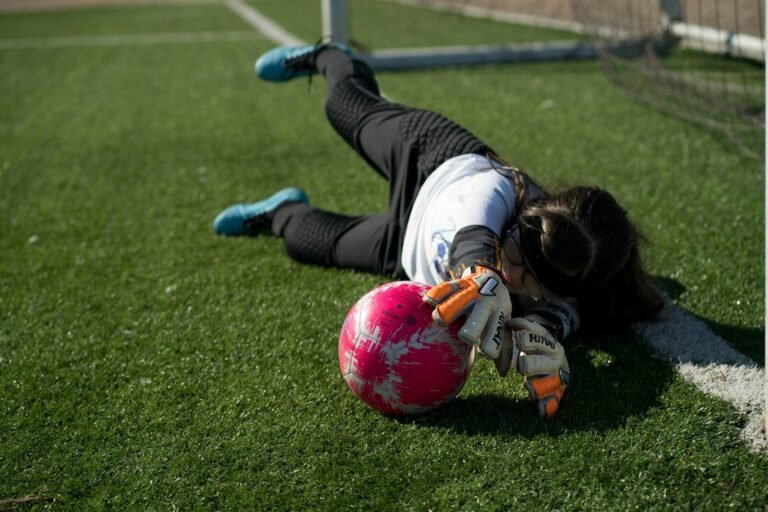
Every time a young goalkeeper pushes themselves off the ground after a dive they make direct contact between the latex palm and the playing surface. In a training session involving twenty to thirty dives that represents twenty to thirty separate abrasion events on the palm latex — none of which involve catching a ball and all of which contribute directly to tearing.
The correct recovery technique — pushing off with a closed fist rather than an open palm — keeps the latex completely off the surface during recovery. A goalkeeper who consistently recovers correctly produces zero palm abrasion during ground recovery. A goalkeeper who pushes off with open palms produces the most damaging repeated abrasion that goalkeeper latex faces in any training session.
Teaching this habit to a young goalkeeper costs nothing. The impact on youth goalie gloves lifespan is immediate and significant — often the single most impactful change a parent can make without buying anything new.
The fix: Teach closed fist ground recovery from the very first session. Every push-up after a dive should use the knuckles — not the open palm. This habit takes one or two sessions to become automatic and then protects every pair of gloves your child owns for the rest of their goalkeeping career.
Reason 3 — The Wrong Latex for the Training Frequency
This cause is closely related to the surface problem but distinct enough to address separately — because it catches parents who have correctly identified their child plays on grass but still see rapid tearing.
Goalkeeper glove latex exists on a spectrum from training durable to match-day soft. The softer the latex the better the grip and the faster it wears. This tradeoff is fundamental and never disappears regardless of price or brand.
A child training three times weekly subjects their gloves to nine to twelve hours of active use every week. Under that frequency even grass surface training produces meaningful latex wear on soft match-day formulations. The latex was simply not designed for that volume of use — it was designed for the sixty to ninety minutes of a competitive match once weekly.
Parents who buy the most impressive feeling grippiest pair they can find and then use it for every training session are using match-day latex for training frequency demands. The tearing that results is not a product defect — it is a predictable consequence of a latex-to-frequency mismatch.
The fix: Match the latex tier to the training frequency. For recreational players training once or twice weekly a mid-range durable latex is entirely appropriate for both training and matches. For players training three or more times weekly separate training and match pairs is the only financially sensible approach — the training pair absorbs the frequency demands and the match pair stays performing at its best for competitive play.
Reason 4 — No Wash Routine Allows Salt to Destroy Latex From Inside
This cause is invisible — which is exactly why it catches so many parents off guard.
Goalkeeper glove latex is porous foam. During every training session sweat drives salt and bacterial deposits deep into those pores. When the gloves go straight from the session into the gear bag without washing those deposits begin drying and crystallizing inside the foam structure.
Salt crystals are corrosive to latex compounds. They break down the foam structure from the inside — producing the brittleness and surface cracking that eventually leads to tearing under the stress of normal use. A glove that tears at the fingertips or along seam lines after six weeks of regular use without washing has almost certainly been destroyed by salt degradation rather than surface abrasion.
The frustrating reality is that this damage is completely invisible until the tearing appears. The gloves can look perfectly normal on the outside while salt deposits are actively destroying the latex structure between sessions.
The fix: Rinse both gloves in lukewarm water within one hour of every session — never hot water. Apply a pH balanced goalkeeper glove wash and rub gently into both palms — never dish soap. Rinse until the water runs completely clear with no trace of foam remaining. Press dry between two clean towels and never wring or twist. Air dry in a cool shaded location away from any heat source. Every session without exception — training and matches alike.
Reason 5 — Heat Drying Destroys Latex Permanently
This is the cause that produces the most dramatic and irreversible damage — and it happens in a single cycle.
Goalkeeper latex is a temperature-sensitive material. The compounds that give it flexibility grip and durability are permanently altered by exposure to heat above a specific threshold. A tumble dryer cycle a session next to a radiator an afternoon in direct sunlight or an hour in a hot car produces the same result — latex that has been permanently baked rigid.
The result is not gradual degradation. It is immediate and complete. Latex that has been heat damaged feels stiff and inflexible from the moment it cools. It cracks and tears under the first moderate stress of a training session because the flexibility that allows it to absorb dynamic force without tearing has been permanently destroyed.
Parents who discover torn gloves after a single session often cannot identify the cause — because the damage happened during drying not during play. The tear appears in training but the cause was the radiator the night before.
The fix: Air dry only — always and without exception. Hang both gloves open in a cool shaded location with good air circulation and allow 12 to 24 hours for complete drying. No tumble dryer. No radiator. No direct sunlight. No hot cars. Not one heat exposure. One single drying cycle near heat is all it takes to permanently destroy any pair of goalkeeper gloves at any price point.
Reason 6 — Gloves Bought Too Large Create Wrong-Angle Surface Contact
This cause is the least obvious and the most counterintuitive — because most parents who buy too large are genuinely trying to extend the life of the gloves by allowing growing room.
When youth goalie gloves are too large the excess material at the fingertips and palm does not sit flush against the hand. During dives and ground contact this excess material contacts the surface at angles the palm was not designed to handle — creating stress points at the fingertips and seams that accelerate tearing significantly compared to correctly sized gloves making equivalent contact.
The growing room that seemed financially sensible produces faster tearing at the most vulnerable points of the glove — the fingertip latex and the finger seams — because excess material creates fold points under stress that correctly sized gloves never experience.
The fix: Buy for the current measurement — not the anticipated future one. Measure the palm below the knuckles not including the thumb and add one inch. That is the correct glove size. A quarter inch of fingertip space is the target fit — not a full finger of growing room. A correctly fitting glove lasts longer than an oversized one regardless of how counterintuitive that feels when standing in the shop.
Tearing vs Normal Wear — How to Tell the Difference
Not every sign of deterioration in youth goalie gloves is premature tearing caused by a preventable problem. Understanding the difference helps parents identify whether they have a care and technique problem or simply a glove that has reached the natural end of its useful life.
Signs of premature tearing — preventable cause:
Tearing appears within four to six weeks of purchase on a glove used twice weekly. The tear is located at the fingertip latex or along the thumb seam specifically. The latex surface feels stiff and inflexible indicating heat damage. The palm shows cracking or brittleness before meaningful surface abrasion has occurred indicating salt degradation. Multiple tears appear simultaneously across the palm indicating heat damage rather than surface abrasion.
Signs of normal wear — end of useful life:
The latex surface becomes visibly thinner and smoother after three to four months of regular use. Grip reduces gradually and consistently across the full palm rather than suddenly. The glove has been used for the expected lifespan at the usage frequency. No dramatic tearing — just gradual latex reduction that produces reduced grip rather than structural failure.
Which Youth Goalie Gloves Resist Tearing Best
Understanding which gloves are built for durability helps parents make the right purchase for their child’s specific surface and training frequency.
The most tear-resistant youth goalie gloves currently available in the verified youth range share three construction features — durable latex formulation specifically engineered for abrasion resistance double stitching at every stress point and reinforced construction at the fingertips and thumb seam where tearing most commonly originates.
For training on artificial turf the Adidas Predator Training Youth uses Soft Grip latex specifically formulated for training demands rather than match-day performance. The positive cut construction and reinforced seams handle the abrasion of regular artificial turf training better than softer match-day alternatives at equivalent price points.
The Reusch Attrakt Solid Junior uses Contact latex — Reusch’s most abrasion-resistant formulation — with double stitching at every stress point and construction specifically built for the demands of regular youth goalkeeper training. In testing on artificial turf the Attrakt Solid consistently outlasts Adidas mid-range alternatives before showing meaningful latex degradation.
The Storelli Challenger Youth uses Superior Grip latex with construction specifically reinforced for artificial turf use — a strong option for players whose tearing problem is primarily surface-driven on rough 3G pitches.
Want to know exactly how to wash your child’s gloves to prevent salt degradation tearing? Our complete guide on how to wash youth goalie gloves correctly covers every step of the routine that doubles glove lifespan. Looking for the right care products? Our youth goalie gloves care kit guide covers the five essential products that prevent the salt and bacterial damage that causes premature tearing.
The Bottom Line
Youth goalie gloves tear fast for six specific and entirely preventable reasons. The playing surface is wrong for the latex tier. Ground recovery technique puts open palms onto abrasive surfaces repeatedly. The latex is too soft for the training frequency. No wash routine allows salt to destroy latex from inside. Heat drying permanently destroys latex in a single cycle. And oversized gloves create wrong-angle surface contact at stress points.
Address any one of these causes and glove lifespan improves measurably. Address all six and the same pair that was lasting six weeks will last a full season.
None of these fixes require spending more money on gloves. They require understanding why the tearing was happening and changing the specific behavior that caused it. Buy the right latex for the right surface. Teach correct ground recovery. Wash after every session. Air dry always. Buy the correct size. And give your young goalkeeper gloves that last.
FAQ: Why Do Youth Goalie Gloves Tear So Fast
Is it normal for youth goalie gloves to tear after a few weeks? No — premature tearing within four to six weeks of purchase is almost always caused by one of six preventable factors rather than poor product quality. Surface abrasion from artificial turf wrong latex for training frequency no wash routine heat drying oversized fit and open palm ground recovery technique account for the vast majority of premature tearing in youth goalkeeper gloves. Address the specific cause and the same gloves last significantly longer.
Why do youth goalie gloves tear at the fingertips specifically? Fingertip tearing is almost always caused by either oversized gloves creating wrong-angle surface contact at the fingertip fold point or by open palm ground recovery technique that places maximum abrasion stress at the fingertip area. Both causes are immediately preventable — correct sizing and closed fist ground recovery eliminate fingertip tearing in most cases.
Does washing youth goalie gloves actually prevent tearing? Yes — washing prevents the specific type of tearing caused by salt degradation which is one of the most common causes of premature latex failure. Salt crystals from sweat deposits break down latex foam from inside the pores producing brittleness and cracking that eventually tears under normal use stress. A five-minute rinse in lukewarm water with a proper goalkeeper glove wash after every session removes these deposits before they cause permanent damage.
Can heat-damaged youth goalie gloves be repaired? No — heat damage to goalkeeper latex is permanent and irreversible. Once latex has been baked rigid by a tumble dryer radiator or direct sun exposure the flexibility that prevents tearing under dynamic stress is permanently destroyed. No product or technique restores heat-damaged latex. Prevention is the only option — air dry in shade always without exception.
Do more expensive youth goalie gloves tear less? Not necessarily — and often the opposite is true for training use. More expensive gloves use softer more grippy latex that tears faster under training frequency demands on artificial turf. A quality mid-range durable training glove resists tearing better than a premium match-day glove used for training because the construction philosophy is specifically matched to training demands. Match the glove to the use case rather than spending more and expecting durability to follow.
How do I know if my child’s gloves tore from poor quality or poor care? Poor quality tearing typically appears immediately within the first one to three sessions at multiple points simultaneously. Poor care tearing typically appears after four to eight weeks of regular use at specific stress points — fingertips thumb seams and palm heel — following a pattern consistent with surface abrasion salt degradation or heat damage. The location timing and pattern of the tear almost always identifies the cause accurately.
Related Guides
- How Long Do Youth Goalie Gloves Last (And How to Make Them Last Longer)
- How to Wash Youth Goalie Gloves and Keep Grip Like New
- Youth Goalie Gloves: 5 Best Wash Products for Better Grip
- Youth Goalie Gloves: Training vs Match Gloves for Better Grip
- Youth Goalie Gloves Size Chart: How to Choose the Right Fit
- Best Youth Goalie Gloves 2026 — The Ultimate Parent buying Guide
Have a specific question about why your child’s gloves tore or need advice on preventing it? Drop it in the comments — every question gets a real answer.